
Key Takeaways
Isolation Is A Result Of Choices: Pastoral isolation is the choice to NOT trust others with who you really are (and that can happen whether you're surrounded by people or not.)
Hiddenness Drives Decisions: Once a pastor stops trusting others with who they are, hiddenness fills that space, and shame begins driving their decisions.
You Cannot Control What You're Hiding: The belief that you're managing what you're hiding is itself a warning sign; if you were in control of that thing, you wouldn't be hiding it.
One Trusting Relationship Changes Everything: Find one person who knows everything, because whatever you keep hidden will eventually control you.
Every pastor starts ministry with a vision to change lives and a passion for Jesus. Very quickly, though, we run into the reality of life in the pulpit and trenches of ministry, and it's far more of a grind than we expected.
Often, we end up struggling with disappointment:
- My ministry-impact isn't what I hoped it would be
- My leadership reality isn't what I hoped it would be
- I am not what I hoped I would be
When these private disappointments are kept in the dark, they form an invisible foundation for isolation in a pastor's inner life.
Many pastors cope by learning to avoid exposing or extending themselves to others. Can't be disappointed (or a disappointment) if you don't show up. The decision to begin withholding parts of yourself from those around you is a significant one - with a cascading negative impact.
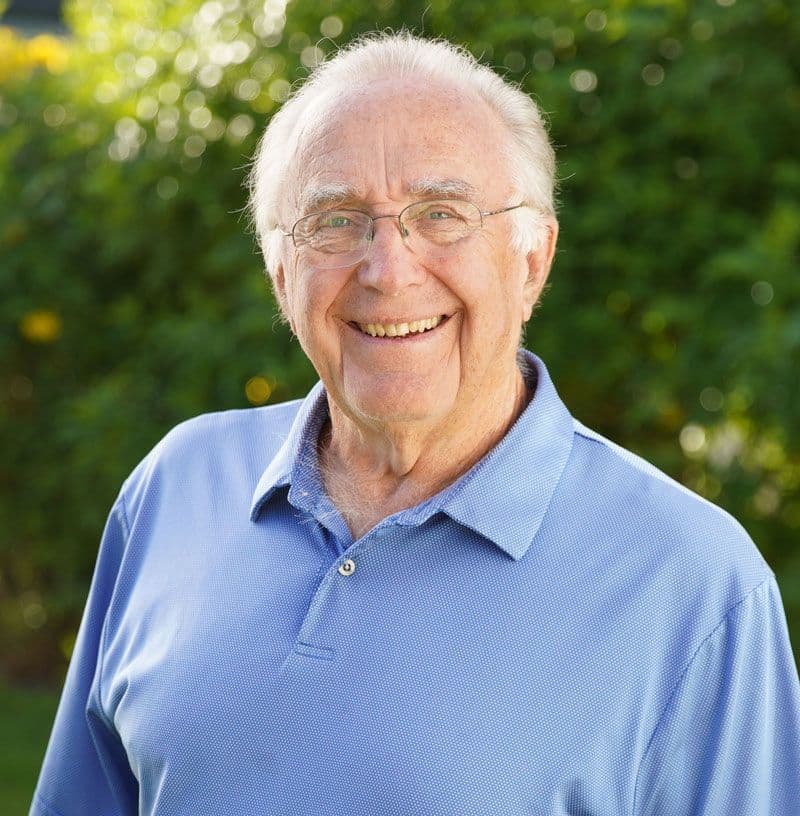
Bill Thrall, a mentor to Christian leaders for thirty years, has mapped out the subtle, internal progression that puts healthy pastors at risk.
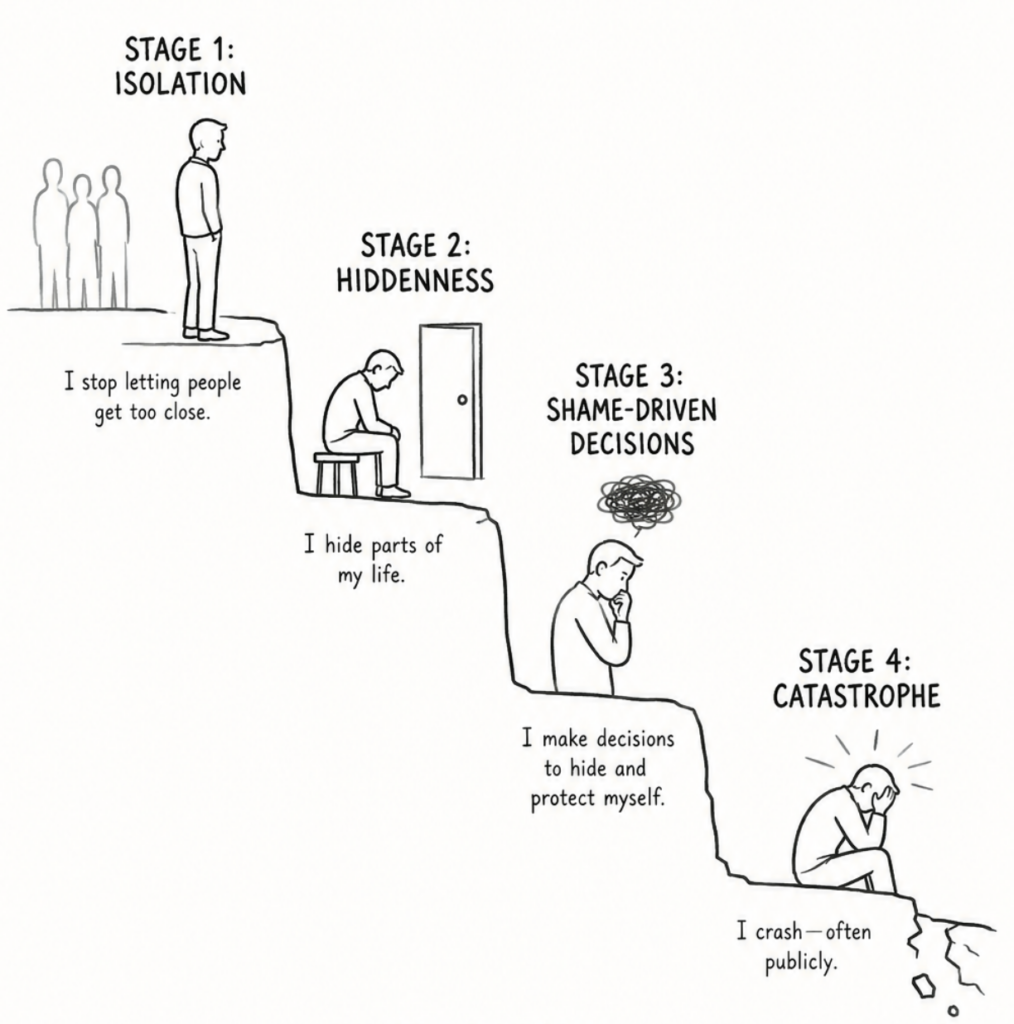
Financial, moral, and emotional crashes are rarely sudden; they are the final step in a quiet, progressive collapse. Stage 1 of that progression is isolation, which begins when a leader chooses to hide.
Isolation is not ‘being alone’; after all, I can be surrounded by people and still feel isolated. Isolation is a heart posture. It’s rooted in a lack of trust. It forms when I choose NOT to trust others with me.
Stage 1: Isolation
We can be surrounded by people and still experience isolation.
A pastor can have a weekly breakfast with other pastors, a board he meets with monthly, a spouse who loves him, and still feel profoundly isolated, precisely because he's holding parts of himself back, for fear of what it will cost him.
The decision to isolate feels like self-protection, but it's the first step toward catastrophe.
When I’m in isolation, I am vulnerable to hiddenness. And when I start hiding things, shame begins to define solutions to my pain… and in that place, I become vulnerable to catastrophic decisions.
Have an account? Log In
Stage 2: Hiddenness
Isolation creates a vacancy. And Bill says hiddenness fills it. The signs of that hiddenness are all too common:
- A pattern of behavior we're managing in secret.
- A corner of our inner life we deem too ugly to expose
- Nagging doubts too heavy to bring into the light
That hiddenness, though, is a self-deception: "I'm in control of what I'm hiding. It's not that serious. I'm handling it."
I've been here before, my friend. I believed I was in control of what I was hiding, but even then, if that were true, I wouldn't be hiding it anymore... the shame I feel is proof.
There's a second deception at play as well. Shame is not static... it is constantly at work, with its own momentum.
If there isn’t somebody who knows everything, I become a victim of whatever I’m hiding. Shame is never neutral. It is always working.
Stage 3: Shame-Driven Decisions
Bill traces shame all the way back to Genesis. When Adam sinned, he experienced shame for the first time, and immediately committed what Bill calls "the first act of sin management in all of history"... he covered himself with fig leaves and hid.
Millenia later, the impulse to cover up and hide hasn't changed. Once shame is ignited, it drives behavior. It looks for relief. It starts making decisions.
If the penalty for what I tell you is so great that I can't bear the weight of it," Bill says, "I will hide from you until you catch me.
The pastor in Stage 3 isn't making free choices anymore.
If I'm caught in this space, I am operating on shame-based logic: the risk of exposure is unbearable, so I'll do whatever it takes to avoid it. That calculus produces decisions nobody would make in the light... and those decisions compound.
More Articles
Stage 4: Catastrophe
Bill has sat with leaders after catastrophic failures - whether financial, moral, or otherwise. He says the stories he hears are remarkably similar. The crashes happen because a pastor, caught up in hiddenness and shame, chose to participate in something they had promised themselves they'd never do.
Often, that catastrophe is public.
But the progression that caused it was private. And it starts, almost always, with one thing: a pastor who decided not to trust anyone with who he really was.
If I don’t trust God and others with what I’ve hidden, whatever I’ve hidden will one day control me.
The Solution: Trust God & Others With Me
Perhaps you have people all around you but still feel like no one knows you.
Perhaps you are trying to manage something privately and telling yourself you are in control.
Perhaps you are making decisions shaped by what cannot come out, not by what is right.
1 Peter 5:5 is clear: God gives grace to the humble. Bill's working definition of humility has been refined over decades of sitting with isolated leaders:
Humility is trusting God and others with who I actually am.
This can be terrifying... so I offer these three prayers directly counter the isolation spiral. Pray them often:
- Jesus, teach me to trust you with my shame.
- Jesus, teach me to trust who you say I am.
- Jesus, teach me to trust others with who I am.
The four-stage isolation progression isn't inevitable... trust is the escape hatch.