

Most Church Evangelism Training Fails. Here’s WHY:

Equip, Don’t Replace: Pastors aren’t the evangelists—they equip people who are.
No Experience, No Outreach: If people aren’t tasting the Gospel, they won’t talk about it.
Programs Can’t Produce Life: Systems can support evangelism, but they can’t drive it.
I did an evangelism training course as a teenager, called “Becoming a Contagious Christian”. I powered through that workbook and had earnest conversations with other kids in my school. I didn’t lead anyone to Jesus… but I did receive a fair amount of ribbing from my unsaved friends.
Today, 30-some years later, I don’t believe the curriculum was the problem.
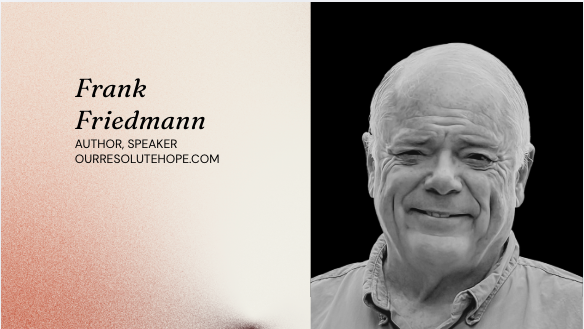
Pastor Frank Friedmann has been in ministry for over 45 years and has pretty much seen it all. He took a church of 13 and grew it to 500. He led an established church of 75, doubled it in 6 months, doubled it again in another 6 months, then doubled it again in another year.

The key to the growth, Frank says, is evangelism… but not the type of evangelism I practiced as a teen. Frank’s thesis is simple: you can't give what you don't have.
Most of our evangelism training problems trace back to that.

Why We Default to Training Instead of Transformation
If you’re like me, when you look out over your congregation and see no evangelism happening, the instinct is to fix it. Launch a series. Find a curriculum. Run a campaign. I get it; there's genuine pastoral care in that impulse. I want to see people reached, and throwing a process or system at the problem feels like something worth doing.
Frank's been watching this pattern for decades. He's seen the Romans Road, the Four Spiritual Laws, and Evangelism Explosion. None of them is wrong, he told me. The problem is what happens to them in practice.
People use evangelism tactics as tools, and then lose sight of the person. They're going out to get notches on their belt buckle.
Frank Friedmann
At worst, that sort of approach becomes a prosecutorial exercise, backing someone into a corner until they say uncle just to get you to leave their house. That's not a conversion. That's an exit strategy.
And the programs get stranger from there. Frank told me about a church that hid footballs in neighborhood homes, rewarded the homeowner for keeping it and the church member for finding it, and called the whole thing "evangelism outreach." His question was the right one: where's Jesus in all that?
The issue isn't creativity. The issue is that when organic evangelism isn't happening, we reach for mechanics to replace it. And mechanics can't replace life.
Frank Friedmann
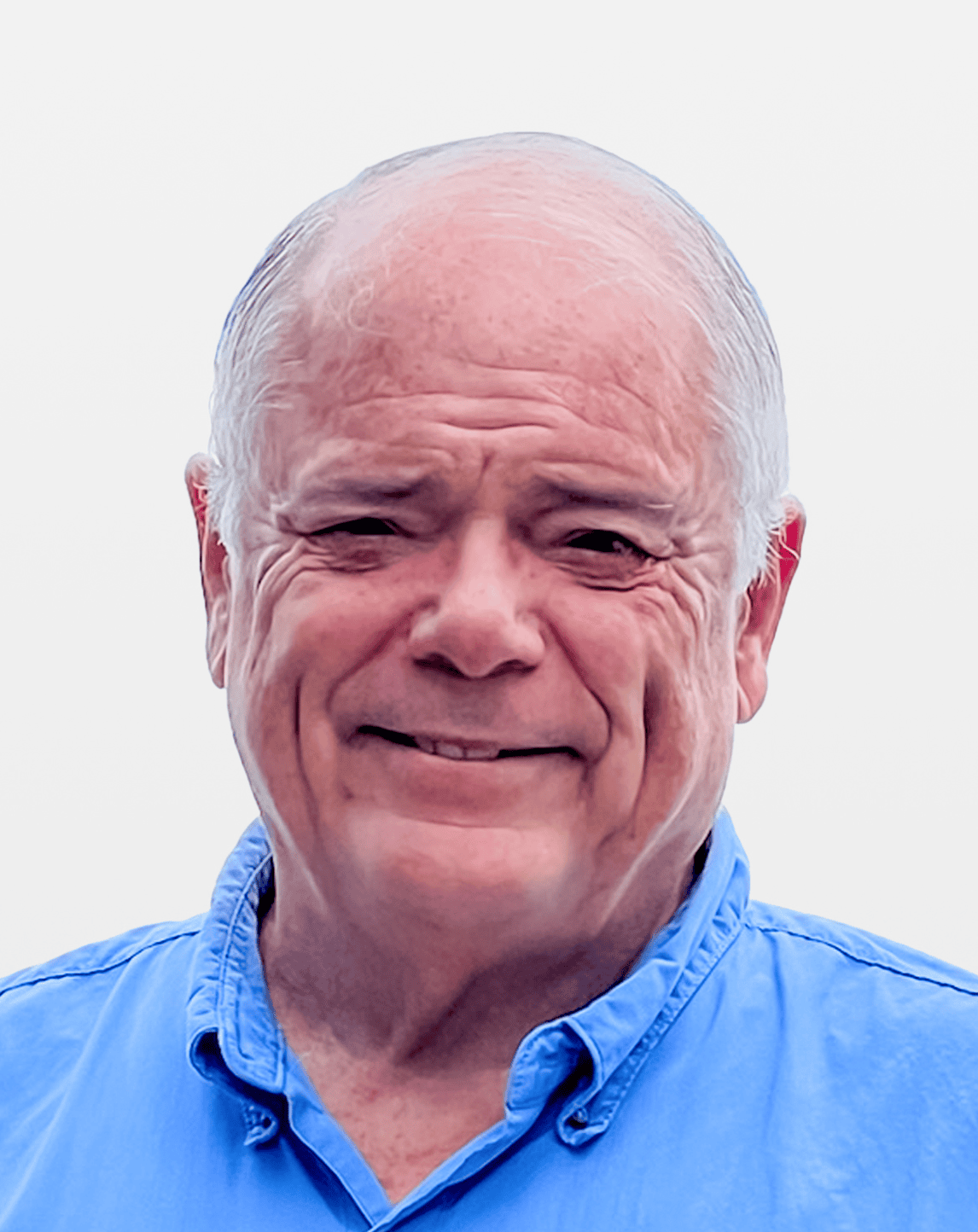
Frank Friedmann is a seasoned pastor and teacher whose ministry has been shaped by a profound personal journey of faith. Raised in a large Catholic family, he came to a deeper understanding…
Frank Friedmann is a seasoned pastor and teacher whose ministry has been shaped by a profound personal journey of faith. Raised in a large Catholic family, he came to a deeper understanding of God’s grace during his university years, ultimately surrendering his life to Christ. His early passion for the gospel led him to invest in campus ministry and later pursue seminary, choosing a path of spiritual leadership over a potential career in professional athletics.
After several years in pastoral ministry, Frank experienced a pivotal shift in his understanding of the finished work of Christ. This renewed vision reoriented his ministry from primarily imparting knowledge to helping people encounter the life of Jesus Himself.
For over three decades, Frank served as the teaching pastor of Grace Life Fellowship in Baton Rouge, Louisiana, faithfully shepherding others with clarity, conviction, and a deep dependence on Christ. He and his wife, Janet, have four children and a legacy of ministry marked by spiritual depth and transformation.
“Evangelism isn’t primarily a method—it’s the overflow of a life shaped by Jesus. When believers experience real freedom, joy, and peace, sharing faith becomes natural—not forced.”

The Real Problem Isn’t Methods, It’s Experience
Frank Friedmann has been running a conference for 30 years, and he opens it with a simple exercise for attendees. He lists five things Jesus promised to those who follow him:
- Fullness of joy
- Peace that surpasses understanding
- Abundant life
- Rest (the Greek is closer to "I will rest you" than "I will give you rest")
- Freedom (freedom from performing for other people, freedom from performing for God, freedom from yourself)
Then he asks the room to think about their church and to count how many people they know who have even two of those five as an abiding presence in their life. Most people go quiet. Then he asks if they can think of anyone with all five. The room gets really quiet.
That's the problem with most evangelism training…
Not a lack of techniques or tools. It’s a lack of LIFE. If our people’s experience of the Christian life is defined by anxiety, unrest, fear, guilt, performance pressure, and shame, is it any wonder it feels like pulling teeth to get them to share their faith?
Frank put it plainly: a church like that looks at the world and says, "Want to join us?" And the world says, "I don't think so. It's hard enough out here without all that."
That's why we resort to training. Because the natural thing isn't working. But the natural thing isn't working because the gospel hasn't landed the way it was meant to, in the people who already HAVE it.
What Changed in Frank’s Church
His church in Delaware started with 13 adults. It grew to around 400-500 people. He later came to Grace Life Church in Baton Rouge, Louisiana, which had been stuck at 70 people for 15 years. It doubled in six months. Doubled again in six months. Doubled again in a year.
When a pastor friend sat him down and asked what his method of evangelism was, Frank told him he didn't have one.
What he had was a conviction from Ephesians 4: the pastor-teacher's job is to equip the saints for the work of the ministry. Not to reach the lost directly, but to build up the Body until the Body goes out and does it on its own, unprompted.
Frank put it even more bluntly when he and I talked:
In most churches, we’ve got this backwards. We tell people, ‘Go invite your friends to church, and we’ll try to get them saved.’ No. TEACH the believer. Help them understand who Jesus is to them and what he’s done for them - and then? Go be the church.
Don’t work to bring the world to a program; rather, build your church into people who understand what Jesus did for them SO deeply that they can’t help but go.
As Frank sees it, the role of the pastor isn’t to carry evangelism for the church:
I’m a pastor to a congregation of pastors… an evangelist to a congregation of evangelists.
Which means ‘success’ isn’t improving with outreach strategies. It’s raising people who understand who they are in Christ & who Christ is in them.
If the Body is built up, if people are coming to understand who Christ is in them and what he has done, they become, as Frank put it, impossible to shut up.
Evangelism will be a natural outflow of who they are. Outside observers will ask, ‘What have you got that I don't have?’ But if we're living with guilt and shame and fear, nobody asks. If they see something different, they ask.
“You have GOT to see this!”
Frank has a word picture for this that I keep coming back to. He calls the church a kaleidoscope: a million expressions of Jesus in a panoramic way. When you look through a kaleidoscope, you don't stay quiet about it. You grab the nearest kid and say, "You have to see this!”
That's the evangelism model. Life that makes people curious. Life that the world looks at and asks, "Can I have some of that?”
He's also clear that some people do have the spiritual gift of evangelism, and that's real. But the gifted evangelist isn't supposed to be the model for everyone else. The model is Jesus himself: trusting the Father and letting him live his life in and through you as you go.
Every believer carries the heart of God, and the heart of God is for the lost. That's not a trait you cultivate through training. It's there. The work is helping people know what they have.
What This Means for Your Church Right Now
I'm not saying cancel your community outreach program. I'm saying ask a harder question first: what is the condition of the people in your church? Not their behavior, their condition. Are they experiencing joy, peace, rest, freedom, and an abundant life, even partially, even growing? Or are they performing, hiding, and managing?
If it's the latter, more evangelism training isn't the answer. Going deeper is.
Frank's ordination charge, given to him 45 years ago by John MacArthur, is worth returning to: take care of the depth of your ministry and leave the breadth of it in God's hands.
The depth is our focus. Trust the breadth to HIM.

