

Delegation Is Tough, But These Two Tools Make It Easier.


'Yes' is a limited resource: Every task you accept is a promise you'll have to keep, so treat your capacity accordingly.
Sequence your handoff conversations: Talk to your board first, then reset expectations with staff, then bring in the person receiving the work.
Delegation problems are usually root problems: Control, fear of exposure, and identity tied to being needed are more often the real issue than poor systems.
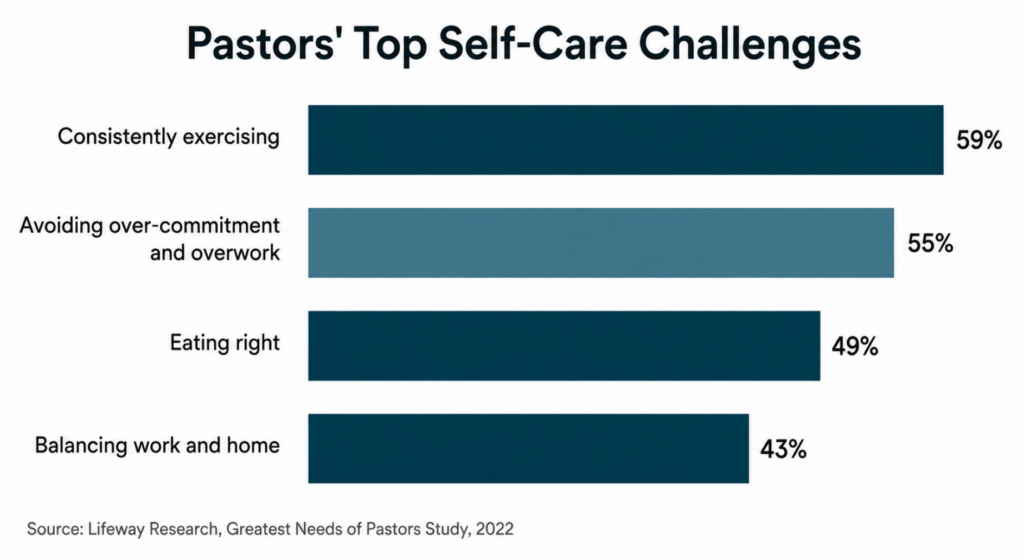
55% of U.S. pastors say avoiding over-commitment is one of their biggest personal challenges. Part of this is just the nature of pastoral leadership. You see needs. You feel like you've got capacity. People trust you with things. There aren't any obvious new leaders to delegate to.
Over time, though, the accumulation of well-intentioned decisions becomes an overwhelming load of responsibility.
Problem: The Reflexive "Yes"
Consider this: every new task you take on is a promise you'll have to keep. You're not being generous, you're being avoidant. Saying yes is easier than the awkward conversation that comes with saying no or "let me find the right person for that." Start treating your yes as a limited resource, because it is.


Problem: No Task-Assignment Process
Does your church have a management process? Is there a defined strategy for recognizing and dealing with new tasks that come up? If not, then likely YOU are the default solution. This is an infrastructure issue and until it's fixed, every task likely lands on your desk.
With these problems in play in your church ops, delegation becomes nearly impossible, because there's nowhere else for things to land. Before you can protect your time, you need a system that can catch what you're no longer holding.
The Acts 6 Filter (aka "Is This Mine?")
The apostles were made aware of a growing issue in their new community. Certain widows in the community were being neglected. While this was a legitimate problem, the apostles declined to take responsibility. Instead, they made the crucial choice to delegate the task.
They recognized that the responsibility was not theirs to carry. They chose to keep the main thing the main thing, and passed the responsibility to others gifted for it... and out of that conviction, the church grew.
It is not right that we should give up preaching the word of God to serve tables. We will devote ourselves to prayer and to the ministry of the Word.
Acts 6:2
How to Hand Something Off
If you're in a similar spot, where you're holding a responsbility that isn't aligned with your core calling, perhaps your instinct is to go straight to the individual you want to delegate a task to.
That's actually the third conversation you should have, not the first.
Start with your elders or board.
Not because you need permission to delegate, but because they will field questions when people notice you are less involved in things you used to own. They need to be able to say "yes, we know, we support it" rather than getting caught off guard.
Second, touch base with anyone who currently has expectations that you do this work.
Consider connecting with your staff or key volunteers who might be impacted by this shift. Those expectations don't disappear because you've decided to stop. Somebody has to reset them, and that somebody is you.
Then, once those two conversations have happened, bring in the person receiving the work. Maybe say something like this:
"I've been carrying [this initiative/role] and I've realized it needs a leader who can give it more than I can right now. I want to hand this off by [date]. I'd like to work with you on who picks this up, and I'll make sure they have everything they need."
Then transfer what is in your head.
Two Free Tools To Help
The first helps you turn any ministry task into a clear, step-by-step checklist your replacement can follow. The second helps you define the role so whoever steps in knows exactly what they are taking on.
Free Tool: Church Task Checklist Creator
This prompt helps you break down any recurring church task into a clear, step-by-step checklist that can be easily handed off to a volunteer.
Copy & paste this into ChatGPT or Claude:
I want to define a clear, compelling volunteer role that I can delegate to someone in our church. I need help thinking through what success looks like, what kind of person fits the role, and how to describe it in a way that’s both specific and inspiring.
Act as a church staffing and volunteer development advisor. You understand how churches function and how to create realistic, motivating volunteer roles that align with both ministry needs and a volunteer’s strengths.
Ask me 3–4 questions, one at a time, to clarify:
- What this volunteer role will help accomplish
- What types of tasks or responsibilities it involves
- How often or when it needs to be done
- The kind of person who would thrive in this role
Once you understand the meeting’s purpose, generate:
- A title for the role
- A brief summary of why it matters
- A bullet-point list of responsibilities
- Estimated time commitment (weekly/monthly)
- Key skills or traits that would make someone a good fit
- Optional: a sample invitation message I can send when asking someone to consider it
And here's a walkthrough video:

Free Tool: Volunteer Role Creator
This tool will guide you through defining a specific, inspiring volunteer role, including its responsibilities, time commitment, and a sample invitation message.
Copy & paste this into ChatGPT or Claude:
I need help creating a repeatable, step-by-step checklist for a recurring ministry task. I want it to be clear enough that I can hand it off to a trusted volunteer or staff member who will execute it with confidence and clarity.
Act as a ministry operations assistant with experience supporting pastors and church volunteers. You understand how churches work, and you know how to turn vague ideas into clear, actionable checklists. I need you to ask me several questions - but don’t overwhelm me… give me questions one at a time. Be sure you understand what the task is, how often it happens, what ‘done well’ looks like, and any people/tools/approvals involved. Ask 2-3 additional questions (one at a time) to get any other context you need.
- Is simple enough to delegate
- Includes deadlines or timing (if applicable)
- Identifies who is responsible (pastor, volunteer, admin)
- Flags any approval steps or common pitfalls
Also include a brief handoff message I could copy and paste to send this checklist to a volunteer. Ensure the hand-off message gives the volunteer permission/encouragement to adjust and tweak as necessary.
And a video walk-through:

Are Your Delegation Struggles A Symptom Issue?
Whenever I've observed I'm overloaded (maybe I heard it from my wife or the board) delegation seems the obvious the fix.
However: "I need to delegate more" is almost always a symptom diagnosis, not a root one. In my experience, there are often a handful of potential root culprits;
- Control. If I let go, it won't be done right. Which raises the question: right by whose standard, and why does that standard matter so much?
- Identity tied to being needed. If others can do what I do, what am I? Delegation feels like erosion of purpose.
- Fear of exposure. What if someone else does it better? What does that mean about me?
- Guilt about asking. Sometimes, delegation feels like burdening people I'm supposed to serve. It's easier to just take the task on myself.
What links all four of these?
Delegation is hard when your sense of value is on the table. If your worth is tied to what you carry, letting go of that load feels dangerous.
My friend, remember: your worth is already settled in Christ before you do a single thing today. The task doesn't define you. Neither does whether it gets done right, or whether someone else could have done it better.
Before you build any system, the better question might be: where am I finding my worth?

