

Sats Solanki (Reflect Church) on Plural Leadership

Pressure Drops With Shared Authority: Plural leadership isn't just a structural choice, it's a personal pressure-relief valve. When you're not the only one responsible for the big calls, you stop carrying the weight alone.
Consensus Isn't Compromise, It's a Posture: The goal of team decision-making is to ask "what does God want?" together, not to get what you individually want. That reframe changes how you show up to hard conversations.
Two Tiers Keep Things Moving: High-stakes decisions require full team consensus. Operational decisions get delegated. The distinction matters, and it keeps you from having a committee meeting about song selection.
Your Gifts Have a Shadow Side: The controlling, domineering tendencies that show up in strong leaders aren't separate from their gifts. They're the flip side of the same coin. Plural leadership protects you from your own wiring.
When I first came across Sats Solanki on Instagram, he was talking about plural church leadership. The idea caught my attention because it's close to home. The church I'm part of, New Life Fellowship, has operated with a team of pastors (we call them elders) making leadership decisions by consensus.
Sats leads Reflect Church in London, and before encountering his instagram channel, I didn't know of any other church that operate that way... When Sats and I connected, I wanted to know HOW they came to that leadership structure.
I also wanted to understand the practical mechanics. What does plural leadership look like in day-to-day leadership for them?

And on a more personal level, I wanted to know how that decision impacted Sats as a key leader. And yeah, our conversation was awesome.
1. Plural Leadership Defuses Pastoral Pressure.
Sats doesn't sell plural leadership as a polity position, but as a Biblical one with very personal implications.
I think the pressure that leaders are under just really changes when you don't have to have all the answers or know everything," Sats said. "And leading that way is just so much more fun, man.
Fun.
That word gets said so rarely in conversations about pastoral ministry that it almost sounds naive when it shows up. But Sats meant it. He wasn't describing a lighter workload. He was describing a different relationship with uncertainty.

Historically, 'authority' = certainty and confidence.
You had a vision, you communicated it clearly, and people got on board. Doubt was something you managed quietly. Sats and the other members of the Reflect Church leadership team had experienced that firsthand. Many of their formative years were spent in a high-energy, high-intensity 'growth at all costs' multi-site church in London, UK.
"There were lots of good things, but lots of unhealthy things as well... and as a location pastor, I was complicit".
Sats had been involved in the church since he was 19, met his wife there, helped plant a location in Germany, and then came back to lead the London location. By 2020, they were gunning for it. Then the pandemic hit, and the cultural pressures it exposed did what pressure tends to do: it revealed what was already cracked underneath. Then, this church that seemed vibrant, healthy, and powerful when viewed from the outside dissolved.
Reflect Church is built on a different foundation.
"Having a bit more space for tension, nuance, a little bit more of the journey of it," as Sats puts it. He tells his church openly when he's unsure. And far from eroding trust, that openness has built it.


"We Landed Here By Accident."
In Sats' own words, Reflect Church landed on plural leadership because of fear.
After the previous church collapsed, Sats and four others leaders were left trying to figure out what to build. Nobody wanted to make a unilateral mistake. So they defaulted to consensus. Every major decision went through all five of them.
We were working as a team and it was very much like, we don't want to make any stupid decisions. Let's get approval for everything... so yes, it was very much fear-based.
When things settled, Sats went looking for what Scripture said about leadership structure. He expected to retrofit a theological framework onto a pragmatic arrangement. What he found instead was that the early church had been doing something like this all along.

"When I stumbled into this, I was so surprised," Sats said. "We're actually doing the right thing by accident."
Two of the most consequential decisions the early church made (Acts 1, the appointment of Matthias. Acts 15, the question of Gentile inclusion) were reached by consensus. Not one leader pronouncing from the top, a community working together until they found what God was saying.
The more Sats has learned, the more he's doubling down. For a deep dive into the theological foundation to plural leadership, comment LEADERSHIP on THIS instagram post:
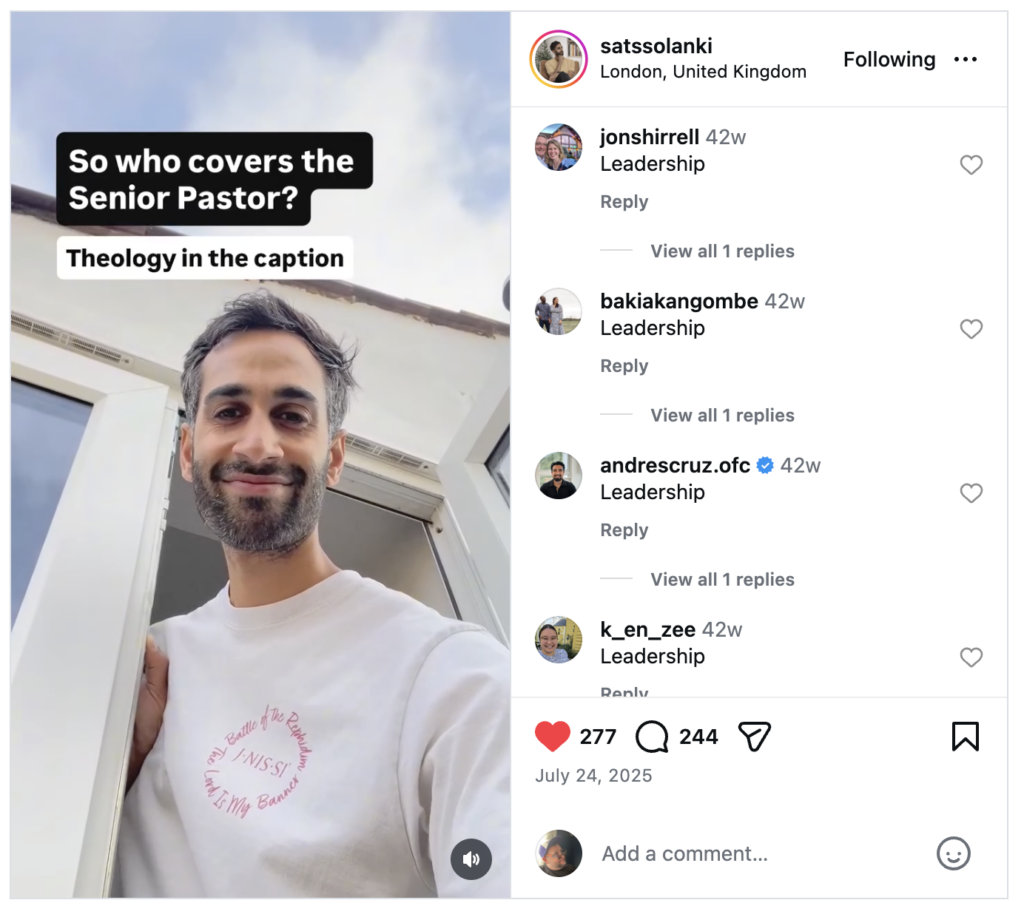
Q: Isn't plural leadership slower or less efficient?
Short answer? Not everything requires consensus. Reflect operates on two tiers:
- High-stakes decisions, things like hiring, leasing a building, major shifts in direction, require full consensus among all five team members.
- Operational decisions, ie: song selection, event logistics, week-to-week programming, get delegated to whoever holds that area of responsibility.
In five-plus years, the team has never failed to reach consensus on a major decision. That's not because they always agree right away. It's because they've learned to stay in the room. The goal is to find what God wants, not to get what you want. And that reframe changes the entire dynamic of a hard conversation.
2. Plural Leadership Protects You From Yourself
Plural leadership offers "protective love." A visionary, driven leader has real gifts. Those gifts also have a shadow side. Plural leadership is one of the best structures available for keeping the shadow in check.
Sats shared how his team protects him from his own ambition and controlling nature. Not because they push back constantly, but because trusting other people and trusting Jesus in them creates a structure where his default instincts can't just run the table unchecked.
A lot of those negative qualities, being controlling, manipulative, domineering, they're all just flip sides of good things.
Sats also noted something a little ironic about his own experience. The more he pushes toward genuine plurality, the more authority his team seems to give him. He doesn't entirely understand it. But it tracks with what I've seen: genuine humility in leadership tends to create more trust, not less.
What Jesus Promised To Do
Jesus said He would build His church (Matthew 16). We love that verse at TheLeadPastor... I hear pastors reference this verse constantly, but rarely is it applied to the weight pastors carry day to day.
If Jesus is the one building the church, then the lead pastor isn't. The elder team isn't. The board isn't.
Rather, you as leaders are stewards, participants in something Jesus is doing, not the architect of something you're responsible for completing.
That weight was never yours to begin with.
That's not a permission slip to coast. It's a reframing of what the pressure you feel is actually for. The church's future doesn't hinge on whether you make the right call in the next elders meeting.
Sats has found that building a team structure that takes that seriously has changed the experience of leading. The work is still hard. London is expensive. Church planting takes everything you have. But the existential weight, the pressure that sits in your chest during the drive to church, that's different when you're not carrying the whole thing alone.
Reflect Church hasn't fully arrived.
Five or six years in, they're still a work in progress. The team holds different views on plural leadership. Some still push Sats toward a more traditional senior pastor role. The theology is still being worked out in practice.
I appreciate that honesty.
What makes conversations like this worth having is when someone gives you the real version, not the polished retrospective where everything worked out perfectly. Reflect is a live experiment in a better way of doing church, and Sats is telling the story while it's still being written.
Join TheLeadPastor.com Community
If you're a lead pastor carrying more than you should have to carry, you're not alone in that. The TLP community is full of pastors working through exactly these kinds of questions together.

