

“200 Coffees by Launch Day” Brandon Kelley on Church Planting

"I don't want a team that is good at putting on events. We want a group of disciple makers."
"Out of efficiency, are we turning ourselves and the things that we provide into these religious goods? Or are we really bringing our whole heart to whatever opportunities we have to minister to people?"
"Are we really reflecting on the people God's given us to shepherd and bringing our whole heart to whatever opportunities we have to minister to them?"
"The most pressing point of discipleship when we start seeing job displacement happen at scale is people's worth and how that's connected to identity."

Overview
- On the Road Back to Fort Wayne (00:31)
- Building a Discipleship-First Launch Team (11:24)
- 200 Coffees by Launch Day (14:00)
- The Weekly Reality of Church Planting (20:12)
- AI: Useful Tool, A Genuine Risk (29:12)
- Job Displacement and What's Coming (36:38)
Interview Summary
Brandon Kelley has a résumé most church planters don't: pastoral experience, plus years of coaching and consulting other pastors through PreachAndLead.com. He's seen inside dozens of congregations; he's learned what works and what breaks down over time.
- He knows why churches plateau.
- He knows what gets deprioritized when Sunday production becomes the organizing principle.
- And he knows, after 15 years of waiting, that he didn't want to repeat any of it.
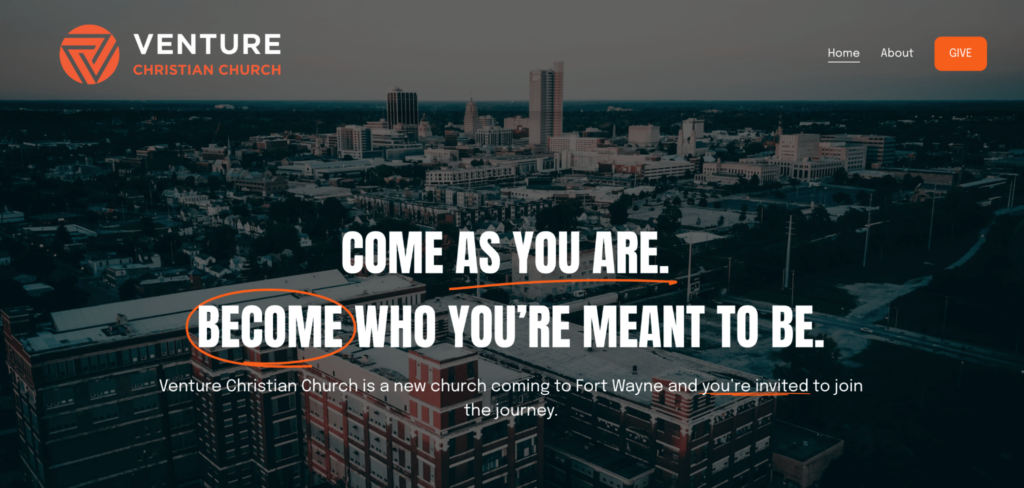
Kelley is planting a church in Fort Wayne, Indiana, with Sunday services set to launch in October 2026. The city is his hometown, a place he once said he'd never return to.

What's taken shape since then is a prelaunch strategy built less around momentum and more around depth. Brandon and his team have chosen a long runway and a discipleship-making launch strategy. Brandon himself has set a personal goal of having 200 in-person conversations with spiritually curious people before launch day.

On the Road Back to Fort Wayne (00:31)
Kelley and his wife spent 2024 and 2025 in what he calls a "season of perspective," a stretch where neither of them carried a pastoral title and both were working through what it meant to have their identity untethered from their roles. He'd been coaching and consulting full-time. She'd stepped back from being a pastor's wife. The question of what came next was live and open. Kelley started updating his resume, scanning job boards, mentally mapping out a move to Florida or the Pacific Northwest. Then, on a Friday morning, the clarity came. God was calling them to plant.
On Building a Discipleship-First Launch Team (11:24)
From the beginning, Kelley has been meeting weekly with his launch team in his home, and the goal isn't to rehearse Sunday morning. He's direct about the dynamic he wants to avoid: the unspoken arrangement where a launch team member invites a friend, drops them at the door, and expects the pastor to handle the rest. "All right, preacher, I got them here. You lead them to Jesus." His answer to that is a year-long investment in equipping, giving people tools and training to walk alongside others in faith, before the church ever goes public.
On 200 Coffees by Launch Day (14:00)
Starting in March, Kelley set a target for himself: 200 in-person conversations with people who have already identified as spiritually curious, all before the October launch. The pipeline runs through social media ads that generate coffee meetings, which funnel into Discovery Bible Studies, which his launch team members will eventually help lead.
He traces the whole strategy back to what he observed in plateauing churches during his coaching years:
When congregations stop growing, it almost always connects back to a loss of evangelistic momentum, and that usually starts at the top.

On the Weekly Reality of Church Planting (20:12)
There's no fixed shape to Kelley's week. Fundraising, launch team prep, speaking engagements at partner churches, message development, and his personal goal of meeting five new people every week all compete for the same hours.
The fundraising load, in particular, caught him off guard. The administrative work of tracking contacts, arranging meetings, and following up is relentless. He says a virtual assistant from day one would have been worth it. His current tech stack includes
- Planning Center for church management
- Text in Church for communication and automations
- Squarespace for the website
- Church Funnels for streamlining the pipeline from ad to coffee meeting to follow-up
On AI: Useful Tool, Genuine Risk (29:12)
Kelley uses AI in limited ways, feeding sermon content in for small group discussion questions and light editing help. But he's cautious, and he can articulate why. The risk he sees isn't laziness. It's the gradual outsourcing of pastoral thinking, the reflection and discernment that ministry requires. He’s seen some pretty brutal AI use cases: chatbots for congregant care, AI discipleship pathways, AI avatars of Jesus.
Kelley's frame for evaluating any of it is simple. Are there real people on the other side? If yes, the stakes are too high to shortcut the human presence.
On Job Displacement and What's Coming (36:38)
Near the close of the conversation, Kelley surfaces what may be the least-discussed pastoral challenge on the horizon. As AI-driven job displacement accelerates, churches are going to fill with people whose sense of worth has been dismantled by forces they didn't see coming.
Kelley puts the discipleship task plainly: walking people through a theological framework for identity that has nothing to do with their ability to produce is going to be demanding, sustained pastoral work.
For pastors who haven't yet wrestled with that question personally, the congregation is going to get there first.
- Follow along with Venture Christian Church.
- Connect with Brandon on Instagram and LinkedIn.
Ready to lead with more than just momentum?
If Brandon’s approach to discipleship-first leadership resonated with you, don’t navigate the complexities of ministry alone. Join The Lead Pastor community to get regular insights, curated tools, and expert resources designed to help you cultivate a thriving, impactful church.
Membership is 100% free. Join a network of leaders committed to leading better and pastoring deeper.

