
Key Takeaways
No Scarcity in the Kingdom: Where it's worked well from our perspective has been when there has been this generative mindset -- there's enough for everyone. It's a God of abundance.
Look Beyond Than Financial Support: What does it look like to introduce that young couple with a calling to someone in your network, or point them to an open door?
Whose Kingdom Is Being Built: You're not building the kingdom of the pastor or the kingdom of the church. That results in control and battling for credit. We are building God's Kingdom, it doesn't really matter WHERE it happens, or whose name is on it.
Trust God's Hand: What does it look like for us to be so at peace with God that anything can be put in the hand or anything can be taken out of the hand, and we are just fine?
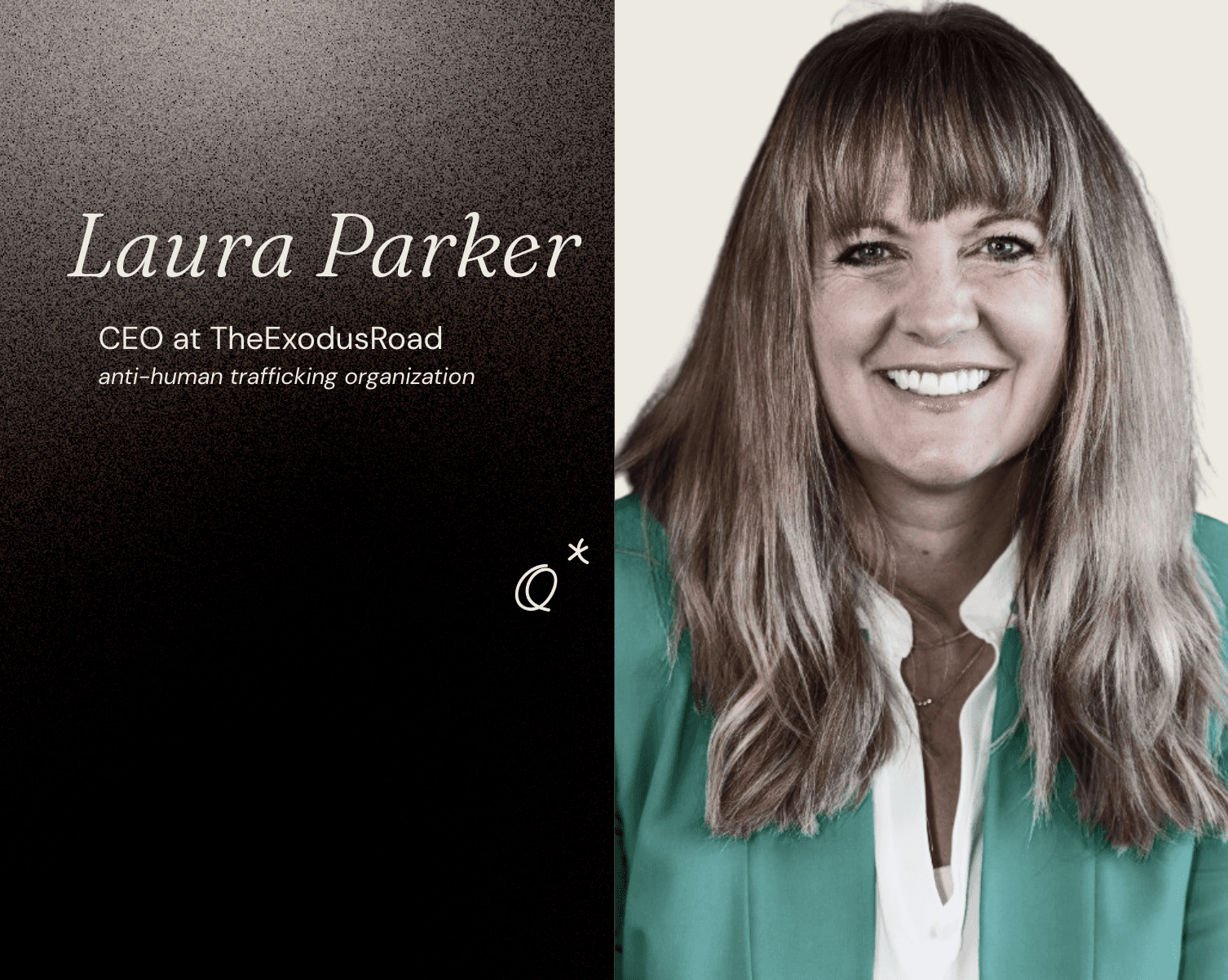
Laura Parker is co-founder of The Exodus Road, a global anti-human trafficking nonprofit operating across Southeast Asia, Colombia, Brazil, and the United States.
Since its founding 15 years ago, the organization has served more than 2,500 survivors and helped free over 6,000 individuals from trafficking -- work that grew out of Laura's husband Matt being deputized as an undercover informant with the Thai Royal Police.
What makes Laura's story particularly relevant for lead pastors is where it started: inside a local church. Matt was a youth pastor. The church sent them out.
Now 15 years in, Laura has a clear-eyed view of what pastors do well -- and what gets in the way -- when it comes to supporting visionaries launching beyond the walls of their church. Her answer is less organizational than spiritual: it comes down to the posture of the open hand.
On How It All Started (5:11)
Laura Parker and her husband Matt moved to Thailand on a two-year contract to serve a family foundation running a children's home. Human trafficking wasn't on their radar. But while living in northern Thailand, they started hearing stories of young girls being lured from their villages with promises of city jobs, only to end up in brothels in southern Thailand. Matt was eventually asked to verify whether a minor was being sold in a red-light district in Bangkok. He went, and he came back having identified a 15-year-old girl. That single operation launched him into undercover work and became the founding act of The Exodus Road.
On the Cost of the Call (8:00)
Laura doesn't soften the weight of what they stepped into. "If I would have known what this journey ultimately has cost us, I am not that holy to have said yes." The decision came down by a creek one afternoon, iced coffees in hand, Matt describing what he'd seen in Bangkok. Laura looked up, saw their own children playing in the water, and heard a simple question from the Spirit: what if it were Kelty, Kate, or Ava? "That has been the motivating energy -- just one step, one right next thing." She frames the early yes as possible partly because they didn't yet know the full cost.
Have an account? Log In
On Church Support in the Early Days (10:22)
When their work began shifting toward anti-trafficking operations, Matt and Laura didn't make broad announcements to their sending church. Instead, they confided in three women from the missions committee who had been assigned as their prayer partners. Over Skype, they would share what they were seeing and how God was shifting their hearts. "We would all just sit there and cry at the realities for young women and teenagers in this part of the world." Those three women became what Laura calls their "undercover support group in the missions committee" -- and some still support The Exodus Road today.
On Choosing Not to Be Faith-Affiliated (12:08)
One of the most consequential decisions The Exodus Road made was choosing not to become a religiously affiliated organization. The reasoning was strategic: their primary early partner was law enforcement, and some government agencies were reluctant to work with faith-based groups. They also wanted to build a table wide enough for people of any faith background. That decision attracted some church partners and cost others. Laura describes the friction as a gift in hindsight. "It confirmed for us that we were actually walking in the right path for us and for the organization. And it naturally allowed people to not partner with us that it wouldn't have worked out anyway because our DNA was pretty different."
On Generosity vs. Scarcity (17:09)
Fifteen years of church partnerships have given Laura a sharp lens on what separates the fruitful ones from the difficult ones. The biggest differentiator: generosity mindset versus scarcity mindset. Scarcity shows up as hesitation to introduce donors, reluctance to promote outside causes, and quiet anxiety about resource competition. Generosity looks like believing there is enough for everyone and actively functioning as a bridge, connecting people and networks to organizations that match their calling. "That whole competition feels so detrimental to the kingdom of God," she says.
On What Made the Launch Succeed (22:18)
Looking back, Laura identifies two factors that were critical to a healthy launch. First, deep relational roots: because Matt had been the church's youth pastor, their support base wasn't a missions line item, it was a web of trust and history. One family whose kids Matt had led in youth group eventually contributed a board chair who served for ten years. Second, not being the church's sole financial project. The Exodus Road raised its own support alongside what the church provided, and that autonomy proved healthy. "It kind of forces the younger organization to figure some of their structure and systems out without just counting on the church or the pastor to do it for them."
On Friction as Clarifying Force (24:42)
Laura reflects that the most useful friction in their early years came from people who pushed back on decisions they were already committed to. In the beginning, she says, all criticism felt like an attack. But the pushback that stung most -- around their choice not to be religiously affiliated -- ultimately did the most work. It forced them to examine their convictions, stand behind their choices, and stop trying to be every thing to every church.
"Stay curious about friction and open -- it has something to teach you all the time."
More Articles
On the Open Hand (30:59)
The conversation ends where its whole arc has been pointing: the posture of the open hand. Laura and Josh both land on the same diagnosis -- that most breakdowns in pastor-to-visionary relationships come down to control, which comes down to trust.
What does it look like for us to be so at peace with God that anything can be put in the hand or anything can be taken out of the hand, and we are just fine?
Laura Parker, CEO, The Exodus Road
For pastors, she says, the question is simply: what kingdom are you building? If it is the kingdom of your church's name, control makes sense. If it is the kingdom of God, the open hand is the only posture that fits.
Don’t build your ministry in isolation.
True kingdom-building requires community, shared wisdom, and the right tools. When you join The Lead Pastor community, you connect with peer leaders navigating the exact same challenges you face every Sunday.
Become a member for free and unlock the strategies you need to launch visionaries, manage church systems, and lead with an open hand.