

Pastor, How Do You Deal With Spiritual Apathy?


Can you want something for someone more than they want it for themselves?
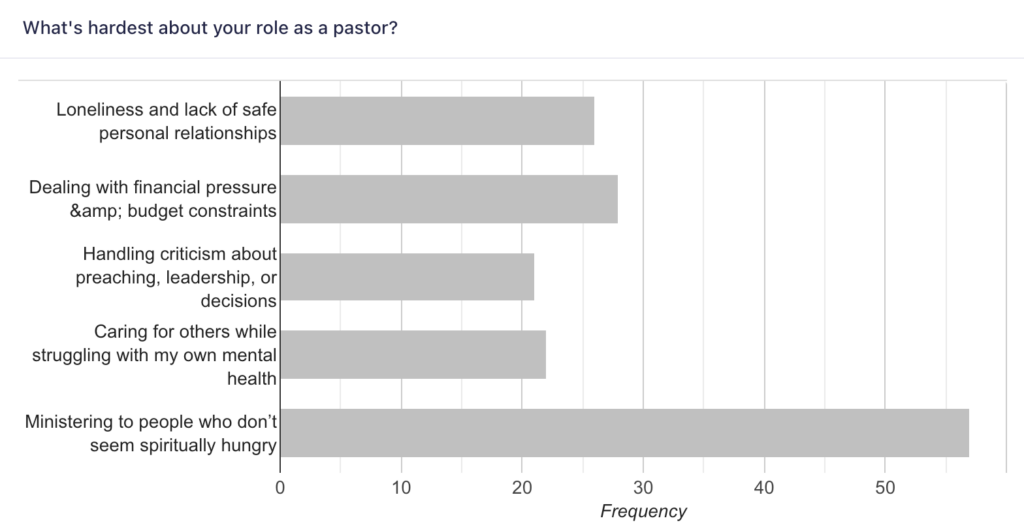
I recently ran a poll on TheLeadPastor.com asking lead pastors about their biggest challenge. The options included loneliness, financial pressure, handling criticism, and carrying others through personal pain while managing your own mental health.
Hunger Issue: Many pastors identify spiritual apathy as their greatest challenge, indicating a lack of engagement in congregations.
Cultural Context: Spiritual hunger may be diminished in cultures of abundance, leading to widespread apathy.
Relational Discipleship: Effective faithfulness requires investing in personal relationships rather than relying solely on programs.
Faithfulness Challenge: Maintaining faithfulness becomes difficult when congregations are comfortable and lack urgency in their spiritual needs.
What I'm Making of the Results
The top result was *ministering to people who don't seem spiritually hungry*, with 57 votes. The next closest was financial pressure at 28.
I took these results to a handful of TheLeadPastor.com readers and contributors to get their take, and after back-and-forth discussions, several major themes appeared.


1. Cultural emphasis on quick fixes
Several pastors suggested that people often seek quick fixes for their problems rather than a deeper pursuit of faith. From this viewpoint, a genuine revival of spiritual desire would naturally resolve or improve many secondary organizational and personal challenges.
2. A decline in personal discipleship focus
One very experienced pastor said he believed the decline was tied to the gradual loss of the slow, costly, and deeply personal relational discipleship. He suggested that an over-reliance on structured programs or large events fails to cultivate true engagement.
3. Cultural emphasis on personal comfort
A common theme was that material abundance, comfort, and a culture of convenience naturally breed lethargy. When people feel completely full economically and experientially, they rarely feel a deeper sense of need... which produces a higher spiritual apathy.
4. Skewed results?
One pastor suggested that poll respondents were more likely to admit struggling with spiritual apathy than anything else. They suggested that leaders might choose spiritual apathy on a poll because it feels like a "safer," less vulnerable admission than exposing deep personal struggles like loneliness.
However, even if it feels easier to admit, facing widespread apathy in a community remains highly discouraging in practice.
Ultimately, we can't manufacture spiritual hunger.
We can cultivate conditions for it, nourish it when we find it, but we can't want it on behalf of someone who doesn't feel the need.
In a context of scarcity, spiritual hunger makes complete sense. Felt need is everywhere. But in a culture of abundance? People don't feel true need very often. Perhaps that includes God.
In this environment, what does faithfulness mean?
The poll can't resolve whether North American spiritual apathy is a discipleship problem, a cultural problem, something the church created, or something the church inherited.
Is the abundance we swim in crowding out the felt need that historically has driven people toward God?
The primary challenge for the pastor is to be faithful. This is easy theology when you are surrounded by enthusiasm, excitement, and growing numbers. This is difficult theology when facing apathy.
I don't think any of the pastors I spoke with have fully cracked it.
I know I haven't. But more than 30% of lead pastors point to spiritual apathy as their primary struggle. That's enough to ask the question together, honestly.
What do you think is driving it?

