

Why Evangelism Programs Fail



In part one of this two-part conversation, Josh Gordon sits down with pastor and author Frank Friedmann to pull apart one of the most common questions in church leadership: how do I get my church to evangelize more? Frank’s answer is that the question itself may be the problem. Drawing from 45 years of pastoral experience and a deep New Covenant theology, Frank argues that evangelism isn’t primarily a program or a method. It’s the natural overflow of believers who actually know what they have in Christ.
The conversation covers everything from the failure of guilt-based evangelism training to Ephesians 4, John MacArthur’s ordination advice, and a story about a deaf woman in a burrito shop.
What You’ll Learn
- Why evangelism programs often produce notch-on-the-belt-buckle results rather than genuine life change
- How expectations breed fear, and why that kills evangelism before it starts
- What Ephesians 4:11-16 actually says about the pastor’s role in church growth
- Why Sunday morning may not be the right venue for reaching the lost
- How to build a church culture where evangelism flows naturally from who people are
Key Takeaways
- Frank’s thesis: you can’t give what you don’t have. Evangelism starts with teaching believers what they already possess in Christ.
- He defines his ministry as evangelizing Christians, because once they understand what Jesus has done, you won’t be able to shut them up.
- The church is a kaleidoscope, a million different expressions of Jesus, and the world’s natural response to that is “wow, can I be one of you?”
- John MacArthur’s ordination charge: take care of the depth of your ministry and leave the breadth of it in God’s hands.
- Having the gift of evangelism doesn’t excuse everyone else, because the heart of God for the lost lives in every believer.
Chapters
- 00:00 — Introduction
- 03:14 — Evangelism & Church Finances
- 05:30 — Taking God Seriously, Not Ourselves
- 08:15 — Why We Can’t Disappoint God
- 09:24 — The Mayonnaise Jar Theory
- 10:41 — What Are We Inviting People Into?
- 15:12 — Frank’s Approach to Evangelism
- 16:31 — Ephesians 4 and the Body of Christ
- 20:05 — What’s Wrong with Evangelism Training
- 25:17 — Living Out Ephesians 4
- 29:57 — How the Early Church Grew
- 30:28 — The Burrito Box Boy Story
- 32:50 — Spiritual Gifts and Evangelism
- 34:22 — Closing Thoughts
Meet Our Guest
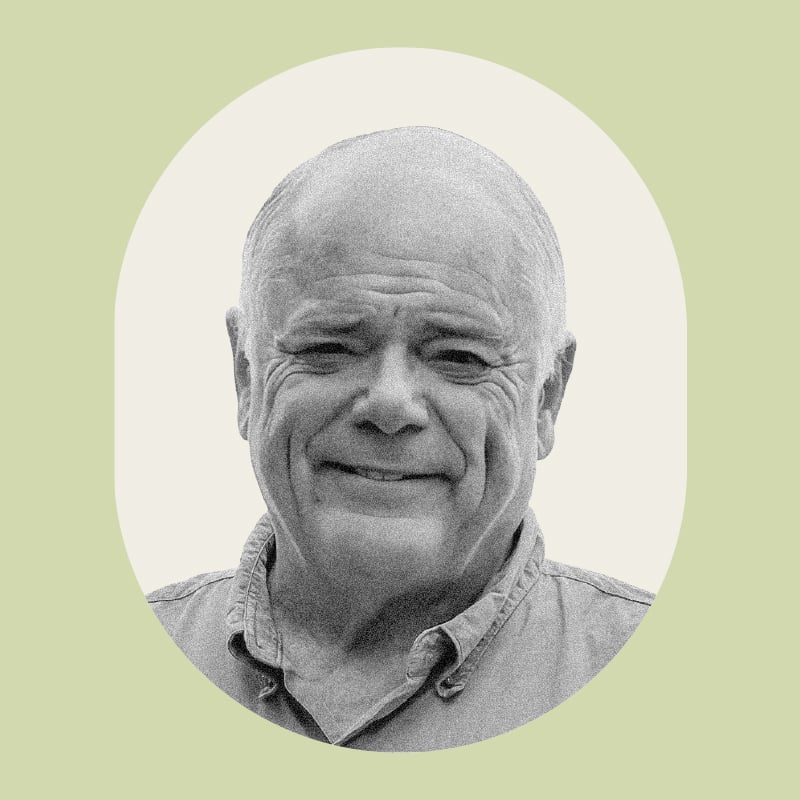
Frank Friedmann is pastor emeritus at Grace Life Fellowship in Baton Rouge, a bestselling author, and the founder of Our Resolute Hope, an online teaching ministry. He has served in pastoral ministry for over 45 years, leading three churches to significant growth through a deep commitment to New Covenant theology and the grace of God. His books are available in five languages, and his newest release, A Frank Talk About Spiritual Warfare, is available now. Frank lives and ministers out of the conviction that the pastor’s job is not to build the church but to trust the One who said he would.
Resources from this episode:
- Join The Lead Pastor Community
- Subscribe to the newsletter to get our latest articles and podcasts
- Connect with Frank on Facebook and Instagram
- Our Resolute Hope
- A Frank Talk About Spiritual Warfare
Related articles and podcasts:
Joshua Gordon: Welcome to TheLeadPastor.com podcast. My name is Joshua Gordon. I'm the host of the TheLeadPastor.com podcast, also the editor at the TheLeadPastor.com. And you know, we haven't recorded a whole lot of episodes yet, but I know that this one is gonna be one of the best. Frank Friedmann, besides being a friend of mine and a mentor of mine, is just a wonderful guy.
He has been I think he's been pastoring for longer than I've been alive, for, like, 45-plus years, which is wild. And one of the really cool things about Frank is that every church he's led us, there's three, his churches have grown exponentially, and he also has had very consistent financial health through all of his church experiences as well.
So obviously, lots of great wisdom, lots of great insight. And I actually ask him some of the practical how questions, and he talks about evangelism, evangelism being one of the keys to growing your church. When I ask him about the dirty deets and the how do you make people evangelize, you might be a little bit surprised at his responses.
So I'm super pumped. I think you're getting a lot out of this episode, and I cannot recommend, I cannot commend Frank Friedmann enough to you. But enough about me. Let's dive in.
Welcome, folks. My name is Joshua Gordon. I'm the community editor at the TheLeadPastor.com, and I am honestly honored to be sitting with my friend, I would say mentor. There's not a lot of people who have impacted my life and my pastoral heart the same way that you have, Frank Friedmann. And so I'm so thankful that you're spending time with me here. I'm excited to talk through a couple big issues and kinda get your thoughts on that.
Before we do, though, can you give a quick synopsis of your pastoral experience and kinda where you're at now with all that, and then we'll dive right in.
Frank Friedmann: Okay, Josh. Great. Well, thank you. It's great to see you again. It's been a while. Yeah, I go by Pastor Frank. That's all. I had a young person in my last church that called me Faster Prank for obvious reasons. I think that's a good one. Very simply, I've been a pastor in three different churches. One is an associate pastor in California, and then we took sort of a missionary role and took a baby, a church of thirteen adults, and that was a really interesting experience.
The Lord was gracious, grew it up, and it was time to go. And then we took a church that was well-established, and that was a whole different ballgame. So we've had an opportunity, Josh, to be in a lot of different circumstances, in a staff role, a missionary role, and then as a come in and see if we can steer this thing in a different direction role.
And so the Holy Spirit was very faithful to teach us a lot, and one of my favorite things to say is I think in my elderly years, I might have done that differently.
Joshua Gordon: As just a general comment to whoever's watching as well, one of the things I think that as I've loved about you, Frank, is what you call the eleventh commandment, "Thou shalt not take yourself too seriously."
And that's, I think, such... I love that. But I think it's kind of in a lot of ways defined what it's been like to get to know you and get to be known by you as well, where I feel like nothing really phases you And I'm not afraid of asking dumb questions or, which is great 'cause I, I'm not the smartest knife in the drawer, so you get the point.
Frank Friedmann: Yeah. That was a dumb analogy. No.
Joshua Gordon: It was. No, no, I, yeah.
Frank Friedmann: Don't take yourself too seriously, Josh.
Joshua Gordon: No, absolutely not. So we've got a few different things I wanted to kind of just pitches, to pitch over the plate and just to kind of get your thoughts on things. And so I know from conversations with the readers of The Lead Pastor, there are a few kind of issues that are just constant, and I'm interested to hear from you on two of them today.
So one is I'd love you, like, church growth, maybe number one and part A is, like, church growth and, like, evangelism. We can talk about evangelism training and the role that that has played and the perspective maybe or how that's changed, your perspective has changed over the years. And then I guess church growth, the second part would be, like, in giving and in tithing and, like, how to facilitate that kind of thing, the healthy finances in a church as well.
So I'm hoping we could, we kind of go wherever you wanna take us in those two streams.
Frank Friedmann: That's dangerous.
Joshua Gordon: You know, I know, but it's, it's, but it's good. It's like, so we start with evangelism. As, I think I was in my teens, and our youth group did an evangelism training curriculum, I think it came out of Willow Creek, called Becoming a Contagious Christian, and there were some very practical things in there.
And I attempted to use it, and to, I mean, I was gonna say to not much success in the sense that I don't think anybody that I talked to became a believer right there with me. I definitely got opened up to some good ribbing from my friends in school, and I feel like that maybe kind of turned me off a little bit from evangelism training.
A lot of the times, I felt like I was being pushed to try to convert or try to win somebody to something that I was being a part of. And I, I just always felt like there's a disconnect f- there. So maybe talk a little bit of evangelism training. Talk about maybe, like, what's worked, what hasn't worked, and what you actually advise pastors and church leaders to do today to have a healthy culture of evangelism in their church.
Frank Friedmann: Josh, that is a great question, and maybe before we start to unpack it, I want to just share a thought about that concept of not taking yourself too seriously. I don't want people to hear us saying we're sloppy. That's not it at all. But what happened to me is when I had a life change, came to Christ, then went into seminary, I became responsibility beyond reality.
I was teaching for God, and you don't let God down, and you do your best for God, and I became obsessive compulsive with God. I put huge demands on myself. And when I realized the grace of God and the realization that He had built His church just fine for 2,000 years before I ever showed up, that He was gonna overcome any mistakes I made because He's bigger than all my mistakes Then he's gonna do just fine long after I'm gone.
That's when that concept, Frank, don't take yourself so seriously. Live from Him, live well, but let's put an end to the expectations, because expectations breed fear and bondage, and when they don't get met, it breeds guilt and shame. So that's where it comes from. I thought our listeners should understand that.
Joshua Gordon: It feels like a deep rabbit hole. I don't know if you're the originator of this quote, but, "If it's a fat rabbit, it's, like, worth it."
Frank Friedmann: Stole it. Yeah, yeah. I stole it from someone. Yeah. But I use it all the time, so people think it's mine.
Joshua Gordon: I'll find out who originally said it, and I'll put it in the show notes.
Frank Friedmann: I heard it from Major Ian Thomas.
Joshua Gordon: Major Ian Thomas. Perfect. So the idea of get rid of expectation, that is something that a younger me, the Josh who was in the middle of that evangelism training course, it would've shocked me because there was this, I think largely unspoken, but there was probably still spoken to some degree is like, if you're a Christian, it's expected that you should be evangelizing and you should be bringing other people to Jesus.
And so yeah, at risk of running down a deep rabbit hole, can you maybe just address that specific idea and why you actually now flip the opposite was like get rid of expectation?
Frank Friedmann: Well, first of all, Josh, we can never disappoint God because He knows all things. If we disappointed Him, that means He had expectations that we didn't meet.
So one of the glorious things is to realize I can never disappoint God. We can grieve Him when we make bad choices. It brings Him sorrow. And we got that great verse in 3 John, you know, "I have no greater joy than to know that my children walk in truth." Well, we got that from Him, of course, but the flip side, "I have no greater sorrow than when they walk in lies and bondage."
So one of the great bondages is that whole idea of expectations. It puts us onto a performance track, which then brings in fear of failure, which then makes us wanna hide and not try because you can't fail if you don't try. Then if you do try and fail, there's the guilt and the shame, so it's a no-win. So we need to get rid of that.
I think that's the starting place for evangelism.
Joshua Gordon: When I was in my late teens, early 20s, I developed this... It was like a kind of a gag joke that I would do, but I, I would joke about the mayonnaise jar theory, which would be, you know, I'd try to open up the mayonnaise lid, and it would be really tight, and so I wouldn't try as hard as I could to open it because if I tried as hard as I could to open it, I couldn't open it.
That meant I was a weak, weak man. And so I'd never actually try my hardest to open the, the tight lids. Ah. That's where the mayonnaise jar kind of like- That's a great illustration ... you know, great illustration came through.
Frank Friedmann: You don't wanna be seen as a wimp.
Joshua Gordon: No, exactly. And so that's when I was like, okay, well maybe that's why I struggled with evangelism, 'cause I'm like, what am I inviting people into?
I mean, am I inviting people into a system where you better shape up or you're shipped out? Or like... So yeah, that's an interesting... I like that, 'cause it, it's like reframing like an underlying foundational assumption that's at the base of so much of our desire to see people evangelize. My question is to, is like, okay, so what's next?
Like, if we take that puzzle piece out, what's left, you know?
Frank Friedmann: You made a huge point, Josh. What are we inviting people into? I'm actually putting together, in fact you, I think, saw this. I've been taking a conference around for 30 years. I'm finally putting it into print, and we're actually gonna produce it on video.
What is Christianity? I start that conference by asking people in attendance this: Jesus promised us five things. He said, "Come that your joy might be made full." So not just a little bit of joy, the fullness of joy. He said, "My peace I leave you. Not as the world gives." It's a peace that surpasses understanding, boggles the mind.
We can be at peace when the world is going to hell in a hand basket. Wow. He said, "I've come that you might have life and have it abundantly." He said, "Are you tired and weary?" And that's what I love about that one. If you can't pull it off Come to me. I will give you rest. And the amazing thing is, the construction in the Greek has been poorly translated.
It's really, "I will rest you."
Joshua Gordon: Mm.
Frank Friedmann: It's very much like Psalm twenty-three, "I will make you lie down beside those still waters." So it's a beautiful concept, because ever since the Garden of Eden, we went from receivers from God to performers for God. So we're perform, perform, perform. And that's part of what this whole evangelism thing is about in churches.
We expect success. We expect numbers. So there's pressure on the pastor to train the people to get the numbers, and then there's pressure on the people to go do the evangelism to get the numbers. And in our ministry, Josh, I didn't care about numbers. That's not the goal. It's required of a steward, Paul said in Corinthians, to be found faithful.
Faithfulness is the measure. Well, then you gotta start asking, faithfulness to what? So the fifth thing he promised, and this is huge, you'll come to know the truth, and the truth will set you free. Free from what? Free from your past, free from fear of the future, free from your sin, free from guilt, free from shame.
How about this one, Josh? Free from performing for other people. How about free from performing for God?
Joshua Gordon: Wow.
Frank Friedmann: And I think the ultimate freedom, freedom from yourself.
Joshua Gordon: Yeah.
Frank Friedmann: Because ever since the Garden of Eden, we've all lived under a lie that we shall be as God, and we're our own worst enemy. So you put those five things together, joy, rest, peace, freedom, abundant life.
And then I ask the people, "Take a good look at the church. How many do you see people that have even two of those things as an abiding presence in their life?" And the people go, "I don't know, many." I say, "Okay, how many you know have all five?" And many people will look and say, "I don't know anybody." And then I meddle, 'cause you always gotta meddle.
How many do you have?
Joshua Gordon: Start messing around. '
Frank Friedmann: Cause then I say, "Well, we got a problem because Jesus promised those things." So we only got two options. He's, either He's the biggest liar that ever hit the planet or we have missed the gospel. And you think about it, Josh, if we've missed the gospel, if we're not experiencing joy, rest, peace, freedom, abundant life, what are we experiencing?
Anxiety, unrest, fear, guilt, shame, demand, performance upon ourself. And then we look at the world and go, "Wanna join us?" Mm, I don't think so. It's hard enough out here without all that.
Joshua Gordon: Yeah, no kidding.
Frank Friedmann: So that's why we had to resort to evangelism training, because it's not working, and we gotta get this straightened out in our own lives before we ever try to go tell others.
And so it's just what happened, I was gonna share with you, is this, you know, every church we've gone to, they've grown. And so this pastor, of course, true to form, we gotta grow the church, sits me down, calls me out, goes to lunch and says, "What's your method of evangelism?" And I said, "Well, that's so exciting, 'cause I don't have one."
He was like, "Well, then how did the church grow?" I said, "You got a few hours?" And now what's happened, Josh, is I am discipling the elders and pastors of that church. And what we're really doing is teaching them what Christianity is and who they are, because the thesis is if a believer comes to understand all that God has done for them, you won't be able to shut 'em up.
Evangelism will be a natural outflow of who they are And people, like Peter said, they're gonna ask you, "What have you got that I don't have?"
Joshua Gordon: Hmm.
Frank Friedmann: And then you can tell them. But if we're living with guilt and shame and fear, nobody's gonna ask us w- what we have. But if they see something different... And the key is when you go back to really understanding the Bible, Josh, and this is just huge, we're made body, soul, and spirit.
We know from 1 Corinthians 6, the Holy Spirit, as a believer, has placed himself in union with our spirit. John 6, Jesus said, "If you, you look at my life, you know how I did it? I lived from the Father."
Joshua Gordon: Yeah.
Frank Friedmann: "And now in the New Covenant, you're gonna live from Me." So if we put that together, the Holy Spirit is in union with Josh Gordon, and that spirit is gonna produce his zoe life, life as God lives it, in Josh's bios life, through his soul, through his body, and Josh becomes incredibly significant because he has become the Josh expression of the living Lord Jesus Christ.
Which means you get to be you, because He wanted one of you. And He expresses his life through my personality and my body, which is very different from yours, but it's the same expression. And so evangelism is really, let's just let the church be who they were created to be, which is a million expressions of Jesus in a panoramic way.
Joshua Gordon: Yeah.
Frank Friedmann: And I define the church as a kaleidoscope. And, you know, when you look at a kaleidoscope, what do you do? You go, "Ooh, wow," and it's so good you can't keep it to yourself. "Come here, kids. You gotta see this, kids."
Joshua Gordon: Yeah, yeah, yeah, yeah. Yep.
Frank Friedmann: And I think if we would... Evangelism is the life of Jesus lived in and through us, and the world looks at us and goes, "Wow, ooh, aah."
And then they go, "Can I be one of you?" Come on, baby. Yeah, yeah. So that's, that's my method of evangelism. The bottom line, I do it with a rule, universal law, you can't give what you don't have.
Joshua Gordon: Yes, 100%.
Frank Friedmann: And so evangelism really starts with teaching Christians. I define my ministry as evangelizing Christians.
Once we get them turned on, boy, you won't be able to shut them up.
Joshua Gordon: Here's the thing, Frank, is that this is very inconvenient because what I want is to be given a, a list, do these things, have your people do these things. You know, I'm kind of tongue in cheek a little bit, but at the same time, it's like I feel a burden for the people that I'm pastoring and shepherding, and so I want to take care of them and, like, love them and all that stuff, and if I'm seeing things like, okay, I'm not seeing evangelism happen, I want nothing more than to solve the problem, and if I can throw a process at it or a system at it...
Even as I'm saying it, that's actually a lot easier than wading into their lives and saying, "Okay, what do you actually have?"
Frank Friedmann: It's funny when you said, "This is really troubling." I don't remember the exact statement you made.
Joshua Gordon: I might have said inconvenient. I don't know. But like-
Frank Friedmann: Yeah, inconvenient for you.
Yeah. That was it, inconvenient. I was gonna ask you, are you teaching evangelism training? Right. Yeah. Oh. Because this is very inconvenient. But let's just look at history In the old days, it was the Romans Road. Then there was the four spiritual laws brought about by Bill Bright, Campus Crusade. Evangelism Explosion by James Kennedy.
The great two questions: Where are you going when you die? And if you die, can you say for certain that you're going to heaven? And then, on what grounds will God say you can come in? There's nothing wrong with those, Josh, but what we found, or at least what I found in my ministry, is that people use that as a tool and lost sight of the people.
Joshua Gordon: Yeah.
Frank Friedmann: They were going out to get notches on their belt buckle. "I led them to Christ." Well, no, maybe you did, maybe you didn't. Maybe you just backed them in the corner like a prosecuting attorney, and they said, "Uncle," to get you to leave their house. I don't mean to be blunt, but it should be lifestyle. And the lifestyle Jesus said is love.
You know, it's by love that the world will know you're my disciples. I heard of a church, Josh, listen to this, this'll blow your mind. Everybody loves football, right? Football season, it's the fall. So the pastor got the evangelism training people together, and they said, "Okay, here's what we're gonna do," and they taught all the people how to share the Romans Road or four spiritual laws or whatever.
And then he went to the neighborhoods that they were gonna canvas, and he put a football in certain homes. He would knock on the door, "Hey, we're having a program at church, and we're hiding these footballs, and if you would like to-- would you consider hiding it in your house? And if one of our people knocks on your door, then talks to you from our church, you please give them the football."
And say, "Oh, you're the person. You win."
Joshua Gordon: Yeah, yeah, yeah.
Frank Friedmann: And then they gave a prize to the people that kept the football, and then they gave a prize to the people that knocked on the door.
Joshua Gordon: Yeah.
Frank Friedmann: Where's Jesus in all that? I mean, all those people knew was that I was hiding the football, and I got to win a restaurant coupon.
And the people coming back said, "I won the restaurant coupon." It's-- Evangelism is about people. It's not about a program. Now, having said that, Josh, I learned the four spiritual laws. I learned the Romans Road. I learned the evangelism explosion, and guess what? I use them all the time, but they are an outflow of a relationship that's being built.
And when there's an opportunity for me to bridge that gap as a friend, as a lover to that person, and when they know I'm their friend and their loved one, they're gonna be more prone to hear than if I just spit out some formula.
Joshua Gordon: Yeah, yeah, yeah.
Frank Friedmann: So that's kind of a synopsis of where I've evolved, what I've seen happen.
And maybe just do it this simple phrase that Jesus said, "Freely you have received, freely give." But you're not gonna give what you don't know you have. And so it really starts with teaching the believer the awe, the wonder of what Jesus Christ has done. I'm not just a sinner going to heaven someday.
Jesus is not a travel agent. He's the living God, and He came to live in union with me, and He wants to know me. He wants to be known by me and He wants to be everything to me, and that makes me wanna know Him and love Him even more. And then that just flows through you naturally. That's kinda where I'm at.
Joshua Gordon: Okay, so not a bit of this conversation we've had has been too much. It's been wonderful. And so what I wanna do is I wanna punt the second part, we're gonna talk about the giving and the money stuff, to another conversation 'cause, like, I wanna take this conversation a little bit deeper. And so a couple things on my mind.
Number one, I think that there's probably a lot of pastors who are not used to hearing people talk like this about evangelism, and maybe they've left the conversation already. Maybe they've gone. But for pastors who are either thinking about their evangelism in their own church, or maybe they're second-guessing evangelism training or curriculum they were gonna get or an evangelism campaign they were gonna try to get their youth to, or pastors who are kinda like now looking at things from a slightly different perspective, are there, like, a series of two or three or four questions that you can ask them to ponder to kinda help them move a little further down the road?
Does that make sense, like, in developing their thinking or?
Frank Friedmann: Rather than a question, Josh, and I, and I hear what you're saying, I hear where you're going, how do we put feet to this?
Joshua Gordon: Yeah, yeah, yeah.
Frank Friedmann: I think the feet is actually the scripture, and it would be Ephesians four, eleven through sixteen. And maybe we just walk through it real quickly because this, I believe, is God's plan for the church I was never about the numbers.
Numbers did not concern me. It was the depth. That was handed to me at my ordination forty-five years ago by my mentor, John MacArthur. John said to me that night, "Frank, you take care of the depth of your ministry and leave the breadth of it in God's hands." That's really good. That is Ephesians four. So we'll just maybe walk through it in about two minutes, three minutes, if that's okay.
God gave pastors, teachers, so, I'm God's gift to you, Josh.
Joshua Gordon: No. I'm clipping that, and I'm spreading it on social media everywhere.
Frank Friedmann: Well, I tease people. I always wanted to be God's gift, and now I got a biblical basis for it. Hallelujah. Especially gifted men by the Holy Spirit. Why? To equip the saints for the work of the ministry.
My job was not so much to the lost, it was to the church. That's why we didn't do altar calls on Sunday morning. I did them when the Spirit led me. We're gonna probably lose a bunch of pastors right now in that statement. But Sunday morning wasn't for the lost, it was for the church.
Joshua Gordon: Yeah.
Frank Friedmann: That was for us.
That was the time of equipping, where God sets aside somebody, their main role is to study, to grow deep in Christ, and give out of the abundance that God is teaching them. Now, we did do altar calls sometimes when the Holy Spirit said there's, you know, led us to. Why is that? So that the saints won't be tossed around by every strange wind of doctrine.
They're gonna know what they know. So therefore, but will be to a mature man. Well, what is a mature man? It says, "Knowing Him." Knowing Christ. So that what happens then is verse 16, and this is huge, "So that the whole body will grow up in all aspects unto the head." Now watch this, "Which then we live from." So it's not about living for God, it's about living from God.
"And then every joint," that's every individual believer, "supplying to the others what they're receiving from the Father, the body builds itself up in love." And so the goal was, in most churches, Josh, we've got this backwards. We've said, "Go invite people to church on Sunday morning, and we'll do our best to get them saved."
So then you're preaching salvation messages every week. The body isn't gonna grow up that way. And in fact, the Book of Hebrews makes some amazing statements, Josh. He says, "It's time to get off the milk." And do you know what he calls the milk? Doctrine, repentance, baptism. He says that's all milk. What's the meat?
The living Lord Jesus Christ. It's a really different philosophy. It's not go bring the unbelievers to church and we'll try to preach the gospel messages and get them saved. No, no, no. It's teach the believer, grow up the believer, help them understand who Jesus is to them, all that He's done for them. Now, church, go be unleashed into the world.
So the true biblical philosophy really is I'm a pastor to a congregation of pastors. I am a teacher to a congregation of teachers. I'm an evangelist to a congregation of evangelists, and that really is more the model. It just happened The church in Delaware went from thirteen people up to about four or five hundred people.
I came to Grace Life. It had been seventy people for fifteen years. It exploded. We doubled in six months, doubled again in six months, doubled again in a year. What happened? Well, they learned how to do the Romans Road, and even... No, no, no, that's not what happened. People got excited and had something to give.
Joshua Gordon: Yeah.
Frank Friedmann: Josh, maybe I could just share one story. You know, after I turned down my pro football contract, I had done it late in the year, so this, you know, mini camps were coming, and that's a whole 'nother story in itself, how foolish. But what happened is I couldn't get a summer job. So I'm a college graduate, and I had to get a part-time job as a box boy at a grocery store with all the fifteen- and sixteen-year-olds, and I got another part-time job making burritos.
So I was the burrito box boy boy.
You talk about humility. I mean, I'm supposed to be having microphones stuck in my camps, in my face, signing autographs at football camp. So I'm making burritos, and this guy comes back, and he says, "Frank, can you come and talk to this girl? She's deaf." Well, my undergrad was adaptive and therapeutic rehab, so I had learned some sign language.
So I go out there to see her. She's very frustrated 'cause she couldn't communicate. So I asked him, you know, "What do you want?" All that stuff. I couldn't do it today. And so she told me what she wanted, and I turned around to tell the guy what she ordered, and I turned back, and I said, "Are you a Christian?"
And she lit up. She says, "How did you know?" And I said, "The countenance, your face." In the midst of that frustration, there was joy, peace, rest. Her deafness didn't define her, and there was an abundant life. Yes, anxiety. Yes, frustration. Yes, conflict. She's living in a fallen world with a disease she was never designed to have, but bursting forth at the same time was the life.
Joshua Gordon: Yeah.
Frank Friedmann: That's what we're trying to talk about.
Joshua Gordon: Yeah, a hundred percent. Final question for you then. So when Paul talks about the different roles in the church, some are called to be, you know, apostles, teachers, and evangelists. So would you say then that there are some folks who just have a s- a special gifting or it just flows a little more naturally?
How do you, how do you parse that? How do you make sense of that?
Frank Friedmann: Great question. Yeah, I think there are people that have those gifts, but that doesn't excuse the rest of us. It would be like my wife has the gift of faith. She's amazing. Something will happen in our lives, as you know our story, and she's like, bam.
And I'm like, you know, I get to where I need to be. I'm like this, and then I'll get to back to her, and I'll say, "Baby, would you..." And she goes, "Oh, I'm already praying about it." And I look at her and I go, "I don't like people with the gift of faith." You know? It just... But that doesn't mean I'm not supposed to live by faith.
Joshua Gordon: Yeah.
Frank Friedmann: You know, I had church people telling me sometimes I don't have the gift of mercy. You have the life of the Lord Jesus inside you, buddy. That is, He is mercy personified. Yeah, yeah. So evangelism is the heart of every believer because His heart is for the lost. "I'm not willing that any should perish.
Jerusalem, I would have loved to gather you under, but you wouldn't come. I'm the servant of all. I c- I came to give my life for you." So evangelism is in us because it's the heart of God. But absolutely there are those people that have the gift, and we should not necessarily try to look at them and say that's our model.
Our model is to live the same way Jesus lived, which is to trust God and let Him live His life in and through you as you do.
Joshua Gordon: Oh, wonderful way to end the episode, man. Thank you so much. And l- looking forward to talking more, and we'll hit the giving budget stuff-
Frank Friedmann: Okay ... next time around. And we'll see if any pastors come back.
Joshua Gordon: We'll see. We'll see. I know I'll be here.
Frank Friedmann: We'll have fun, you and me.
Joshua Gordon: Yeah, yeah. Okay, actually, before we go, so tell folks if they're interested in hearing more about you, from you, I know ourresolutehope.com, you've got a podcast there. There's, I think you guys have a newsletter as well. Any other places that they should be reaching out or connecting or?
Frank Friedmann: Yeah, they can catch us on all podcast sites. We've got books that are available on Amazon, of course on our website. We try to address books to minister to all aspects of a believer's life. And so we got a new one coming out, by the way, in two weeks, shameless plug. It's called A Frank Talk About Spiritual Warfare.
Joshua Gordon: Excellent.
Frank Friedmann: It'll be out in about two weeks.
Joshua Gordon: Awesome, Frank. Well, listen, we're gonna talk soon, but thanks for this, man.
Frank Friedmann: All right, bless you. Look forward to it.