

10 Best Church Streaming Software Tools for 2026

Best Church Streaming Software Shortlist


Using the wrong church streaming software is downright aggravating:
- You pay for features that never get used... and don't have what you really need.
- Audio and video fall out of sync — again — and people start tuning out.
- The stream lags or buffers, especially for members watching from rural areas.
These problems show up when we rely on tools that weren’t built for churches—or that are simply too complex for our current team to manage.
Each of the streaming tools in this list is either designed for or well-suited to ministry environments like yours.
This list will help you pick something that just works—so your team stays sane, your viewers stay engaged, and you can focus on the message, not the machinery.
Why Trust Our Software Recommendations
Our team has been testing and reviewing software since 2012. As church leaders ourselves, we know how difficult—and important—it is to choose the right software.
For this guide, we evaluated tools using hands-on testing and independent research, scoring tools using our selection criteria.
Our reviews reflect our human editorial judgment, not a sales pitch.
Comparison Table: Live Streaming Software For Churches
| Tool | Best For | Trial Info | Price | ||
|---|---|---|---|---|---|
| 1 | Best for simulcasting to 30+ platforms at once | Free plan + free demo available | From $19/month | Website | |
| 2 | Best with branded mobile app streaming | Free demo available | Pricing upon request | Website | |
| 3 | Best for streaming with real-time giving tools | 30-day free trial available | From $72/month | Website | |
| 4 | best free streaming tool | Not available | Website | ||
| 5 | best for simple streaming needs | Not available | From $29.08/month | Website | |
| 6 | best for max impact on a tight budget | Free trial + free demo available | From $39/month (billed annually) | Website | |
| 7 | best for developing a custom streaming system | 60-day free trial | Website | ||
| 8 | best one-size-fits-all solution | 14-day free trial | From $99/month to $999/month | Website | |
| 9 | best for accommodating volunteers at different skill levels | 14-day free trial | From $29/month | Website | |
| 10 | best for offering live-rewind | Not available | Website |

Best Live Streaming Software For Churches
Virtually every church is working on improving their streaming – and for good reason. 83% of visitors who walk in your front door checked out your church and service online first. THESE tools will help you improve your church’s streaming.
Finding the right church streaming software can be surprisingly frustrating. You want to serve your congregation well online, but the tech side of things keeps getting in the way.
-
Volunteers get overwhelmed by clunky interfaces they don’t understand.
-
You’re constantly training new team members because the software isn’t intuitive.
-
The livestream randomly crashes mid-sermon, and no one knows how to fix it.
-
Audio and video fall out of sync — again — and people start tuning out.
-
The stream lags or buffers, especially for members watching from rural areas.
-
You’re paying for features you never use, but not getting what you really need.
-
Every new setup or update eats an entire Saturday just to get functional.
-
Your team feels burned out from babysitting glitchy equipment.
-
Viewers text in saying, “There’s no sound,” while you’re preaching.
-
You spend more time maintaining your stream than preparing your message.
These problems show up when we rely on tools that weren’t built for churches—or that are simply too complex for our current team to manage. You shouldn’t need a full-time tech director to make church online work.
That’s why I put together this roundup of church streaming software tools. Each one is either designed for or well-suited to ministry environments like yours. This list will help you pick something that just works—so your team stays sane, your viewers stay engaged, and you can focus on the message, not the machinery.

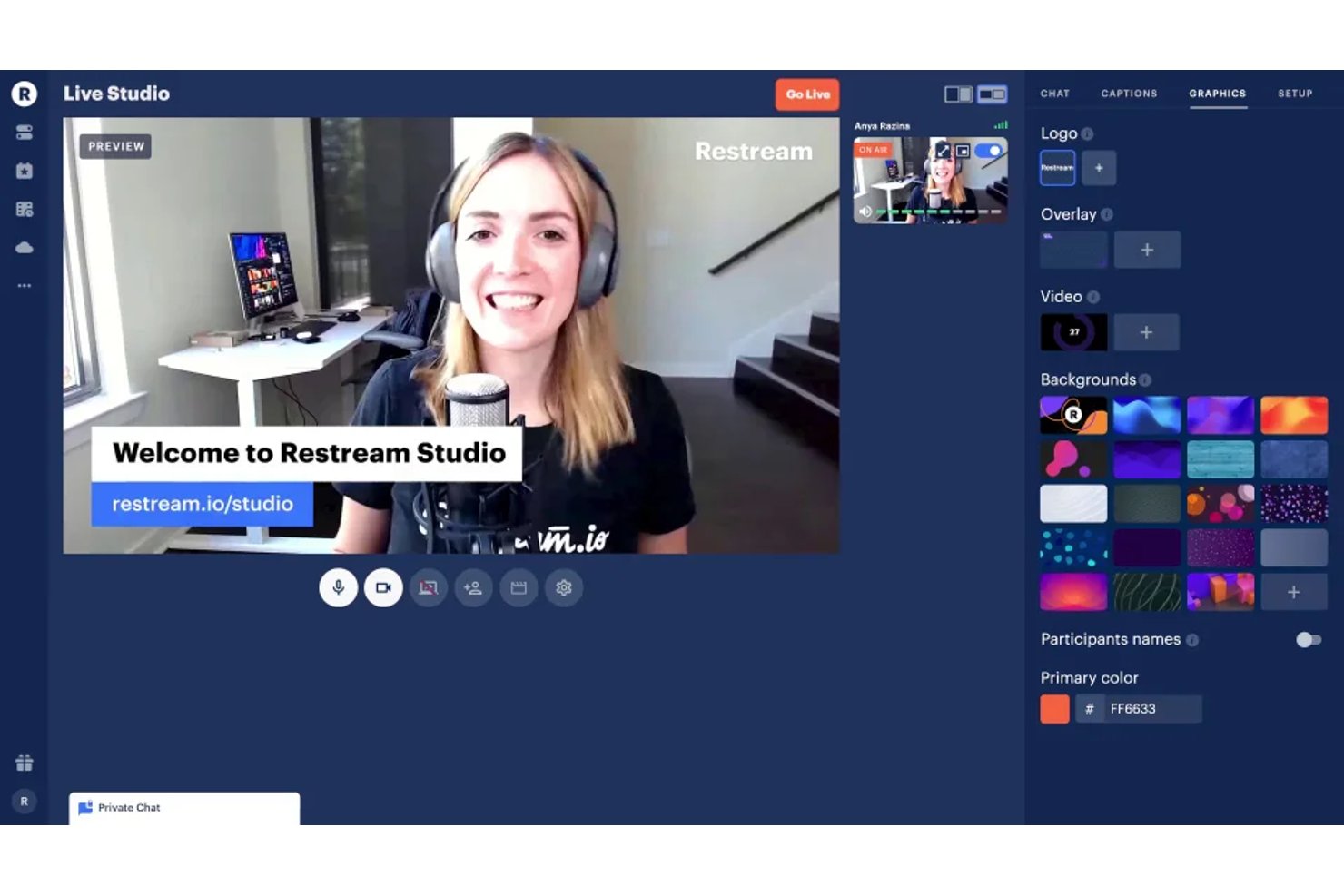
Restream is a general-purpose multistreaming platform that lets you broadcast live video to 30-plus destinations simultaneously, with tools for scene management, overlays, guest hosting, and cloud recording.
Who Is Restream Best For?
Restream is a strong fit for church plants and smaller congregations that want to reach audiences across multiple social platforms without investing in expensive broadcast infrastructure.
Why I Picked Restream
I picked Restream as one of the best because it lets a single volunteer push a live service to 30-plus platforms at once, including Facebook Groups, YouTube, and custom RTMP destinations, without splitting bandwidth or adding delay. I love that sub-2-second latency holds steady regardless of how many channels you add, which matters when your congregation is watching live across multiple platforms simultaneously. The browser-based Studio also supports up to 10 on-screen guests, so remote worship leaders or guest speakers can join without any extra software setup.
Restream Key Features
- Browser-based studio: Stream live services directly from a browser with no software downloads, making it accessible for volunteers with minimal technical experience.
- 4K video ingest: Accepts 4K-quality video input on every plan, so your production quality isn't limited by the platform.
- Upload and stream: Pre-recorded sermons can be scheduled and broadcast as live streams across connected platforms.
- Co-producer mode: Available on the Business plan, this lets a second team member manage the stream alongside the primary operator during a service.
Restream Integrations
Restream supports streaming to 30+ platforms, including YouTube and Facebook, plus custom RTMP destinations. It connects with OBS, vMix, ATEM, and Wirecast through RTMP; no church management, giving, or ProPresenter integrations are documented.
Pros and Cons
Pros:
- Keeps live delay under two seconds
- Browser studio suits rotating volunteer teams
- Simulcasts services across 30-plus destinations
Cons:
- Recordings lack searchable sermon organization
- No native giving or prayer tools

Best with branded mobile app streaming
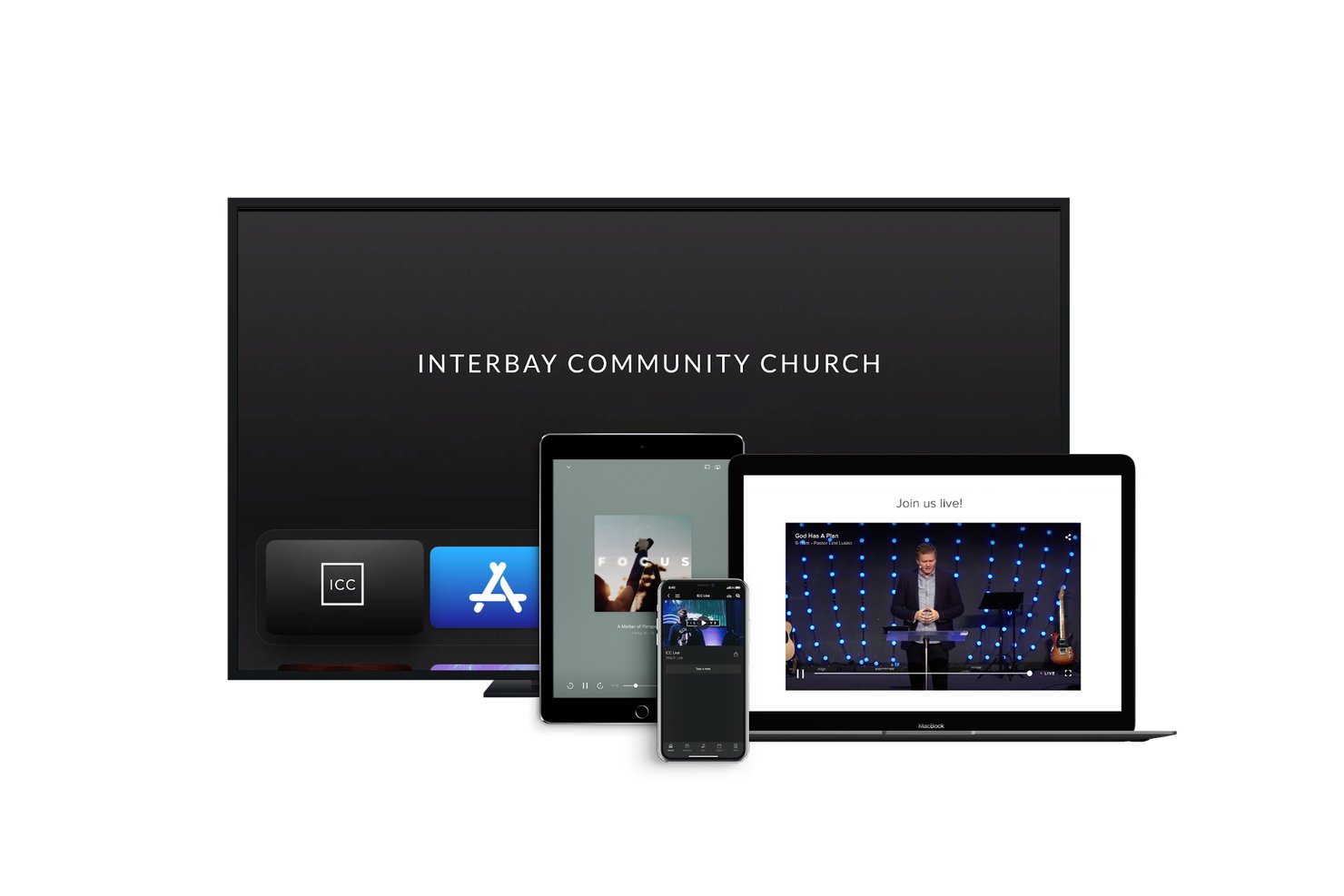
Subsplash is an all-in-one church engagement platform that combines live streaming, branded mobile and TV apps, on-demand sermon libraries, integrated giving, and congregation management tools.
Who Is Subsplash Best For?
Subsplash suits large and growing churches whose media and production teams want a single platform for streaming, branded apps, and giving rather than multiple disconnected tools.
Why I Picked Subsplash
Subsplash earns its spot on my shortlist because no other church streaming platform ships a fully white-labeled mobile app, native TV apps for Roku, Apple TV, and Fire TV, and live streaming all from one dashboard. I especially like Pulpit AI, which automatically turns each sermon into clips and social content the moment a stream ends. Live RS keeps broadcasts stable even when a production team is working from a hotspot on a remote or satellite campus.
Subsplash Key Features
- Automated podcast publishing: Each live or on-demand sermon can be instantly distributed as an audio podcast for members.
- Volunteer scheduling module: Coordinate, schedule, and track church production and AV volunteers right inside the platform.
- In-app Bible integration: Members can read, search, and follow along in Scripture directly within the church app during services.
- Child check-in system: Manage, register, and securely check in families for children’s ministry programs or special events.
Subsplash Integrations
Subsplash offers native integrations with Planning Center, Zapier, Breeze, MortarStone, and more, and provides an API for custom integrations.
Pros and Cons
Pros:
- Includes native Roku and Apple TV apps
- Pulpit AI creates sermon clips automatically
- Native branded mobile and TV app builder
Cons:
- Limited control over app design customization
- App setup requires considerable onboarding support

Tithe.ly
Best for streaming with real-time giving tools

Tithe.ly is a church management platform that includes features for live streaming, allowing churches to engage both in-person and online congregants. Its all-in-one design simplifies church operations by combining tools for streaming, communication, giving, and event management within a single cloud-based system.
One of the standout features of Tithe.ly is its integration with real-time chat and digital giving during streams. This helps churches foster greater engagement during live services while simplifying the process of collecting donations. Tithe.ly also connects with popular platforms like YouTube for wider reach and offers scheduling tools to make live streaming events easier to manage. Additionally, its people management and messaging tools help churches maintain strong connections with their communities before, during, and after services.
The platform also supports customizable apps and websites, providing churches with additional avenues to share content and communicate with their members throughout the week.


If your church is still new and wants to use free live stream software, the best place to find this is at Open Broadcast Software (OBS). Even though OBS is free, it compares well to other church streaming software out there. For example, it doesn't restrict the number of scenes you can seamlessly switch between using custom transitions.
The OBS project is sponsored by several tech giants, including Facebook and YouTube.


Describing the Wirecast video streaming service, the Director of Music Ministries at Fredericksburg United Methodist Church, Don Doss, says, "Yes, it’s true that the ‘BIG’ churches have all the cool equipment, but it’s also true that some smaller churches with smaller budgets can now produce quality video with the help of Telestream’s Wirecast software."
Wirecast comes with a free 30-day trial limited to two Rendezvous guests and does not permit ISO recording (an isolated recording of one camera in a multi-camera production). The service has two paid plans for both Mac and Windows: Wirecast Studio ($599) and Wirecast Pro ($799).


Visit Dacast.com, and you will realize that this live stream software promises every feature and functionality a live streaming church service needs. The service has 24/7 support, high-quality live streaming with top-tier CDNs, an all-device HTML5 player, VODs and live video integration, and customization that allows users to monetize their videos.
Another valuable Dacast feature is that it allows you to set up multiple bitrate streams using Wirecast video or vMix broadcasting software. These multiple bitrate streams ensure that your live streams can be watched on different devices and internet connections with varying bandwidths.
Dacast has a free 30-day trial. Paid plans start at $39 a month.

vMix is a software video switcher and mixer that also functions as a live streaming software that works on Windows. Some of the software's features include "LIVE mixing, switching, recording and LIVE streaming of SD, full HD and 4K video sources including cameras, video files, DVDs, images, [and] Powerpoint."
The vMix software is customizable, based on the user's production needs. All these features can be enjoyed on a free 60-day trial. Paid plans start with the Basic HD, which costs $60, and go all the way to the Pro plan that costs $1200. The software's developers say that "Each purchase does not expire and includes Free Version Updates for one year from the date of purchase.”

Boxcast's promise: "Whether your congregation has 1,000 members or 100, our features and plans have been crafted to meet the needs of both first-time broadcasters and seasoned streamers."
You can live stream on the Boxcast free trial for 14 days before deciding whether the live streaming software is for you. If you decide that it is, pricing plans start at $99/month and go all the way to $999/month.

"Whether you’re a Photoshop expert or technology isn’t your friend, we’ve got you covered. Create beautiful graphics with our built-in editor." This is how the developers of Propresenter market their software.
Among the several features, you’ll find on Propresenter is the ability to record your screen for further editing, switch video outputs, and capture and output audio. The service also presents live streaming tutorials on its website.
Propresenter has a free version, which is not designed to be used in front of an audience. The HoW (House of Worship) plan starts at $399 per year for a new account or $275 per year when renewing.


The developers of StreamShark say that they "understand the pressures involved when live streaming." Consequently, they have designed a workflow that aims to "ease the burden on the stream operator."
StreamShark's leading features include instant stream archiving, real-time statistics showing viewer engagement, and live DVR rewind that allows viewers who join late to rewind and see areas they have missed.
StreamShark's pricing starts at $199 per month, and the most expensive plan is $999 per month. The advantage of using this software is that you can cancel your plan anytime.
Visit WebsiteOpens new window
Other Options
- Churchstreaming.tv
For broadcasting to multiple locations
- TruthCasting
For simplicity and ease-of-use
- mimoLive
For working with Apple devices
- Proclaim
For broadcasting to social channels


How I Evaluate Church Streaming Software
I split my evaluation into three parts, with core functionality carrying most weight: send one service to multiple platforms, encode live video, and save recordings. Next, I consider standout features such as multisite controls and CCLI integration for campus broadcasts. Finally, I consider support, onboarding, volunteer usability, and total cost.
Core Functionality (Table Stakes For This List)
When I'm selecting tools for my list, I score each one on a scale from 0 (does not offer the functionality) to 5 (excels in this area) for each core functionality listed below. I then convert the total into a percentage to help assess each tool’s overall fit, with extra weight on any functionalities I’ve deemed essential.
- Multi-Platform Distribution (Essential): I look for one stream reaching YouTube, Facebook, and the church website without separate encoders or repeated setup.
- Live Video Production (Essential): I evaluate camera and switcher inputs, scene changes, graphics, and audio mixing during a live worship service.
- On-Demand Archiving: Recordings should save automatically, sort by service or date, and support later playback or website embedding.
- Service Scheduling: I check for recurring service schedules, reminders, and reusable settings across services, campuses, or event types.
- Website Video Player: I look for a responsive, embeddable player with church branding for hosting services directly on the church website.
- Giving And Engagement: I assess support for giving links, chat, bulletins, prayer requests, or other viewer interactions alongside the stream.
Once I have a list of tools that meet the criteria, I consider what sets each platform apart.
Differentiating Factors (What Sets Vendors Apart)
Here's how I compare and contrast different vendors:
Standout Features
I look for built-in CCLI and copyright tracking so volunteers aren't manually logging song usage after every service. Multisite stream management matters if your church runs multiple campuses—I check whether one dashboard can monitor and control all feeds at once. I also evaluate analytics dashboards for watch-time and drop-off data, since that tells me whether the online congregation is actually engaged or just clicking in and leaving.
Beyond Features
I check whether vendor support is available on weekends, since a streaming issue at 10 a.m. Sunday can't wait until Monday's ticket queue. Volunteer usability matters just as much—I look for preset templates and guided workflows that let a new volunteer run the board after one walkthrough. I also evaluate how each platform connects to existing church management tools like Planning Center or Church Community Builder, because syncing service schedules and giving data across systems saves hours of duplicate entry every week.
How to Choose Church Streaming Software
As you work through your own unique software selection process, keep the following points in mind:
- Ease of Use for Volunteers: Most churches rely on volunteers to manage tech during services. Choose software that’s simple to set up and operate, even for people without much technical experience. Look for tools with intuitive controls, clear tutorials, and responsive customer support to minimize training time.
- Stream Quality and Reliability: Few things are more frustrating for your congregation than buffering or poor audio. Select software that prioritizes high-quality video and audio streaming, even with limited internet speeds. Some tools even offer adaptive streaming that adjusts quality automatically based on bandwidth.
- Integration with Existing Tools: Your software should work seamlessly with the tools you’re already using, like cameras, microphones, or presentation software. Check for compatibility with your current setup to avoid costly upgrades or frustrating workarounds. For example, if you use ProPresenter, confirm that your streaming software supports it.
- Custom Features for Churches: Not all streaming tools are designed with churches in mind. Look for features like sermon overlays, scripture slides, or options to stream to multiple platforms like YouTube and Facebook at once. These extras can help you create a more engaging worship experience for online viewers.
- Affordability for Tight Budgets: Many small to mid-size churches operate on limited budgets. Compare pricing plans carefully and prioritize software that offers the features you need at a price you can afford. Some providers even offer special discounts or plans for churches.
By keeping these considerations front and center, you’ll be better equipped to choose the right church streaming software for your ministry’s needs.
Trends in Church Streaming Software
Church streaming software has advanced to better serve congregations and streamline operations for church leaders. Key trends include:
- Enhanced Multi-Platform Streaming: Tools now allow simultaneous broadcasting to platforms like YouTube and Facebook, expanding reach without extra effort.
- Integrated Donation Features: Some software includes in-stream giving options, simplifying tithing for online attendees and supporting church finances.
- Custom Branding Capabilities: The ability to add church logos and personalized elements helps maintain a consistent identity across digital services.
- Improved User Interfaces: Developers focus on intuitive designs, making it easier for volunteers to manage streams with minimal training.
- Advanced Analytics: Access to detailed viewer statistics enables churches to understand and engage their online audience more effectively.
- Mobile Compatibility: Support for mobile streaming ensures that services are accessible to members on various devices, enhancing flexibility.
- Security Enhancements: Stronger security measures protect streams from unauthorized access, ensuring a safe viewing experience for congregants.
These developments address the growing need for accessible, engaging, and secure online worship experiences, allowing church leaders to focus more on ministry and less on technical challenges.
What is Church Streaming Software?
Church streaming software is a tool that lets churches broadcast their services live online so people can worship from anywhere. It’s like setting up a digital window into your sanctuary, making it easy for members who are sick, traveling, or far away to stay connected. It usually includes features like live video, recording for later viewing, and tools to stream on platforms like YouTube or Facebook. With the right setup, it takes the stress out of going online and helps churches focus on ministry.
Features of Church Streaming Software
Using church streaming software can free you up to focus on ministry by simplifying operations. With the right tools, you’ll spend less time fixing technical problems, more time connecting with people, and be able to reach your congregation effectively online. To help you do that, here are the most important features to look for.
- Simple Setup: Choose software that’s easy to install and get running quickly so you can spend more time ministering and less time troubleshooting.
- User-Friendly Dashboard: A clear and straightforward dashboard makes managing streams less stressful for you and your volunteers.
- Multi-Platform Streaming: Software that lets you stream to YouTube, Facebook, or your website at the same time helps you reach more people without extra work.
- Reliable Streaming Quality: High-quality, stable streaming ensures your congregation can worship without interruptions, which reflects well on your ministry.
- Automated Scheduling: Look for tools that allow you to schedule streams in advance, so you don’t have to manage it live every time.
- Integration with Existing Tools: Software that works with your cameras, microphones, and presentation tools saves you time and money.
- Tech Support: Having access to quick support means you can solve problems fast and get back to focusing on people.
- Custom Branding: The ability to add your church’s logo or customize the stream helps reinforce your ministry’s identity while reaching others.
- Analytics and Insights: Software that tracks viewership stats shows you how well you’re connecting with your audience, helping you fine-tune your ministry approach.
- Affordable Pricing Plans: Finding a tool within your budget lets you reserve resources for other ministry priorities without compromising on quality.
With features like these, church streaming software can help you manage the technical side of ministry while giving you more time and energy to focus on people. Look for tools that fit your church’s needs, and you’ll be on your way to more meaningful ministry.
Benefits of Church Streaming Software
Church streaming software helps churches connect with their congregation, save time on tech, and expand their ministry’s reach. It’s a tool that makes online worship easier and more effective. Here are the top benefits it offers:
- Broader Audience Reach: Streaming makes it simple to share services with members who can’t attend in person, as well as attract new viewers online.
- Improved Engagement: Tools like live chat and interactive features help online attendees feel part of the service, creating a sense of community.
- Simplified Operations: With user-friendly dashboards and automation options, managing streams takes less time and reduces stress for volunteers and staff.
- Cost Efficiency: A good streaming solution is often more affordable than costly AV upgrades, making it a budget-friendly way to modernize your ministry.
- Increased Giving Opportunities: Integrated donation tools make it easier for online viewers to contribute, helping sustain your church financially.
Church streaming software is more than just a tech tool; it’s a way to serve your congregation better and grow your ministry without overloading your team. With the right system, you can focus on what matters most—caring for your people.
Costs & Pricing for Church Streaming Software
Church streaming software usually offers several plans to fit different needs and budgets, ranging from free options to premium solutions. These plans are designed to help churches of all sizes find the right features without overpaying for tools they don’t need. Below is a breakdown of the common plans available:
| Plan Type | Average Price | Common Features | Best For... |
|---|---|---|---|
| Free Plan | $0/month | Basic live streaming, single-platform streaming, limited support | Small churches just starting out with streaming |
| Basic Plan | $20-$50/month | Multi-platform streaming, recording, basic overlays, analytics | Churches needing more flexibility for online services |
| Standard Plan | $50-$100/month | Custom branding, multi-camera support, scheduling, detailed analytics | Mid-size churches expanding online reach |
| Premium Plan | $100-$300/month | Advanced features like adaptive streaming, integrations, priority support | Larger churches with dedicated streaming teams |
| Enterprise Plan | Custom Pricing | Full customization, unlimited viewers, advanced security | Mega-churches or organizations with complex needs |
Each plan is tailored to different levels of need, so it’s important to choose one that matches your church’s size and goals. Start small if you’re new to streaming, but consider advanced plans if your congregation relies heavily on online services.
Church Streaming Software Frequently Asked Questions
1. How can I ensure our streaming setup aligns with our worship style?
Church streaming software is flexible and can fit a variety of worship styles. Look for tools that offer customizable layouts, scripture overlays, and multi-camera support. These features allow you to match the flow and tone of your in-person services, creating a seamless experience for your congregation online.
2. Is it possible to stream to multiple locations within our church simultaneously?
Yes, many tools allow you to stream to different screens or rooms within your church, often referred to as simulcasting. This feature is especially useful for overflow spaces, multi-campus churches, or specialized groups like children’s ministries.
3. What kind of internet speed do we need for smooth streaming?
A stable internet connection with at least 5 Mbps upload speed is usually sufficient for basic HD streaming. If you plan to stream in 4K or use multi-platform features, you might need closer to 10-20 Mbps. Always test your connection during the time of day you plan to stream to ensure consistency.
4. Can church streaming software help us manage our video library?
Many tools offer video management features like automatic saving, categorization, and the ability to create on-demand content. This makes it easier to organize and share past sermons, Bible studies, or special events with your congregation.
5. Are there options to include closed captions or translations for non-English speakers?
Yes, some software includes automatic captioning or translation tools to make services accessible to a wider audience. This is helpful for churches with multilingual congregations or those reaching out to diverse communities.
These questions cover practical concerns that pastors might have when starting or upgrading their streaming capabilities, helping you make informed decisions about the best software for your church’s needs.