

Google Calendar Review: Pros, Cons, Features and Pricing
Google Calendar stands out for its user-friendly interface and seamless integration capabilities, making it an excellent choice for churches seeking efficient scheduling.

We review tools independently, and commissions help fund our testing. See our transparency policy, our methodology, or suggest a tool.
Google Calendar is a free church scheduling software for ministries that need to coordinate services, events, and room bookings across staff and volunteers. I'd consider it over Planning Center if your church doesn't need a full ministry management platform and instead needs shared calendars that your team can use right away.
Google Calendar Evaluation Summary
4.6/5
- $7.56/month
- 14-day free trial
Why Trust Our Software Recommendations
6,700+
Reviews
20
Industry experts
16+
Evaluation factors
14
Years
Our team has been testing and reviewing software since 2012. As church leaders ourselves, we know how difficult—and important—it is to choose the right software.
For this guide, we evaluated tools using hands-on testing and independent research, scoring tools using our selection criteria.
Our reviews reflect our human editorial judgment, not a sales pitch.
Google Calendar Overview
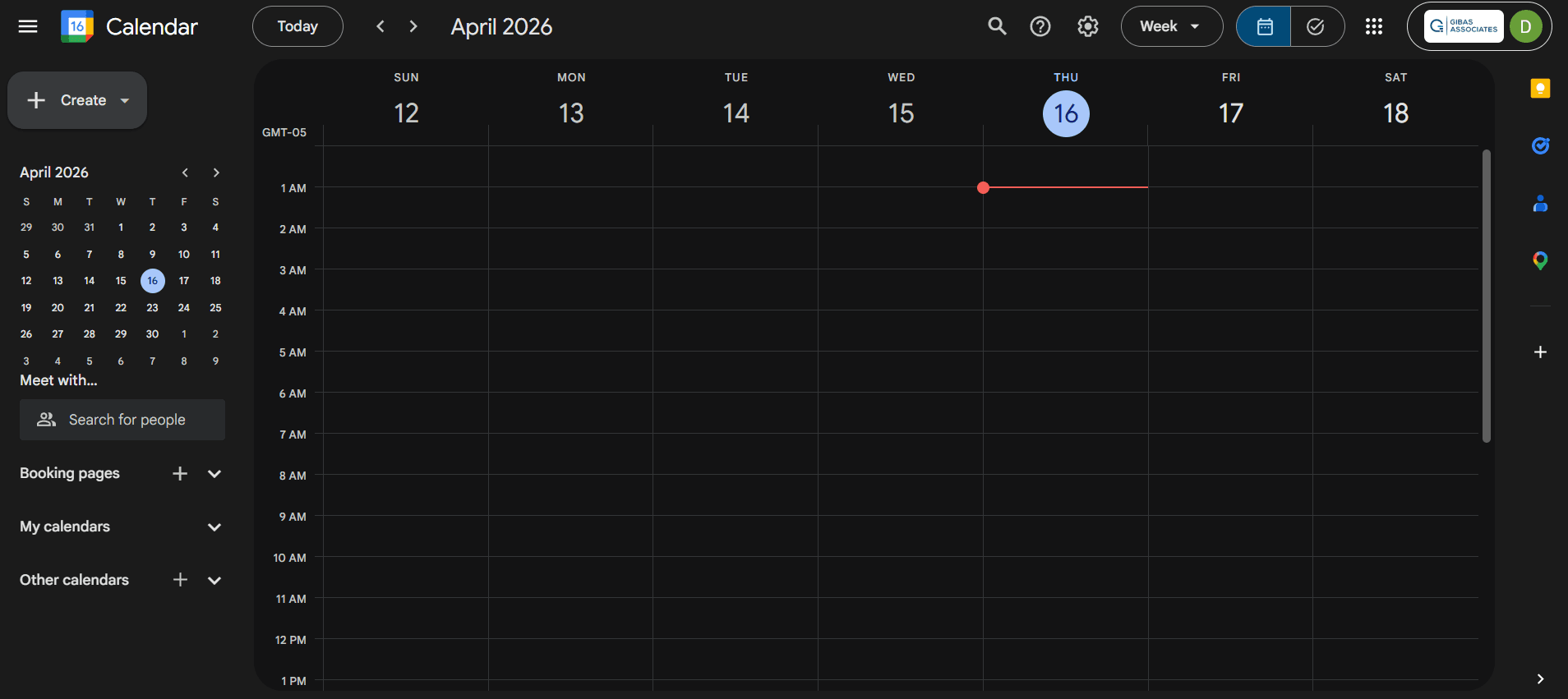
In my opinion, Google Calendar is a solid choice for church scheduling. Its intuitive interface and seamless integration with other Google services make it a great fit for tech-savvy teams. Compared to other church scheduling tools, it stands out in ease of use and cost-effectiveness. However, it may lack some advanced features specific to larger church organizations. It's best for smaller churches or those already using Google Workspace. If you're choosing a scheduling tool, consider Google Calendar for its simplicity and excellent value.
Pros
- It's easy to use, so your team can start scheduling right away.
- You can access it from any device, making it convenient for everyone.
- Its intuitive design helps you manage your church's events effortlessly.
Cons
- It may lack some specialized features for larger church organizations.
- Customization options are limited compared to other church-specific tools.
- There's no direct support for complex scheduling needs.
Is Google Calendar Right For Your Needs?
Who Would be a Good Fit for Google Calendar?
Google Calendar is a great fit for small church teams, volunteer coordinators, and administrative staff who need an easy-to-use scheduling tool. It's perfect for those already using Google Workspace, as it integrates seamlessly with other Google services. Beyond church use, it works just as well for personal use and small businesses that need a reliable calendar app without the overhead of complex scheduling apps. If your team values accessibility and simplicity, Google Calendar's intuitive design and device compatibility make it ideal for managing events and tasks. Its straightforward interface allows your team to quickly organize schedules without a steep learning curve.
- Small ChurchesGoogle Calendar offers user-friendly scheduling for smaller congregations with fewer events and simpler coordination needs.
- Volunteer CoordinatorsIts intuitive interface helps you manage volunteer schedules efficiently, keeping everyone informed and organized.
- Administrative StaffGoogle Calendar's easy access across devices allows your team to manage tasks and appointments on the go.
- Educational InstitutionsSchools and colleges can benefit from its scheduling features for organizing classes, meetings, and events.
- Non-Profit OrganizationsNon-profits with limited resources will appreciate Google Calendar's cost-effectiveness and ease of use.
- Remote TeamsDistributed teams can coordinate effectively with Google Calendar's real-time updates and accessibility from anywhere.
Who Would be a Bad Fit for Google Calendar?
Google Calendar may not be ideal for large churches or organizations with complex scheduling needs that require advanced features. If your team needs detailed reporting, resource management, or integration with specialized church management systems, you might find Google Calendar lacking. Its limited customization options and lack of church-specific functionality can be a drawback for teams needing tailored scheduling solutions.
- Large ChurchesIts lack of advanced scheduling features makes it unsuitable for managing multiple services or large events.
- Event PlannersGoogle Calendar doesn't provide the intricate tools needed for detailed event planning and resource allocation.
- Resource ManagersYou'll find its lack of resource management capabilities limiting if you need to coordinate facilities or equipment.
- Church NetworksFor networks managing multiple locations, Google Calendar's basic features might not suffice for complex oversight.
- Corporate OfficesLarge corporations requiring detailed scheduling analytics will miss the reporting features found in specialized tools.
- Hospitality IndustryHotels and venues needing comprehensive booking systems will find Google Calendar too basic.
How We Test & Score Tools
We’ve spent years building, refining, and improving our software testing and scoring system. The rubric is designed to capture the nuances of software selection and what makes a tool effective, focusing on critical aspects of the decision-making process.
Below, you can see exactly how our testing and scoring works across seven criteria. It allows us to provide an unbiased evaluation of the software based on core functionality, standout features, ease of use, onboarding, customer support, integrations, customer reviews, and value for money.
Core Functionality (25% of final scoring)
The starting point of our evaluation is always the core functionality of the tool. Does it have the basic features and functions that a user would expect to see? Are any of those core features locked to higher-tiered pricing plans? At its core, we expect a tool to stand up against the baseline capabilities of its competitors.
Standout Features (25% of final scoring)
Next, we evaluate uncommon standout features that go above and beyond the core functionality typically found in tools of its kind. A high score reflects specialized or unique features that make the product faster, more efficient, or offer additional value to the user.
We also evaluate how easy it is to integrate with other tools typically found in the tech stack to expand the functionality and utility of the software. Tools offering plentiful native integrations, 3rd party connections, and API access to build custom integrations score best.
Ease of Use (10% of final scoring)
We consider how quick and easy it is to execute the tasks defined in the core functionality using the tool. High scoring software is well designed, intuitive to use, offers mobile apps, provides templates, and makes relatively complex tasks seem simple.
Onboarding (10% of final scoring)
We know how important rapid team adoption is for a new platform, so we evaluate how easy it is to learn and use a tool with minimal training. We evaluate how quickly a team member can get set up and start using the tool with no experience. High scoring solutions indicate little or no support is required.
Customer Support (10% of final scoring)
We review how quick and easy it is to get unstuck and find help by phone, live chat, or knowledge base. Tools and companies that provide real-time support score best, while chatbots score worst.
Customer Reviews (10% of final scoring)
Beyond our own testing and evaluation, we consider the net promoter score from current and past customers. We review their likelihood, given the option, to choose the tool again for the core functionality. A high scoring software reflects a high net promoter score from current or past customers.
Value for Money (10% of final scoring)
Lastly, in consideration of all the other criteria, we review the average price of entry level plans against the core features and consider the value of the other evaluation criteria. Software that delivers more, for less, will score higher.
Core Features
Event Scheduling
Easily create and manage specific events, set reminders, and send calendar invites to attendees. Coordination stays simple and your team stays on track.
Recurring Events
Set up repeating events like weekly services or meetings, saving time on scheduling. Consistency in your church's calendar is built right in.
Shared Calendars
Share multiple calendars with your team to keep everyone in sync. Avoid scheduling conflicts and improve communication across the board.
Notifications
Receive timely alerts for upcoming events so nothing slips through the cracks. Customize notifications to suit your team's preferences.
Time Zone Support
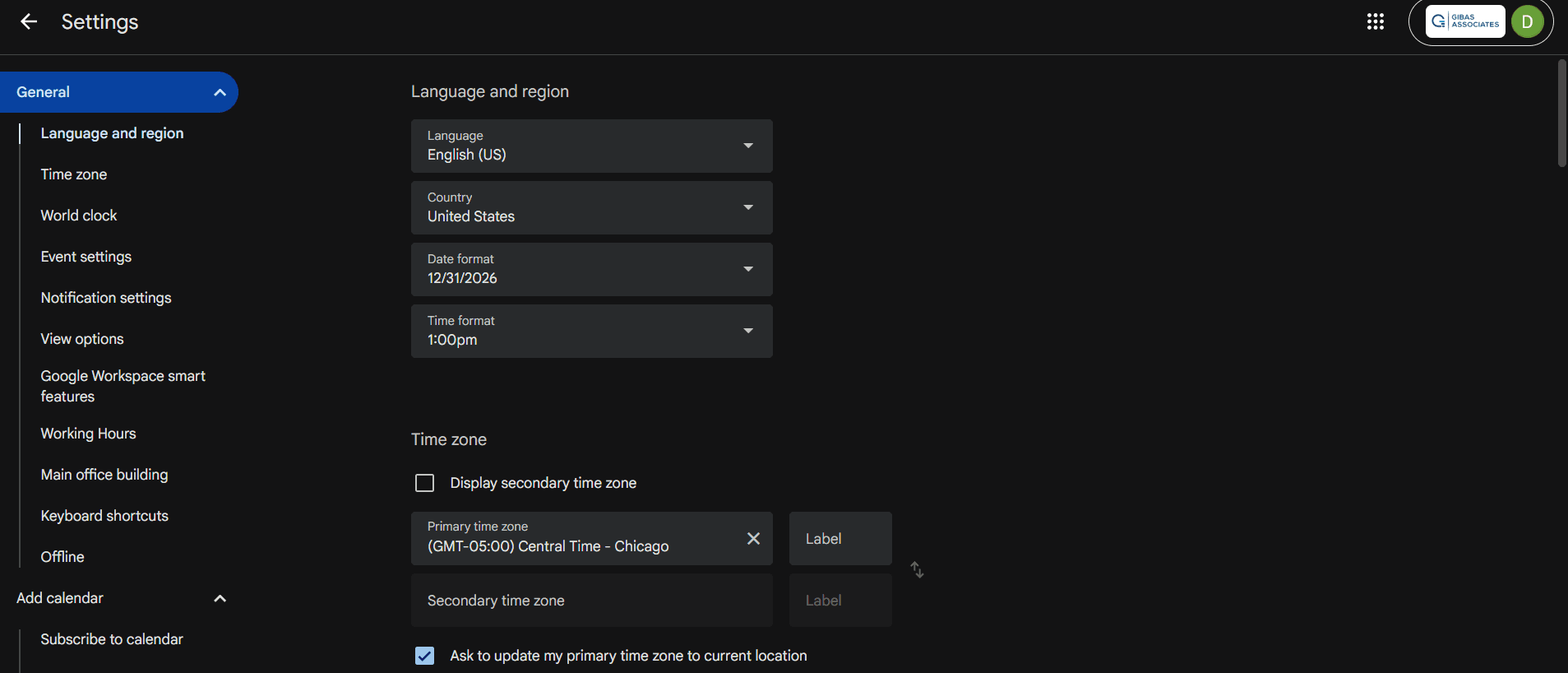
Scheduling across different time zones is hassle-free for virtual meetings and webinars. Events automatically adjust to the correct local time.
Color-Coding
Organize your calendar visually with color-coded events to differentiate activities at a glance. Quickly identify what's on your schedule without digging through details.

Ease of Use
Google Calendar shines in user-friendliness, making it a top choice for church scheduling. Its intuitive interface allows your team to quickly create, manage, and share events without a steep learning curve. You'll appreciate the straightforward drag-and-drop functionality and customizable notifications that keep everyone informed. Its mobile accessibility ensures you can manage your schedule from anywhere, adding to its practicality. Compared to other tools, Google Calendar's simplicity and accessibility make it easy for anyone to use effectively.
Integrations
Google Calendar integrates natively with the entire Google ecosystem; Gmail, Google Drive, and Google Meet. It also natively connects with tools like Zoom, Asana, Microsoft Outlook, Calendly, TogglTrack, and Notion.
For custom workflows, it provides an API and works with automation platforms like Zapier to help you automate repetitive tasks and book meetings without manual effort.

Google Calendar Specs
- API: Yes
- Appointment Scheduling: Yes
- Attendance Tracking: Yes
- Calendar Management: Yes
- Contact Management: Yes
- Contact Sharing: Yes
- Dashboards: Yes
- Email Integration: Yes
- External Integrations: Yes
- Google Apps Integration: Yes
- Mobile App: Yes
- Multi-User: Yes
- Notifications: Yes
- Project Management: Yes
- Reports: Yes
- Resource Management: Yes
- Scheduling: Yes
- Task Scheduling/Tracking: Yes
- Time Management: Yes
- Vacation & Absence Calendar: Yes

