


Key Takeaways
Pastoral wellbeing is whole-person wellbeing: Spiritual, physical, relational, and ministry pressures all interact and can affect a pastor’s ability to sustain ministry.
Protect the inner life: Prayer, Scripture, spiritual formation, spiritual direction, and Sabbath need to remain more than ministry tasks.
Pay attention to physical health: Regular movement, sleep, nutritious food, preventive care, and vacation are ordinary but important practices for sustainable ministry.
Build trusted relationships: Peer support, mentoring, marriage, and close friendships give pastors places to be honest, receive support, and notice warning signs.
Healthy rhythms don’t make pastors strong enough to carry ministry: They help create a life rooted in Christ—the One who ultimately carries them.
When pastors quit, it’s rarely for a single reason. In Lifeway Research’s 2025 Pastor Attrition Study, those pastors often cited conflict, resistance to their ministry approach, and unrealistic expectations as reasons they left.
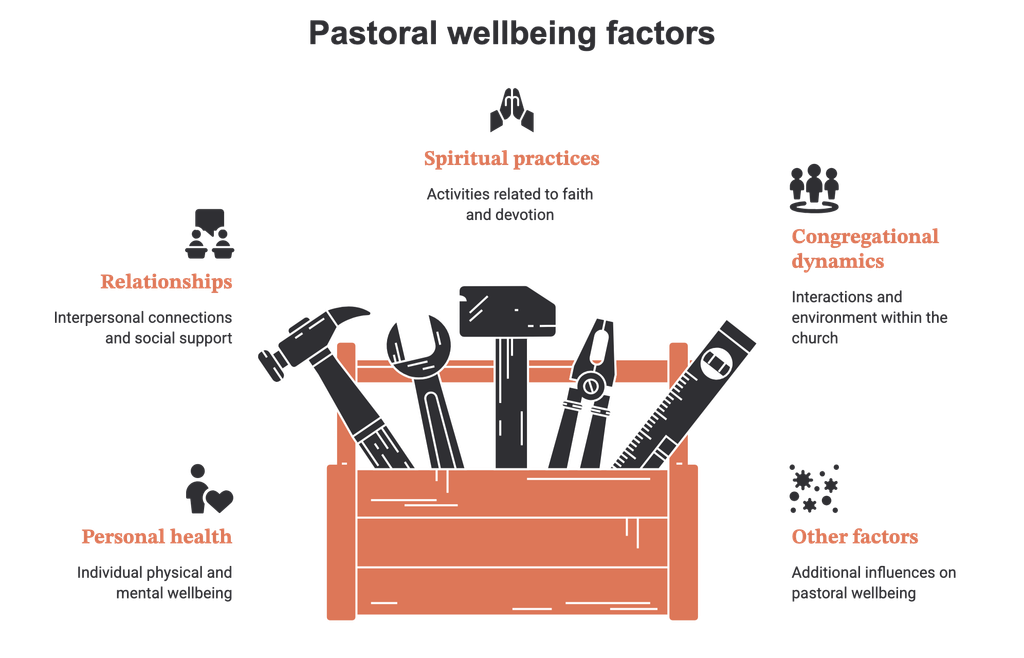
This is backed up by Hartford Institute’s 2024 clergy wellness study, which shows pastoral wellbeing as multifaceted. It is primarily shaped by:
Barna’s research adds another piece: between 2015 and 2022, pastors’ spiritual, mental, and emotional wellbeing all declined. While more recent 2026 data shows exhaustion has eased somewhat, their job satisfaction has fallen to its lowest point in more than a decade.
Across the research, three interconnected areas emerge repeatedly as significant to pastoral longevity.
Zone 1: The Inner Life
Barna found that pastors considering leaving ministry were more likely to say their spiritual formation had taken a back seat to pastoral responsibilities. They were also less likely to report consistent personal Bible reading and worship.
Pete and Geri Scazzero lived that pattern. In Geri’s account of their early years at New Life Fellowship, the church was growing while exhaustion took a toll on her body and emotions, and their marriage was deteriorating. Eventually she told Pete, “This church no longer brings me life, but death.”
Pete later wrote:
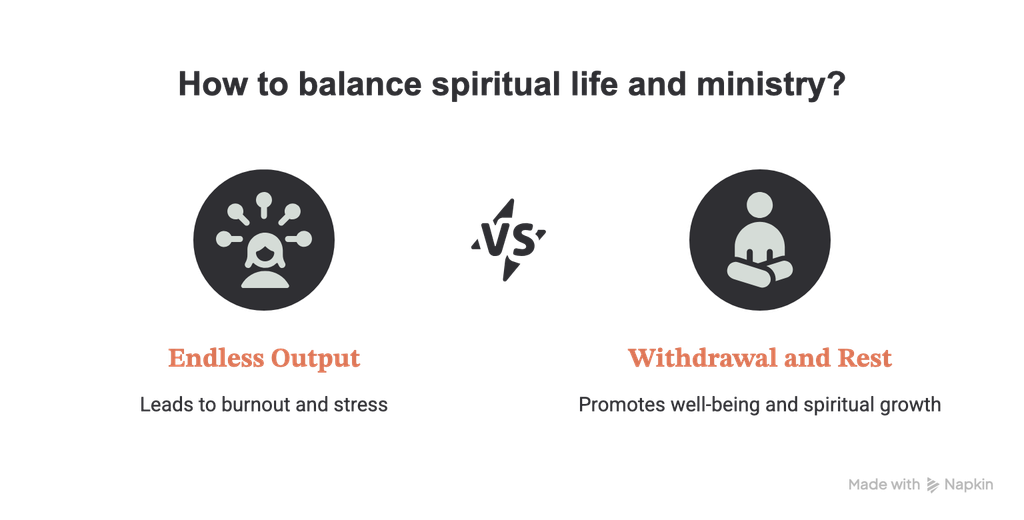
Spiritual deficits typically reveal themselves in too much activity. Unhealthy leaders engage in more activities than their combined spiritual, physical, and emotional reserves can sustain.
Pete Scazzero
The biblical pattern includes withdrawal, not endless output. Psalm 46:10 says, “Be still, and know that I am God,” and Luke 5:16 says Jesus “often withdrew to lonely places and prayed.”
Practices that protect this zone include a rule of life, prayer and Scripture kept distinct from sermon preparation, spiritual direction or counseling, and regular Sabbath. Barna’s research associates rest and Sabbath with stronger reported well-being.
Zone 2: The Physical Life
Lifeway Research found that 59% of Protestant pastors said regular exercise was challenging, 49% said eating right was challenging, and 45% said consistent rest was challenging.
Neither story proves ministry stress caused the medical crisis. Both men describe the experience as a turning point in how much attention they gave to physical health.
In 1 Corinthians 6:19–20, Paul says the body belongs to God. The immediate context is sexual holiness, but the passage still places embodied life within the scope of discipleship.
The habits here are ordinary: consistent movement, adequate sleep, nutritious food, preventive medical care, and actual vacation. The CDC links regular physical activity with better sleep, mental health, cardiovascular health, and lower risk of several chronic diseases.
Zone 3: The Relational Life
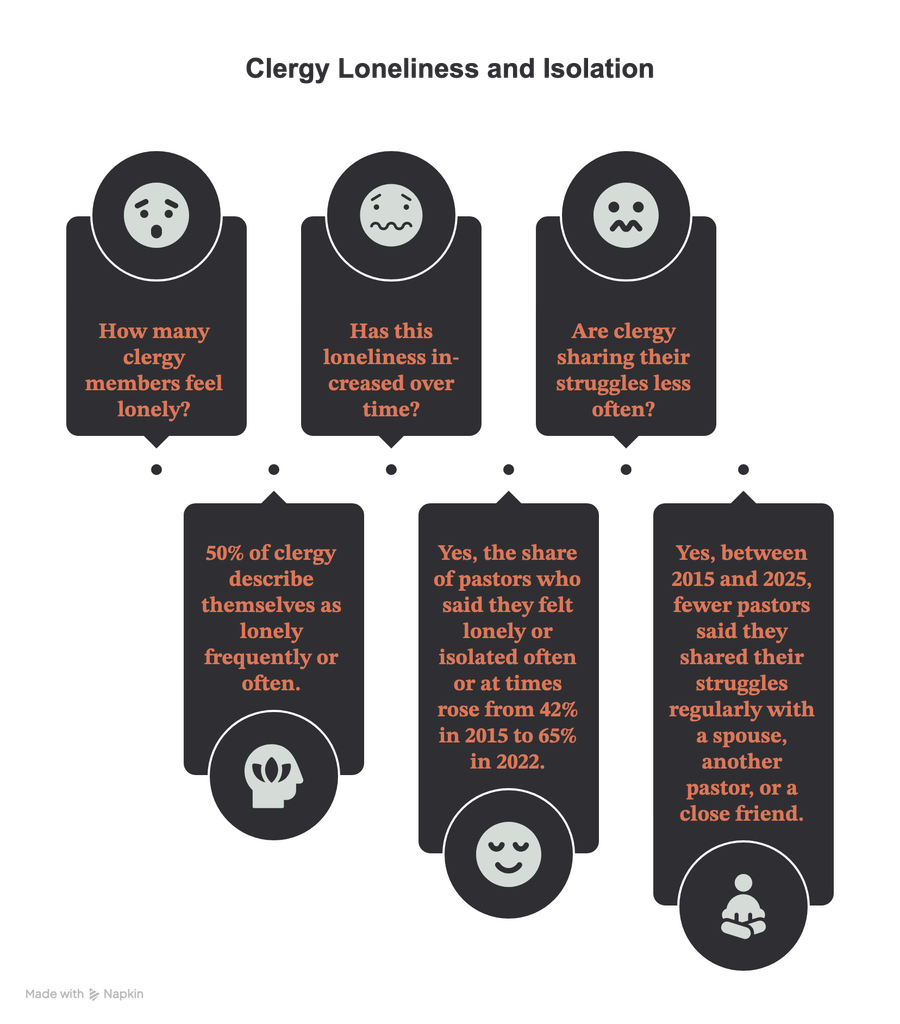
Hartford Institute’s clergy survey found that 50% of clergy described themselves as lonely frequently or often. Barna’s seven-year trend data found that the share of pastors who said they felt lonely or isolated often or at times rose from 42% in 2015 to 65% in 2022.
Lifeway found another warning sign: between 2015 and 2025, fewer pastors said they shared their struggles regularly with a spouse, another pastor, or a close friend.
Mike Romberger, now Executive Pastor of Ministries at Crossroads Community Church, has also served as senior pastor of two churches and as president and CEO of Mount Hermon Christian Camp. Across those decades of ministry leadership, one of his key safeguards has been his marriage. Writing about healthy habits for lead pastors, Romberger says his wife, Jane, has “redirected me many times.” The point is simple: the person closest to a pastor can often see warning signs before the pastor does.
Derwin Gray, founding and lead pastor of Transformation Church since 2010, uses a Pauline framework for the relationships that sustain a pastor: a “Paul” who is further down the road, a “Barnabas” who walks beside you, and a “Timothy” you are investing in. (Transformation Church)
Barna’s data supports the need for those relationships. In 2015, 37% of pastors received personal spiritual support from peers or mentors at least several times a month. By 2022, that number had dropped to 22%.
Protective practices include a standing peer group, a mentor, someone younger to invest in, and a marriage or close friendship where honesty is welcome.
Why the Three Zones Work Together
Hartford’s research describes clergy wellness as multidimensional. Physical health, spiritual practices, relationships, congregational life, and systemic pressures interact.
Paul uses comparable whole-person language.
May your whole spirit, soul and body be kept blameless.
1 Thessalonians 5:23
The goal, then, is not simply to find ways to cope with ministry demands. It is to cultivate a sustainable life rooted in Christ.
That matters because the demands are real. Lifeway found that 67% of pastors say they must be “on-call” 24 hours a day, and 57% say the role is frequently overwhelming.
Yet Colossians 1:17 says that in Christ “all things hold together.”
Our habits don't create that security. They help us build a life we can live from. We don't practice healthy rhythms to make ourselves strong enough to carry ministry. We practice them so we can remain rooted in the One who carries us.