

10 mejores programas de gestión de eventos para organizaciones sin fines de lucro para 2026

El mejor software de gestión de eventos para organizaciones sin fines de lucro para 2026


El software de gestión de eventos para organizaciones sin fines de lucro te ayuda a planificar, organizar y llevar a cabo eventos mientras realizas un seguimiento de las inscripciones, las donaciones y la participación de los voluntarios en un solo lugar. Si buscas herramientas que se adapten a las necesidades únicas de tu ministerio, como gestionar actividades de recaudación de fondos, coordinar voluntarios o involucrar a tu congregación, encontrar la plataforma adecuada puede marcar una gran diferencia. Esta guía te ayudará a comparar las principales opciones para 2026, para que puedas elegir un software que respalde tu misión, se ajuste a tu presupuesto y ayude a tu equipo a ofrecer eventos significativos con confianza.
Por qué confiar en nuestras recomendaciones de software
Nuestro equipo lleva probando y evaluando software desde 2012. Como líderes eclesiásticos, sabemos lo difícil —y lo importante— que es elegir el software adecuado.
Para esta guía, evaluamos las herramientas mediante pruebas prácticas e investigación independiente, puntuando las herramientas según nuestros criterios de selección.
Nuestras reseñas reflejan nuestro criterio editorial humano, no un discurso de ventas.
Resumen del mejor software de gestión de eventos para organizaciones sin fines de lucro
\u003cspan style=\u0022font-weight: 400\u0022\u003eEste cuadro comparativo resume los detalles de precios de mis selecciones del mejor software de gestión de eventos para organizaciones sin fines de lucro, para ayudarte a encontrar la mejor opción según tu presupuesto y las necesidades de tu organización.\u003c/span\u003e
| Tool | Best For | Trial Info | Price | ||
|---|---|---|---|---|---|
| 1 | Ideal para formularios de RSVP personalizables | Plan gratuito + demo gratis disponible | Desde $24/mes (facturación anual) | Website | |
| 2 | Mejor sin comisiones por transacción | Plan gratuito disponible | Gratis para usar | Website | |
| 3 | Ideal para un seguimiento de eventos centrado en donantes | Demo gratuita disponible | Desde $40/mes (facturado anualmente) | Website | |
| 4 | Ideal para experiencias de eventos híbridos | Demostración gratuita disponible | Desde $499/usuario/mes (facturado anualmente) | Website | |
| 5 | Ideal para la gestión de asistentes a gran escala | Demostración gratuita disponible | Precio a consultar | Website | |
| 6 | Ideal para herramientas integradas de recaudación de fondos | Plan gratuito + prueba gratuita disponible | Desde $29/mes (facturado anualmente) | Website | |
| 7 | Ideal para pujas móviles en eventos | Demo gratuita disponible | Precio disponible bajo solicitud | Website | |
| 8 | Ideal para funciones de coordinación de voluntarios | Demo gratuita disponible | Desde $99/mes (facturado anualmente) | Website | |
| 9 | Ideal para organizaciones basadas en membresías | Prueba gratuita de 60 días disponible | Desde $59.40/mes (facturado anualmente) | Website | |
| 10 | Ideal para integración CRM todo en uno | Demostración gratuita disponible | Precios bajo pedido | Website |
Opiniones sobre el software de gestión de eventos para organizaciones sin fines de lucro
\u003cspan style=\u0022font-weight: 400\u0022\u003eA continuación encontrarás mis resúmenes detallados del software de gestión de eventos para organizaciones sin fines de lucro que llegó a mi selección final. Mis opiniones ofrecen un análisis detallado de las funciones, los mejores casos de uso y las integraciones de cada plataforma para ayudarte a encontrar la mejor opción para ti.\u003c/span\u003e

RSVPify
Ideal para formularios de RSVP personalizables
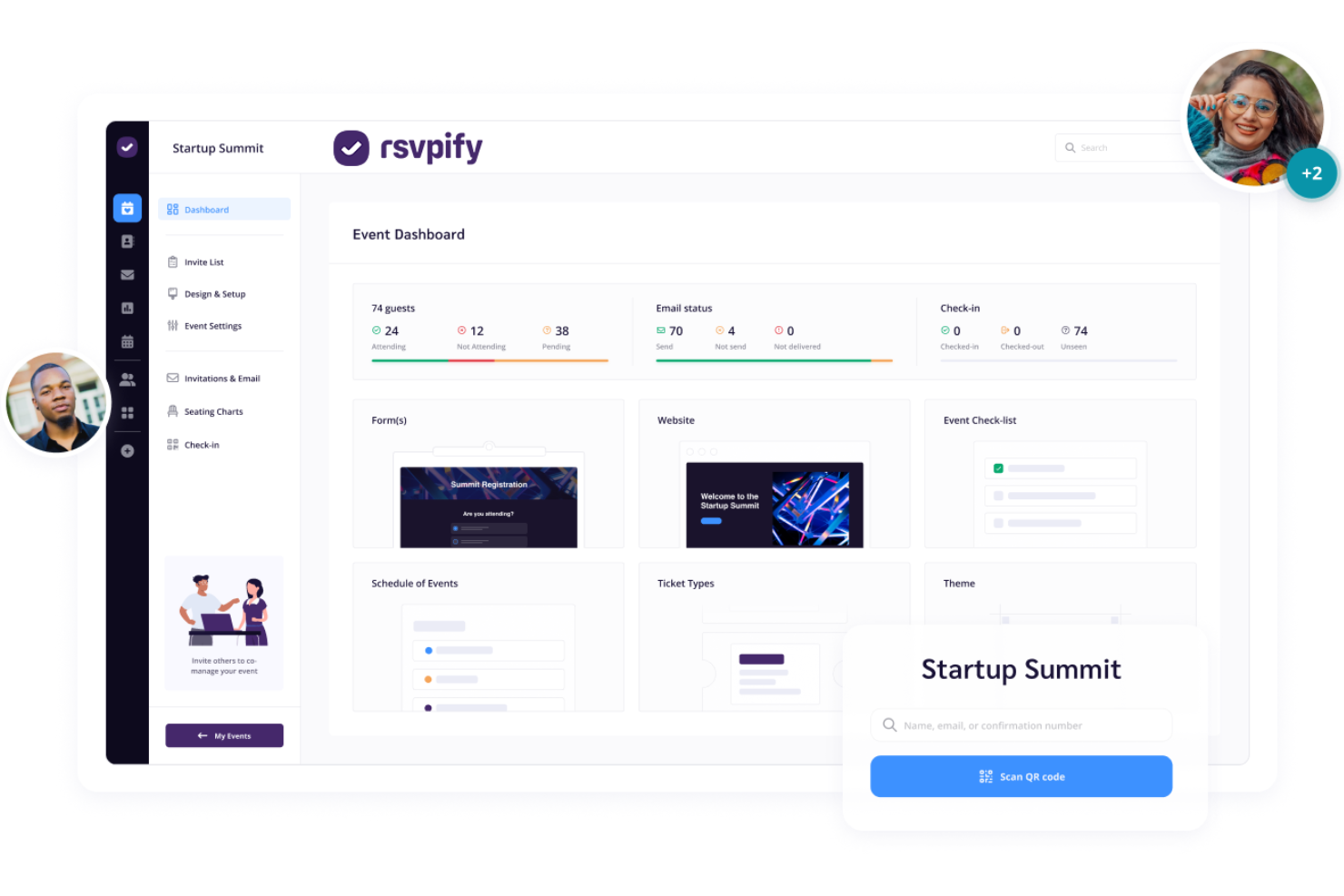
RSVPify ofrece a las organizaciones sin fines de lucro una forma de crear formularios de RSVP altamente personalizables para eventos de cualquier tamaño. Esta herramienta es especialmente útil para organizaciones que necesitan recopilar información detallada de los asistentes o gestionar listas de invitados complejas. Para los organizadores de eventos que desean mayor control sobre las preguntas de registro, las opciones de comidas o las invitaciones grupales, RSVPify brinda una flexibilidad inigualable.
Por qué elegí RSVPify
Lo que distingue a RSVPify es su capacidad para permitirte diseñar formularios de RSVP que se adaptan a las necesidades únicas de los eventos de tu organización sin fines de lucro. Lo elegí porque puedes personalizar cada aspecto del proceso de registro, desde agregar preguntas específicas hasta recolectar preferencias de comida y gestionar invitados adicionales. La plataforma también soporta lógica condicional, lo que te permite personalizar las preguntas de seguimiento según las respuestas de los asistentes. Este nivel de control es especialmente útil para organizaciones que necesitan recopilar información detallada o gestionar escenarios complejos de invitados.
Características clave de RSVPify
Otras funciones de RSVPify que apoyan la gestión de eventos para organizaciones sin fines de lucro incluyen:
- Planos de asientos con función de arrastrar y soltar: Organiza visualmente a los invitados y asigna lugares para banquetes o galas.
- Procesamiento de pagos integrado: Recibe donaciones o pagos de entradas directamente a través del formulario de RSVP.
- Herramientas de registro en el evento: Utiliza la entrada digital para los invitados el día del evento con escaneo de códigos QR.
- Sistema de invitaciones por correo electrónico y recordatorios: Usa el marketing por correo integrado para enviar invitaciones personalizadas y recordatorios automáticos a tu lista de invitados.
Integraciones de RSVPify
Las integraciones incluyen Salesforce, HubSpot, Calendly, Blackbaud, Google Sheets, Stripe, Bloomerang y Google Forms.
Pros and Cons
Pros:
- Soporta lógica condicional para preguntas de RSVP
- Ofrece herramientas para planos de asientos con arrastrar y soltar
- Permite invitaciones y recordatorios por correo electrónico con la marca
Cons:
- No cuenta con funciones integradas de gestión de voluntariado
- Opciones limitadas para configuración de eventos recurrentes

Zeffy
Mejor sin comisiones por transacción
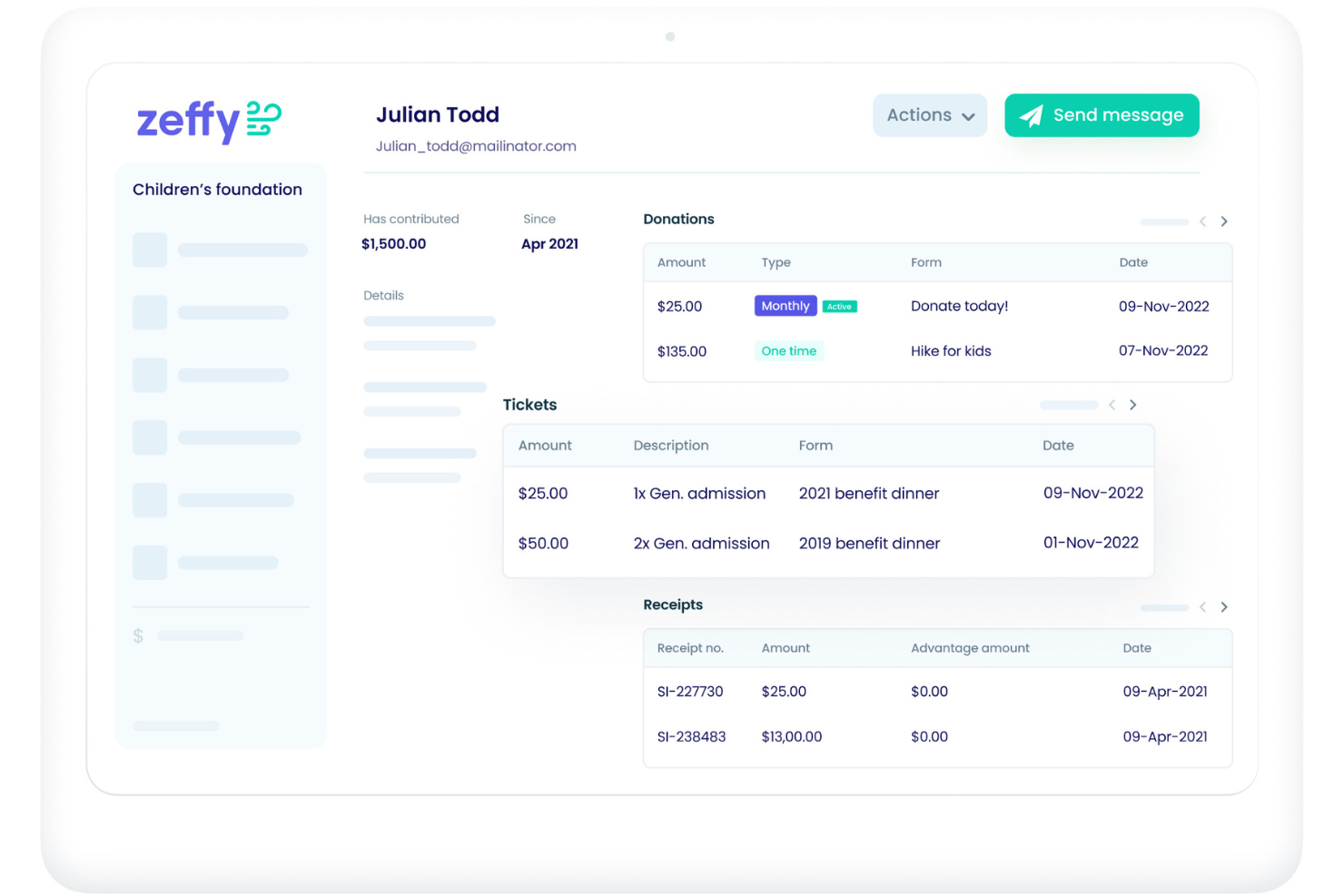
Zeffy se destaca entre las organizaciones sin fines de lucro que desean evitar las comisiones por transacción en la inscripción a eventos y donaciones. Esta plataforma está diseñada para organizaciones que necesitan maximizar cada dólar recaudado, lo que la hace especialmente atractiva para equipos pequeños o aquellos con presupuestos ajustados. Si tu grupo busca una forma de gestionar eventos y recaudar fondos sin perder ingresos a causa de comisiones de los procesadores de pago, Zeffy ofrece una solución verdaderamente libre de comisiones.
Por qué elegí Zeffy
A diferencia de la mayoría de las plataformas de gestión de eventos, Zeffy procesa donaciones y ventas de entradas sin cobrar ninguna comisión por transacción, lo cual es una gran ventaja para organizaciones sin fines de lucro que desean aprovechar al máximo cada dólar. Elegí Zeffy porque permite a las organizaciones cobrar pagos y gestionar inscripciones a eventos sin perder un porcentaje en costos de procesamiento. La plataforma también admite campañas y eventos ilimitados de recaudación de fondos, por lo que no hay límite en cuanto a volumen o escala. Para ONGs que quieran maximizar el impacto de su recaudación, el enfoque sin comisiones de Zeffy es una solución única y práctica.
Funciones clave de Zeffy
Otras funciones de Zeffy que apoyan la gestión de eventos para organizaciones sin fines de lucro incluyen:
- Páginas de eventos personalizables: Crea páginas de eventos con tu marca, el logo y los colores de tu organización.
- Recibos de impuestos automatizados: Genera y envía recibos fiscales a donantes y participantes automáticamente.
- Herramientas de colaboración en equipo: Invita a miembros del equipo para gestionar juntos eventos y campañas de recaudación.
- Panel de gestión de asistentes: Haz seguimiento a las inscripciones, pagos y detalles de invitados en un solo lugar.
Integraciones de Zeffy
Actualmente no hay integraciones nativas enumeradas.
Pros and Cons
Pros:
- Sin comisiones por donaciones ni entradas
- Recibos fiscales automatizados para todos los inscritos
- Eventos y campañas de recaudación ilimitados
Cons:
- Reportes y análisis limitados
- Las funciones de registro de asistentes son básicas

Ideal para un seguimiento de eventos centrado en donantes
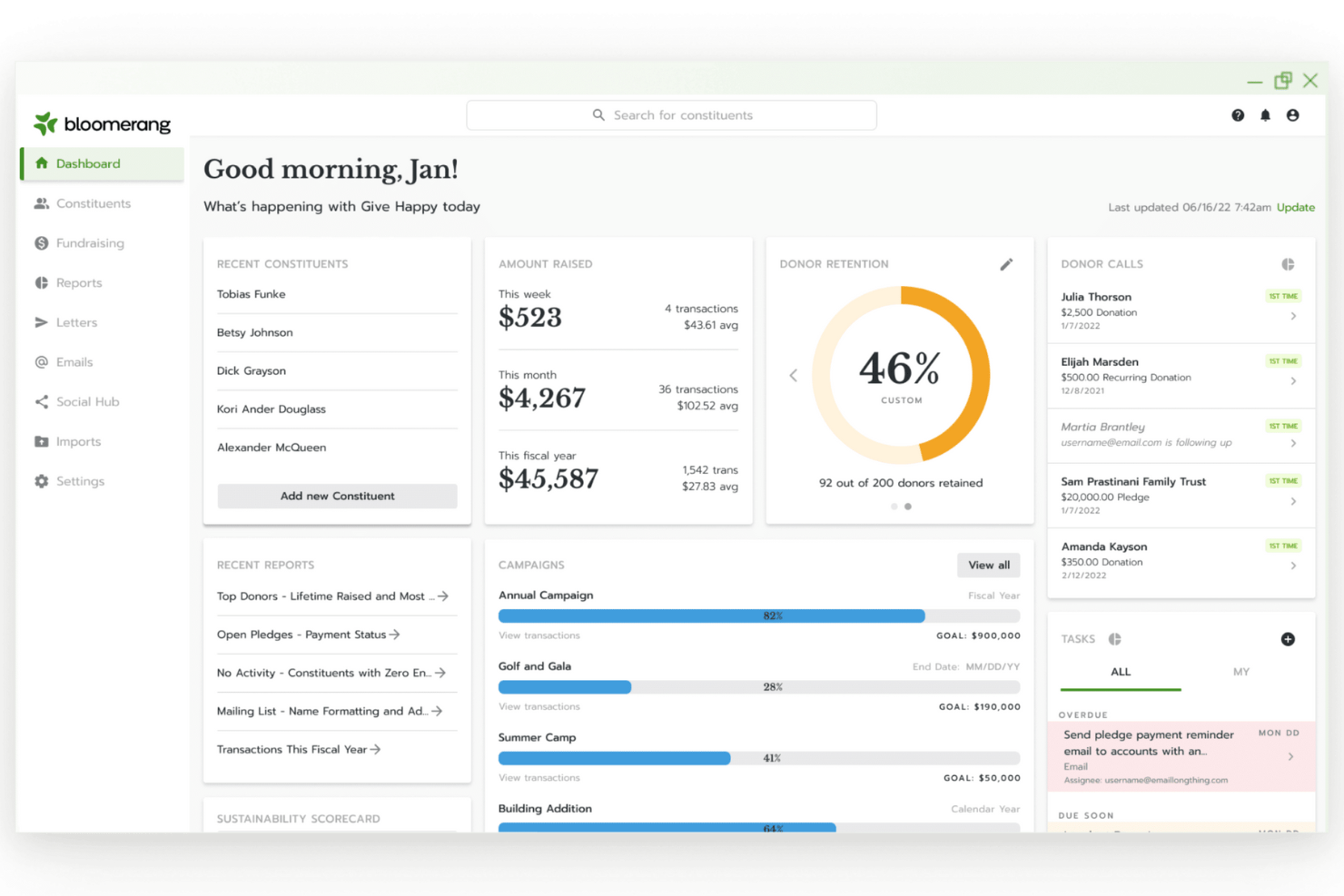
Si buscas un software de gestión de eventos para organizaciones sin fines de lucro que mantenga las relaciones con los donantes en el centro, vale la pena considerar Bloomerang. Esta plataforma está diseñada para organizaciones que desean rastrear la participación en eventos junto con los datos e historial de donaciones de sus donantes. Es ideal para equipos enfocados en construir apoyo a largo plazo a través de eventos y seguimientos personalizados.
Por qué elegí Bloomerang
Bloomerang destaca por facilitar a las organizaciones conectar la participación en eventos directamente con el compromiso de los donantes. Lo elegí porque sus herramientas de seguimiento de eventos te permiten ver qué simpatizantes asisten, donan o se ofrecen como voluntarios, y luego vincular esas acciones con su historial de donaciones. Los perfiles de donantes y funciones de reportes de la plataforma ayudan a identificar tendencias y personalizar el seguimiento tras los eventos. Este enfoque en los datos de los donantes hace más fácil mejorar la gestión y crear relaciones duraderas a través de cada evento que organices.
Características clave de Bloomerang
Otras características de Bloomerang que apoyan la gestión de eventos para organizaciones sin fines de lucro incluyen:
- Páginas de donación en línea: Crea páginas de donación con tu marca para alcanzar tus objetivos de recaudación mediante la venta de entradas a eventos.
- Agradecimientos automáticos: Configura envíos automáticos de correos electrónicos de agradecimiento y recibos para asistentes y donantes de eventos.
- Gestión de voluntariado: Haz seguimiento de las inscripciones, horas y roles de los voluntarios en cada evento.
- Reportes personalizables: Genera reportes para analizar el desempeño del evento, la demografía de los asistentes y los resultados de la recaudación de fondos.
Integraciones de Bloomerang
Las integraciones incluyen QuickBooks, Mailchimp, Constant Contact, DonorSearch, Amilia, Verified First, PayPal, Google Pay, Apple Pay y Venmo.
Pros and Cons
Pros:
- Rastrea la participación de donantes a través de múltiples eventos
- Ofrece correos electrónicos automáticos de agradecimiento y recibo
- Permite la gestión de voluntariado para organización de equipos
Cons:
- No incluye herramientas integradas de venta de entradas ni RSVP
- La personalización de los formularios de eventos es limitada

Bizzabo
Ideal para experiencias de eventos híbridos
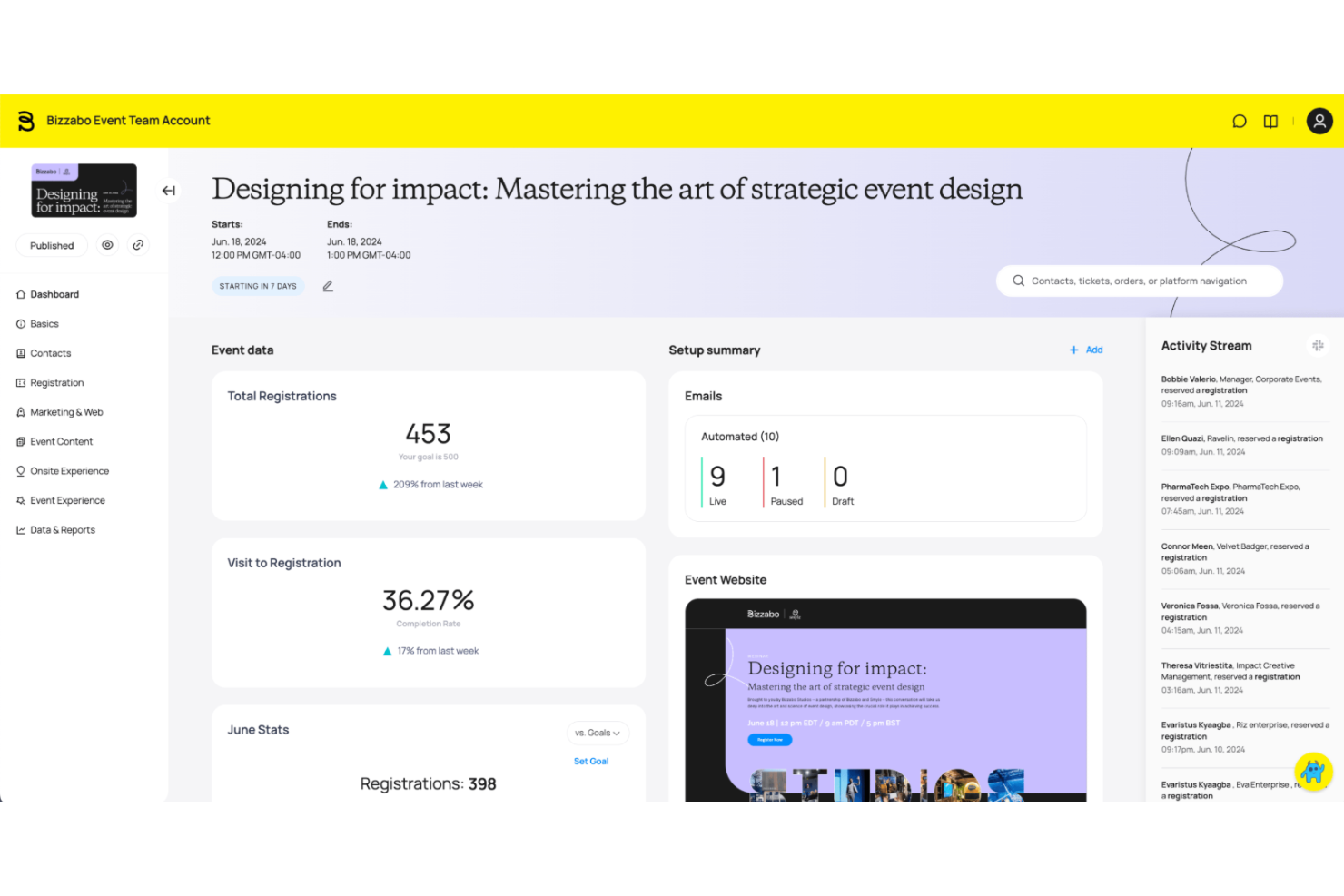
Bizzabo se destaca para organizaciones sin fines de lucro que desean crear eventos híbridos atractivos con componentes tanto presenciales como virtuales. Si tu equipo necesita conectar a simpatizantes en distintas ubicaciones u ofrecer opciones de asistencia flexibles, esta plataforma reúne transmisión en vivo, redes de contactos y herramientas interactivas en un solo lugar. Bizzabo es especialmente útil para organizaciones que buscan combinar experiencias físicas y digitales para recaudación de fondos, conferencias o encuentros comunitarios.
Por qué elegí Bizzabo
Los eventos híbridos están cobrando mayor importancia para las organizaciones sin fines de lucro que desean llegar tanto a simpatizantes presenciales como remotos. Elegí Bizzabo porque ofrece una plataforma unificada para gestionar experiencias en vivo, virtuales e híbridas, lo que facilita la coordinación de eventos complejos. La plataforma incluye transmisión en vivo interactiva, herramientas de networking para asistentes y funciones de participación como encuestas y preguntas y respuestas que funcionan tanto presencialmente como en espacios digitales. Para las organizaciones que buscan maximizar la participación y la flexibilidad, las capacidades de eventos híbridos de Bizzabo son una excelente opción.
Funciones clave de Bizzabo
Otras funciones de Bizzabo que favorecen la gestión de eventos para organizaciones sin fines de lucro incluyen:
- Constructor de sitios web de eventos: Crea sitios web de eventos con tu propia marca, con detalles de registro y agenda.
- Herramientas de gestión de patrocinadores: Haz seguimiento de paquetes de patrocinio, entregables y opciones de visibilidad.
- Aplicación móvil de eventos: Da a los asistentes acceso a horarios, mapas y redes de contactos desde sus teléfonos.
- Panel de análisis: Supervisa el engagement de los asistentes y el rendimiento del evento en tiempo real.
Integraciones de Bizzabo
Las integraciones incluyen Salesforce, HubSpot, Mailchimp, Slack, Vimeo, Brightcove, ActiveCampaign, Microsoft Teams y Zoom.
Pros and Cons
Pros:
- Las herramientas para eventos híbridos apoyan lo presencial y lo virtual
- Incluye opciones de emparejamiento de asistentes
- La gestión de patrocinadores realiza seguimiento de entregables y visibilidad
Cons:
- No incluye herramientas de donación integradas
- Programación de turnos de voluntarios limitada

Cvent
Ideal para la gestión de asistentes a gran escala
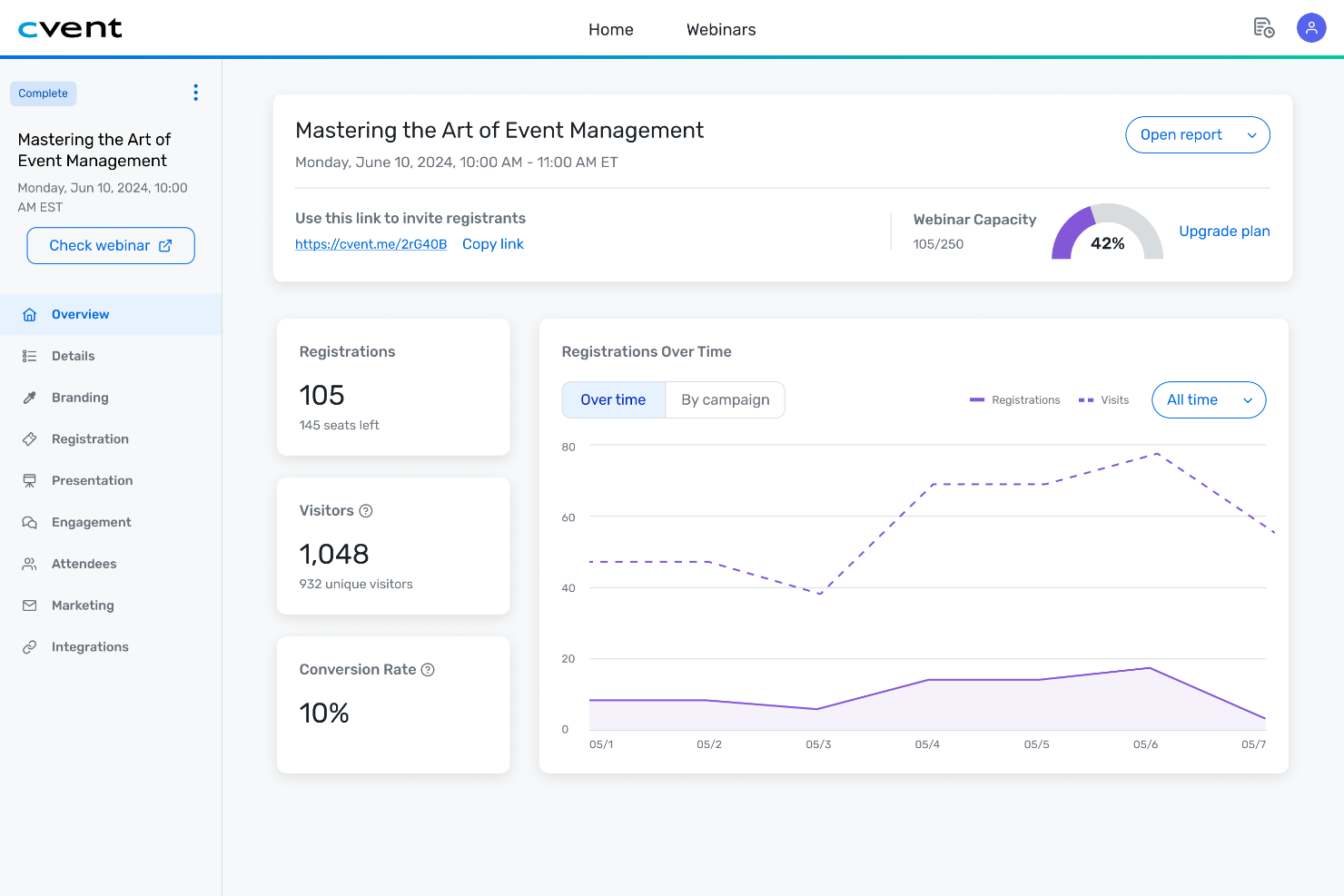
Cvent está diseñado para organizaciones que necesitan gestionar eventos a gran escala con una logística compleja de asistentes. Las organizaciones sin ánimo de lucro que realicen galas, conferencias o reuniones de varios días pueden utilizar Cvent para manejar el registro, la acreditación y las comunicaciones de miles de participantes. Si tu equipo necesita herramientas avanzadas para el seguimiento de asistencia y la coordinación de detalles del evento a gran escala, Cvent ofrece funciones pensadas para la gestión de alto volumen.
Por qué elegí Cvent
Cuando se trata de gestionar eventos con miles de asistentes, Cvent destaca por su capacidad de manejar una logística compleja a gran escala. Elegí Cvent porque ofrece herramientas avanzadas de gestión de asistentes, como registro en bloque, acreditación automatizada y seguimiento de asistencia en tiempo real. La plataforma también admite una gestión detallada de sesiones, por lo que puedes organizar sesiones simultáneas, talleres y agendas multi-trayecto con facilidad. Para las organizaciones sin ánimo de lucro que organizan grandes conferencias o galas de recaudación de fondos, la capacidad de Cvent para administrar datos de eventos complejos y coordinar asistentes en gran volumen lo convierte en una excelente opción.
Características clave de Cvent
Otras características de Cvent que apoyan la gestión de eventos para organizaciones sin ánimo de lucro incluyen:
- Sitios web de eventos personalizables: Crea páginas de evento con tu marca, formularios de registro y detalles del evento.
- Impresión de credenciales en el lugar: Imprime credenciales de asistentes al instante en los puestos de acreditación.
- Aplicación móvil para el evento: Ofrece a los asistentes acceso a horarios, mapas y herramientas de networking en su teléfono.
- Gestión de patrocinadores y expositores: Realiza el seguimiento de los paquetes de patrocinio y administra la logística de expositores dentro de la plataforma.
Integraciones de Cvent
Las integraciones incluyen Salesforce, HubSpot, Microsoft Dynamics, Eloqua, SugarCRM, Veeva, NetSuite, Salesforce Pardot y Zoom.
Pros and Cons
Pros:
- Admite formatos de eventos con múltiples sesiones y días
- Ofrece seguimiento en tiempo real y análisis de asistentes
- Ofrece aplicación móvil para la interacción de los asistentes
Cons:
- Herramientas de recaudación de fondos limitadas
- Opciones limitadas de personalización de marca

Ideal para herramientas integradas de recaudación de fondos
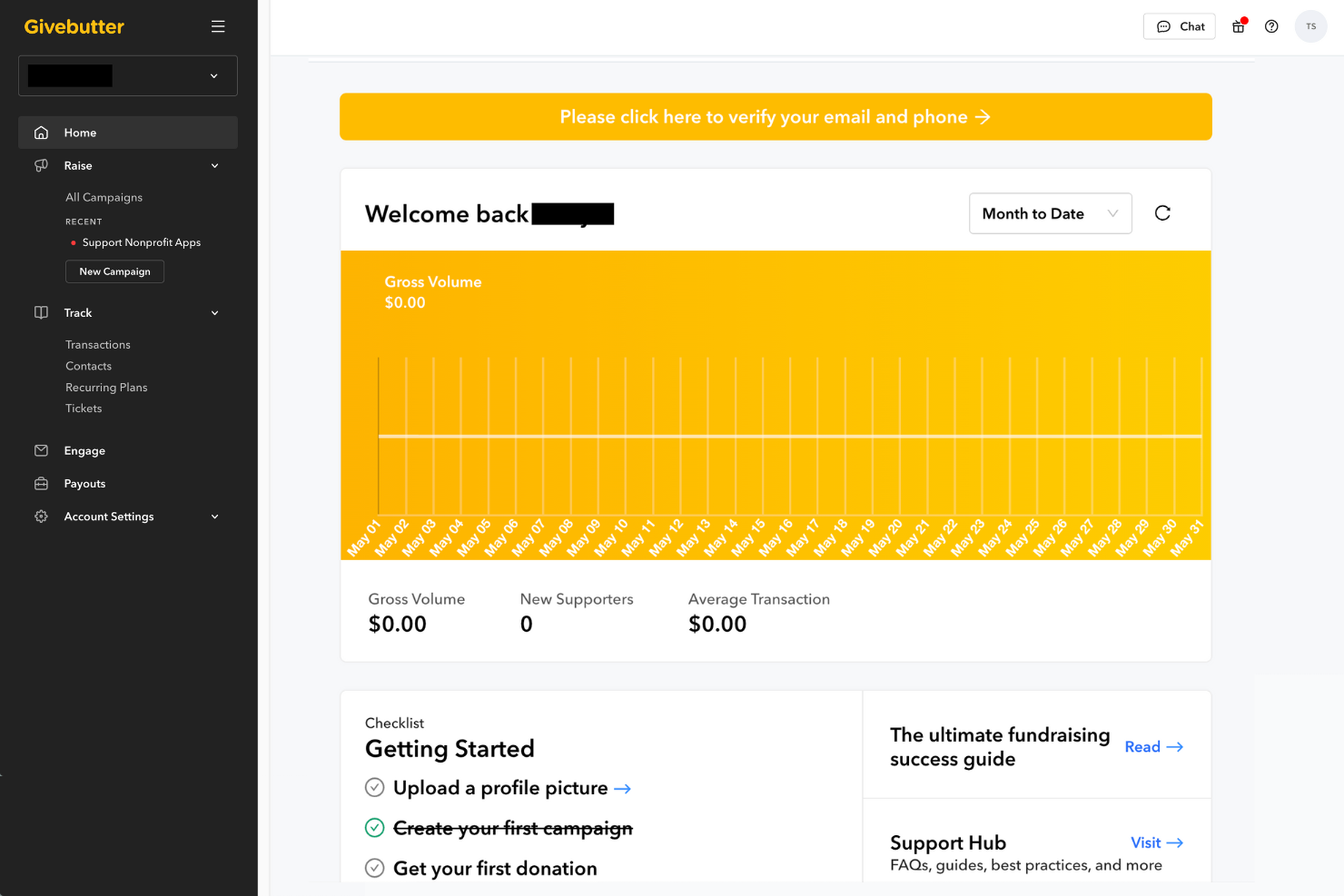
Givebutter reúne la gestión de eventos y el software de recaudación de fondos en una sola plataforma, lo que lo convierte en una opción sólida para organizaciones sin ánimo de lucro que desean realizar campañas y eventos en paralelo. Esta solución es especialmente útil para organizaciones que necesitan coordinar la venta de entradas, donaciones y recaudación de fondos entre pares desde un único panel. Si tu equipo busca una forma de conectar la participación en eventos con la donación integrada, Givebutter ofrece un enfoque unificado.
Por qué elegí Givebutter
Lo que distingue a Givebutter es la combinación de gestión de eventos con un conjunto completo de herramientas de recaudación de fondos, haciéndolo especialmente útil para organizaciones sin ánimo de lucro que desean conectar la donación y la participación. Elegí Givebutter porque te permite organizar eventos con venta de entradas, campañas entre pares y subastas, todo desde una sola plataforma. Los formularios de donación integrados y las páginas de campaña están diseñados para trabajar junto con el registro de eventos, para que puedas fomentar donaciones antes, durante y después de tus eventos. Para organizaciones que desean colocar la recaudación en el centro de sus eventos, el enfoque integrado de Givebutter es ideal.
Funciones clave de Givebutter
Otras funciones de Givebutter que apoyan la gestión de eventos en organizaciones sin ánimo de lucro incluyen:
- Funcionalidad para donar por SMS: Recauda donaciones de los asistentes por SMS durante los eventos.
- Tipos de entradas personalizables: Configura múltiples opciones de entrada, incluyendo una opción gratuita, de pago y entradas basadas en donación.
- Páginas de eventos en vivo: Muestra termómetros de recaudación en tiempo real e indicadores de actividad durante tus eventos.
- Mensajes de agradecimiento automáticos: Envía automáticamente reconocimientos personalizados a donantes y registrados.
Integraciones de Givebutter
Las integraciones incluyen Bloomerang, Double the Donation, Canva, Constant Contact, DonorSearch, HubSpot, Mailchimp, QuickBooks Online, Salesforce y Zoom.
Pros and Cons
Pros:
- La recaudación entre pares está integrada en las páginas de eventos
- La función de donar por SMS está incluida en todas las campañas
- Se admiten múltiples tipos de entradas para cada evento
Cons:
- Seguimiento limitado de donaciones offline para eventos
- El uso de dominio personalizado requiere un plan de pago

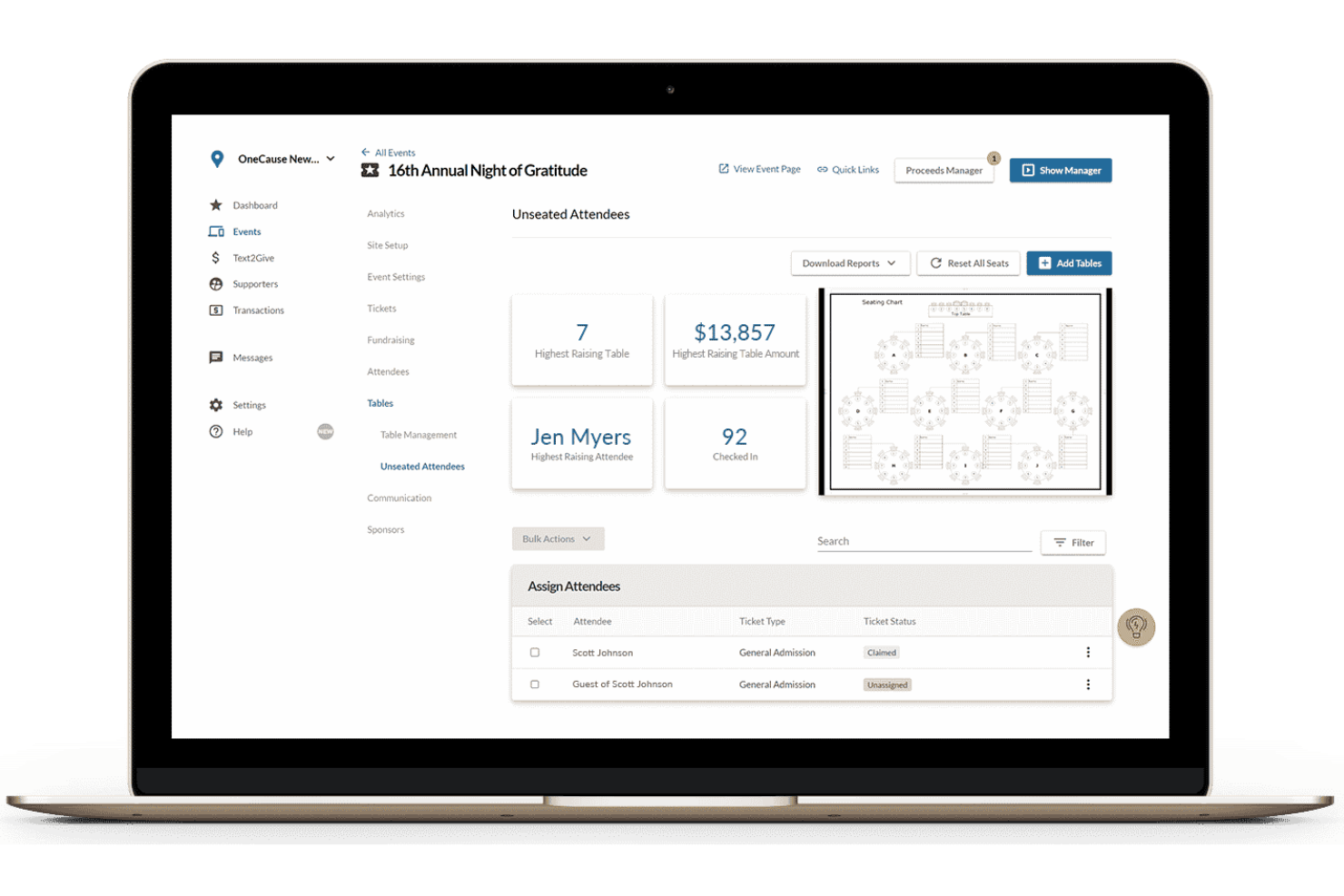
Si tu organización sin fines de lucro organiza subastas o galas benéficas, OneCause está diseñado para facilitar las pujas móviles y las donaciones para tus invitados. Esta plataforma es especialmente útil para organizaciones que desean aumentar la participación y las donaciones a través de subastas silenciosas, levantamiento de paletas y recaudación de fondos entre pares. OneCause te ayuda a gestionar el registro, las pujas y los pagos del evento directamente desde los teléfonos de los asistentes, reduciendo la fricción y manteniendo a los simpatizantes involucrados durante todo tu evento.
Por qué elegí OneCause
Las pujas móviles pueden transformar la manera en que las organizaciones sin fines de lucro llevan a cabo subastas y eventos de recaudación de fondos, por eso elegí OneCause para esta lista. La función de puja móvil de la plataforma utiliza la gamificación para permitir que los invitados hagan ofertas, realicen donaciones y reciban notificaciones instantáneas directamente desde sus teléfonos. También valoro que OneCause ofrezca clasificaciones en tiempo real y alertas cuando se supera una oferta, lo cual fomenta la competencia amistosa y aumenta el total recaudado. Para organizaciones enfocadas en maximizar la participación y los ingresos en eventos presenciales, estas herramientas móviles son una excelente opción.
Características clave de OneCause
Otras funciones de OneCause que apoyan la gestión de eventos sin fines de lucro incluyen:
- App de registro en el evento: Gestiona la llegada y registro de los invitados desde una tableta o dispositivo móvil.
- Gestión de mesas y asientos: Asigna invitados a mesas y haz seguimiento de la organización de asientos para galas o cenas.
- Gestión de artículos para subasta: Organiza, muestra y haz seguimiento de los artículos para subasta con imágenes y descripciones.
- Procesamiento de pagos integrado: Recauda pagos y donaciones de forma segura a través de la plataforma.
Integraciones de OneCause
Actualmente no se enumeran integraciones nativas.
Pros and Cons
Pros:
- Las pujas móviles admiten subastas silenciosas y en vivo
- La app de registro agiliza la entrada de invitados
- La función de levantamiento de paletas registra donaciones en tiempo real
Cons:
- Las exportaciones de informes requieren formato manual
- Comisiones más altas por procesamiento de pagos
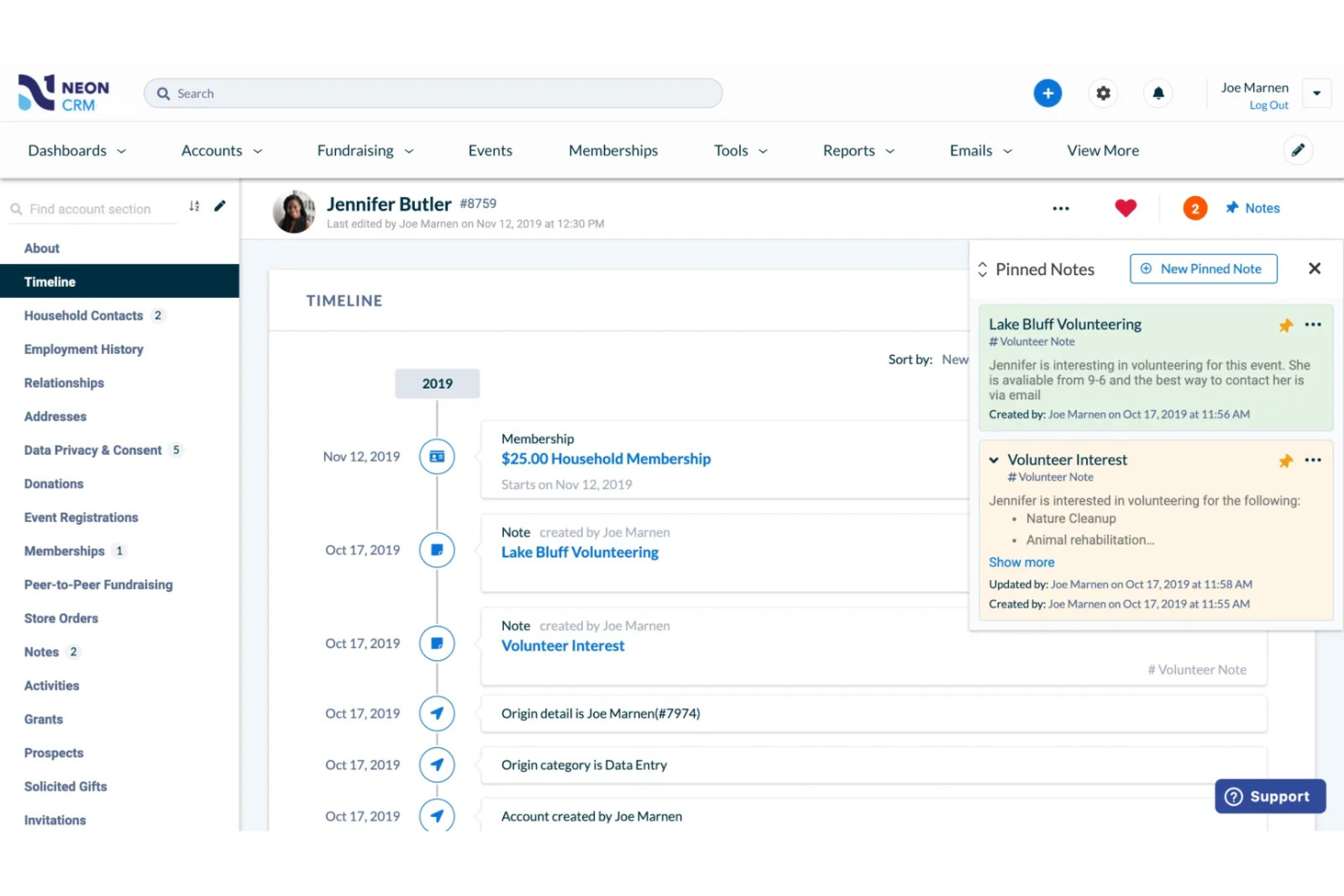
Neon CRM de Neon One destaca para organizaciones sin fines de lucro dedicadas a la recaudación de fondos que necesitan coordinar voluntarios junto con la planificación de eventos. Esta plataforma está diseñada para organizaciones que dependen del compromiso de voluntarios y desean gestionar inscripciones, horarios y comunicaciones en un solo lugar. Con Neon CRM, puedes conectar la gestión de voluntarios directamente con los flujos de trabajo del evento, lo que facilita organizar a las personas y la logística en conjunto.
Por qué elegí Neon CRM
La coordinación de voluntarios es el punto fuerte de Neon CRM para organizaciones que planean eventos. Elegí Neon CRM porque ofrece herramientas integradas de gestión de voluntarios que te permiten programar turnos, registrar horas y comunicarte directamente con los voluntarios desde la plataforma. El sistema también permite asignar voluntarios a roles o tareas específicas según sus habilidades y disponibilidad. Este enfoque en la coordinación de voluntarios ayuda a las organizaciones a que sus eventos funcionen sin problemas y asegura que se cubran todos los puestos necesarios.
Características clave de Neon CRM
Además de su fortaleza en la coordinación de voluntarios, Neon CRM ofrece varias otras funcionalidades para la gestión de eventos sin fines de lucro:
- Formularios de registro de eventos personalizables: Crea formularios de inscripción adaptados para recopilar información de los asistentes de cada evento.
- Herramientas integradas de recaudación de fondos: Acepta donaciones y gestiona campañas de recaudación de fondos directamente desde la plataforma.
- Comunicación por correo electrónico automatizada: Envía invitaciones, confirmaciones y recordatorios de eventos a los participantes.
- Paneles de informes en tiempo real: Supervisa el rendimiento de los eventos y sigue los principales indicadores a medida que se desarrolla tu evento.
Integraciones de Neon CRM
Las integraciones incluyen QuickBooks, Mailchimp, Salesforce Nonprofit Success Pack, PayPal, Venmo, Neon Pay y Zapier.
Pros and Cons
Pros:
- Los formularios de registro de eventos son totalmente personalizables
- La recaudación de fondos y la emisión de boletos son funciones integradas
- Recordatorios automáticos por correo electrónico para los participantes del evento
Cons:
- La aplicación móvil carece de funciones de gestión de eventos
- No tiene herramientas integradas para transmisión en vivo o seminarios web

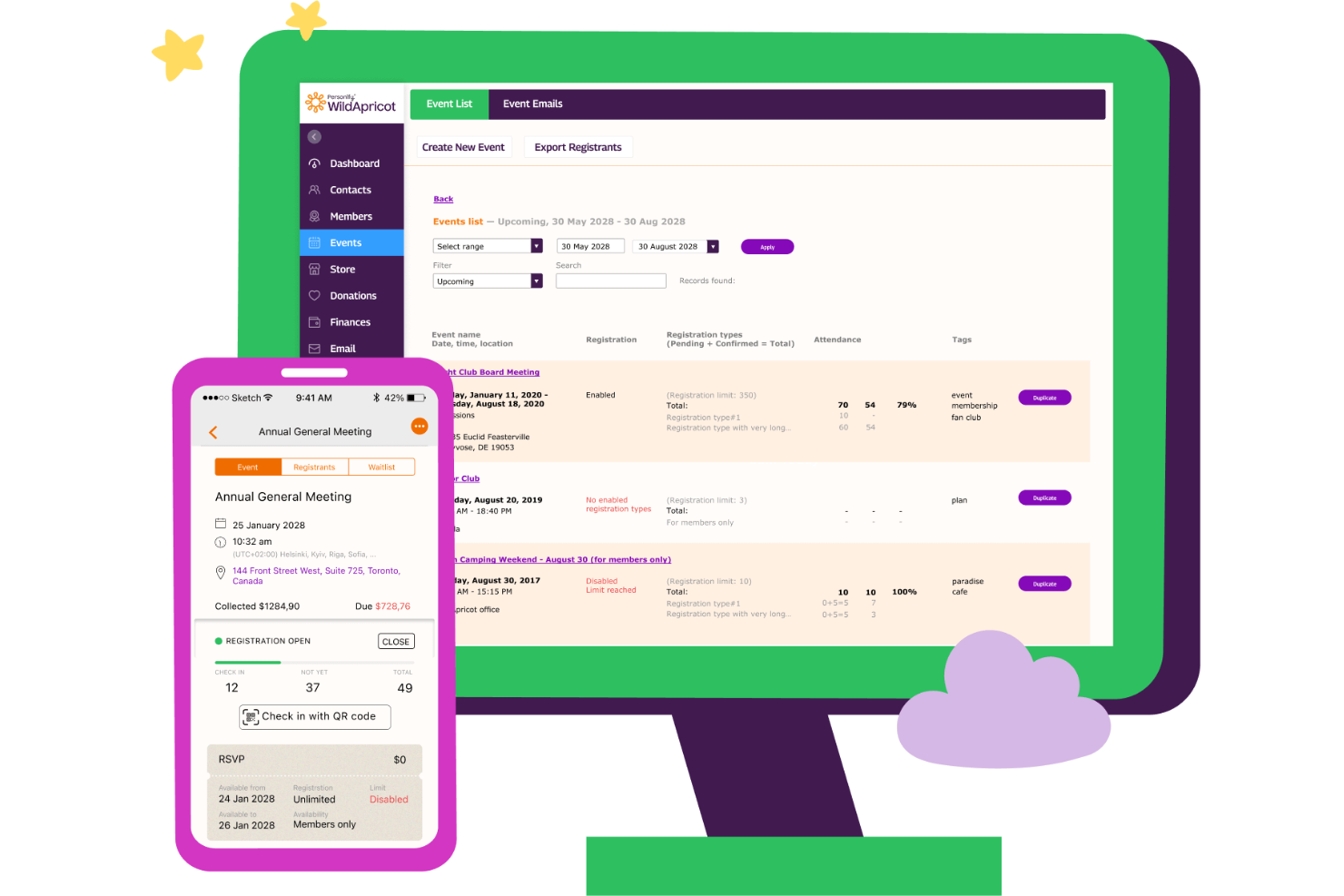
WildApricot está diseñado para organizaciones sin fines de lucro y asociaciones que dependen de membresías como parte central de sus operaciones. Si gestionas una organización basada en miembros, esta plataforma te ayuda a automatizar renovaciones, registros para eventos y comunicaciones en un solo lugar. WildApricot destaca por combinar herramientas de gestión de eventos con gestión de miembros, facilitando la participación y el crecimiento de tu comunidad.
Por qué elegí WildApricot
Para organizaciones donde la membresía es central para su misión, WildApricot ofrece una combinación única de gestión de eventos y miembros en una sola plataforma. Elegí WildApricot porque ahorra tiempo al automatizar la renovación de membresías, administrar directorios de miembros y gestionar registros para eventos sin tener que usar múltiples sistemas. El portal de autoservicio para miembros permite a los usuarios actualizar sus perfiles, registrarse para eventos y pagar cuotas en línea. Esta combinación de funciones es especialmente valiosa para organizaciones sin fines de lucro que desean simplificar tanto la gestión de membresías como la de eventos.
Características clave de WildApricot
Además de sus herramientas de gestión de miembros, WildApricot ofrece varias funciones que apoyan la organización de eventos para organizaciones sin fines de lucro:
- Sitios web de eventos personalizables: Crea páginas de eventos con tu marca, formularios de registro e información del evento.
- Campañas de correo electrónico automatizadas: Programa y envía invitaciones, recordatorios y seguimientos de eventos a los asistentes.
- Procesamiento de pagos en línea: Acepta pagos con tarjeta de crédito para entradas a eventos y donaciones directamente desde la plataforma.
- Aplicación móvil para administradores: Gestiona registros de entrada a eventos, consulta listas de inscritos y actualiza detalles del evento desde tu teléfono.
Integraciones de WildApricot
Las integraciones incluyen WordPress, Make, Zapier, Google Calendar, Outlook Calendar, Personify Payments, Access, FileMaker y QuickBooks.
Pros and Cons
Pros:
- Las renovaciones de membresía automatizan los pagos recurrentes
- El directorio de miembros es buscable y se puede filtrar
- Plantillas de correo electrónico adaptadas para eventos sin fines de lucro
Cons:
- El creador de sitios web tiene flexibilidad limitada de diseño
- No incluye funciones integradas para subastas o pujas

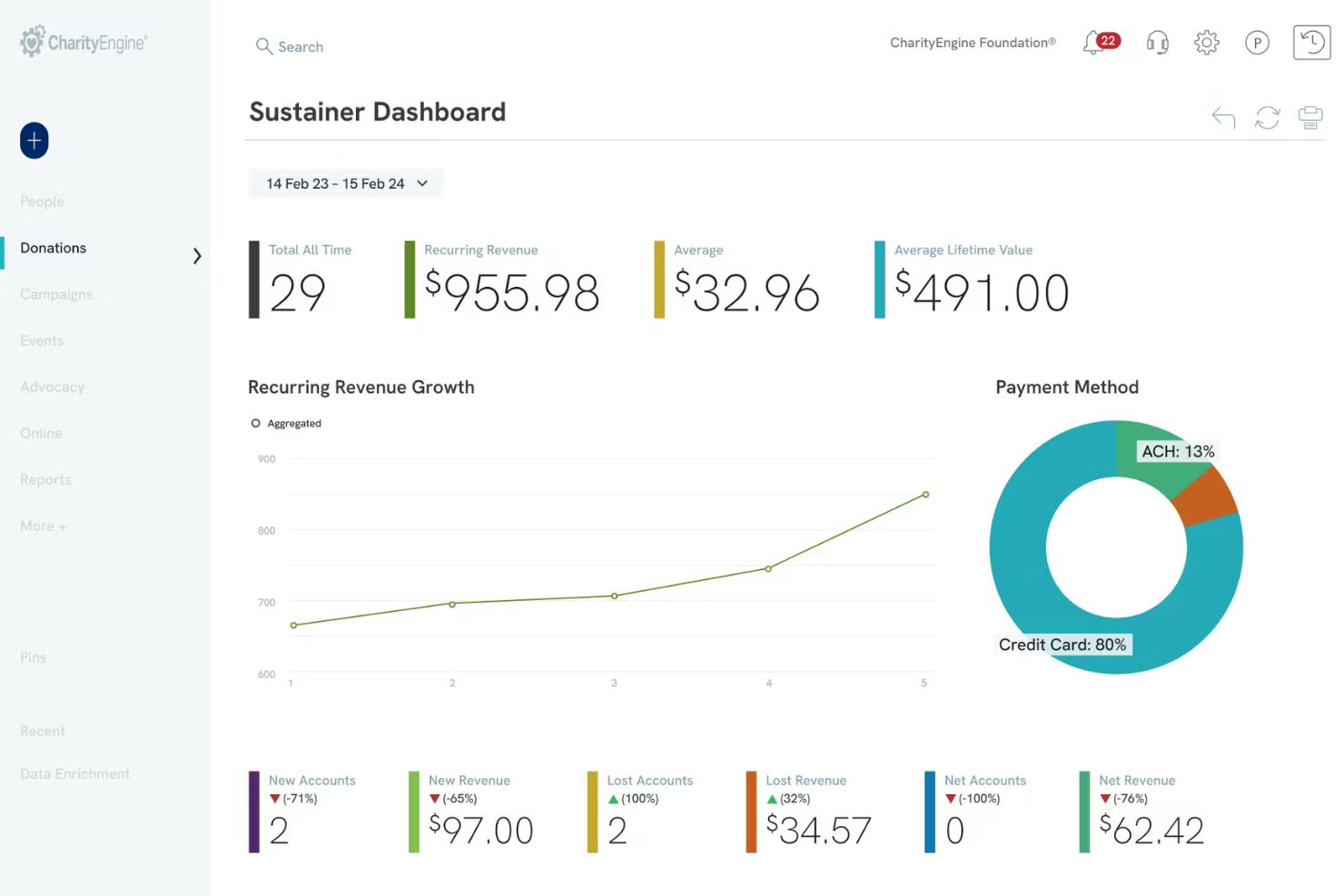
CharityEngine reúne herramientas de gestión de eventos y CRM en una sola plataforma, lo que la convierte en una opción ideal para organizaciones sin fines de lucro que desean conectar la recaudación de fondos, el compromiso de donantes y la planificación de eventos. Esta solución es especialmente útil para organizaciones que buscan rastrear la participación en eventos junto con el historial y las comunicaciones de los donantes. Con CharityEngine, puedes gestionar inscripciones, automatizar seguimientos y mantener todos los datos de los colaboradores en un sistema unificado.
Por qué elegí CharityEngine
Lo que distingue a CharityEngine es su integración CRM todo en uno, especialmente valiosa para organizaciones sin fines de lucro que gestionan tanto eventos como relaciones con donantes. Elegí CharityEngine porque permite rastrear inscripciones a eventos, donaciones y participación de los colaboradores en una sola base de datos. El panel unificado y fácil de usar de la plataforma conecta la participación en eventos con el historial de los donantes, facilitando la personalización del acercamiento y el seguimiento. Este enfoque ayuda a las organizaciones a tener una visión completa de la implicación de los colaboradores, desde la asistencia a eventos hasta las donaciones continuas.
Características clave de CharityEngine
Otras características que hacen a CharityEngine útil para la gestión de eventos de organizaciones sin fines de lucro incluyen:
- Páginas de eventos personalizables: Crea páginas de registro e información con la marca para cada evento.
- Campañas de correo electrónico automatizadas: Programa y envía invitaciones a eventos, recordatorios y seguimientos.
- Herramientas de gestión de voluntariado: Rastrear inscripciones, asignaciones y horas de voluntarios para los eventos.
- Registro móvil: Utiliza dispositivos móviles para registrar asistentes en la entrada del evento.
Integraciones de CharityEngine
Actualmente no se indican integraciones nativas.
Pros and Cons
Pros:
- La base de datos vincula donantes y asistentes a eventos
- Gestión de voluntariado incorporada para la organización de eventos
- Páginas de eventos personalizables que permiten experiencias de marca
Cons:
- No cuenta con vistas en panel en tiempo real
- No dispone de recursos de incorporación o configuración autodirigidos
Otros programas de gestión de eventos para organizaciones sin fines de lucro
\u003cspan style=\u0022font-weight: 400\u0022\u003eEstas son algunas opciones adicionales de software de gestión de eventos para organizaciones sin fines de lucro que no llegaron a mi selección final, pero que aún vale la pena revisar:\u003c/span\u003e


Comment j'évalue les logiciels de gestion d'événements pour les organisations à but non lucratif
Je divise mon évaluation en critères de base — le logiciel peut-il gérer les inscriptions aux événements, la planification des bénévoles et l'enregistrement ? — et en facteurs de différenciation qui déterminent la meilleure solution pour les équipes d'églises.
Fonctionnalités principales (Critères essentiels pour cette liste)
Lorsque je sélectionne des outils pour ma liste, j'évalue chacun sur une échelle de 0 (ne propose pas la fonctionnalité) à 5 (excelle dans ce domaine) pour chaque fonctionnalité principale listée ci-dessous. Ensuite, je convertis le score total de l'outil en pourcentage. Chaque logiciel doit atteindre un score total minimum de 55% pour être pris en compte.
- Inscription aux événements & RSVP : Je vérifie si le logiciel propose des formulaires personnalisables selon différents types d'événements — cours du dimanche, retraites de week-end, camps VBS — avec des options comme la billetterie à plusieurs niveaux et les listes d'attente.
- Traitement des paiements & des dons : L'intégration des dons est essentielle ici, donc je recherche des outils capables de gérer à la fois les frais d'événement et les dons avec la génération de reçus fiscaux et des tarifs adaptés aux associations.
- Planification & gestion des bénévoles : Qu'il s'agisse d'assigner des accueillants aux rotations du dimanche ou de recruter des animateurs de camp, j'évalue comment chaque logiciel gère la planification par rôle, les inscriptions et les rappels.
- Communication avec les participants : Je privilégie les outils qui intègrent des fonctionnalités d'envoi d'e-mails et de SMS permettant d'envoyer des confirmations d'inscription, des changements de dernière minute et des suivis après l'événement, sans avoir besoin d'une plateforme distincte.
- Suivi de la présence & enregistrement : L'enregistrement sécurisé des enfants avec badges d'appariement parent/enfant est un point clé. J'évalue également les options d'enregistrement générales comme le mode borne, le scan QR et les rapports de présence.
- Base de données des membres & contacts : Chaque solution doit relier la participation aux événements aux fiches des membres, donc je vérifie la présence d'une base de données interne ou une intégration directe avec des plateformes telles que Planning Center ou Breeze.
Une fois que j'ai une liste d'outils répondant aux critères, j'examine ce qui distingue chaque plateforme.
Facteurs différenciants (Ce qui distingue les fournisseurs)
Voici comment je compare et différencie les différents fournisseurs :
Fonctionnalités remarquables
L'intégration des vérifications d'antécédents est une vraie valeur ajoutée — je privilégie les solutions qui intègrent le filtrage des bénévoles directement dans le processus d'intégration plutôt qu'en procédure séparée. La gestion des petits groupes se distingue aussi lorsqu'une plateforme relie les inscriptions aux études bibliques ou aux cours au calendrier des événements avec des tableaux de bord pour les responsables. Une application mobile personnalisée apporte également une vraie valeur, offrant aux membres un point d'accès unique pour consulter les prochains événements, s'inscrire et s'enregistrer le dimanche matin.
Au-delà des fonctionnalités
La structure tarifaire est un aspect crucial dans ce domaine. J'évalue si une plateforme propose des paliers selon la taille de l'église ou des réductions pour associations, puisqu'une implantation d'église de 50 membres n'a pas le même budget qu'une paroisse multi-sites. L'intégration à l'écosystème est également importante – je vérifie les connexions natives avec des outils comme QuickBooks, Mailchimp et les principales plateformes ChMS afin que vos données circulent effectivement entre les systèmes. Je prends aussi en compte l'accompagnement à la mise en place, car de nombreux employés et bénévoles d'église ne sont pas technophiles, et une configuration guidée peut être décisive pour l'adoption.
Cómo elegir un software de gestión de eventos para organizaciones sin fines de lucro
Es fácil perderse entre largas listas de funciones y estructuras de precios complejas. Para ayudarte a mantenerte enfocado mientras avanzas en tu proceso único de selección de software, aquí tienes una lista de factores que debes tener en cuenta:
| Factor | Qué debes considerar |
|---|---|
| Escalabilidad | ¿El software podrá gestionar el tamaño actual y futuro de tus eventos, el número de voluntarios y el crecimiento de asistentes? Comprueba si puede admitir tanto reuniones pequeñas como grandes actividades anuales de recaudación de fondos. |
| Integraciones | ¿La herramienta se conecta con tus sistemas actuales de gestión de donantes, contabilidad o comunicación? Comprueba si ofrece integraciones nativas con las plataformas que ya utilizas. |
| Personalización | ¿Puedes adaptar los formularios de inscripción, la imagen de marca y los flujos de trabajo a las necesidades únicas de tu ministerio? Evita las herramientas que te obliguen a utilizar plantillas rígidas. |
| Facilidad de uso | ¿El personal y los voluntarios con distintos niveles de conocimientos tecnológicos podrán utilizar el sistema sin frustraciones? Busca una navegación clara y requisitos mínimos de capacitación. |
| Implementación e incorporación | ¿Cuánto tiempo llevará ponerlo en marcha? Pregunta por la asistencia para la migración, los recursos de capacitación y si necesitarás ayuda externa de TI. |
| Coste | ¿Todas las tarifas son transparentes, incluidos los costes de transacción y asistencia? Compara los niveles de precios y presta atención a los cargos ocultos que podrían afectar tu presupuesto. |
| Medidas de seguridad | ¿El software protege los datos confidenciales de donantes y asistentes? Busca cifrado, permisos de usuario y cumplimiento de las normas de privacidad. |
| Disponibilidad de asistencia | ¿Qué canales de asistencia se ofrecen y durante qué horarios? Considera si necesitarás ayuda por las tardes o los fines de semana, cuando suelen celebrarse muchos eventos. |
¿Qué es el software de gestión de eventos para organizaciones sin fines de lucro?
El software de gestión de eventos para organizaciones sin fines de lucro es una plataforma digital diseñada para ayudar a las organizaciones a planificar, organizar y ejecutar eventos, mientras gestionan registros, voluntarios y actividades de recaudación de fondos. Estas herramientas centralizan la logística de los eventos, la comunicación y el seguimiento de datos, lo que facilita que los equipos de organizaciones sin fines de lucro coordinen esfuerzos, involucren a sus colaboradores y midan los resultados de los eventos, todo dentro de un único sistema.
Funciones
Al seleccionar un software de gestión de eventos para organizaciones sin fines de lucro, presta atención a las siguientes funciones clave:
- Gestión del registro de eventos: Recopila la información de los asistentes, procesa las inscripciones y gestiona la venta de entradas o las confirmaciones de asistencia mediante formularios en línea personalizables.
- Programación de voluntarios: Asigna voluntarios a funciones específicas, realiza un seguimiento de su disponibilidad y gestiona las inscripciones a turnos para garantizar operaciones fluidas durante el evento.
- Herramientas de recaudación de fondos: Acepta donaciones, vende entradas y realiza un seguimiento del progreso de la recaudación directamente dentro de la plataforma para respaldar los objetivos financieros de tu evento.
- Comunicación automatizada por correo electrónico: Envía invitaciones, confirmaciones, recordatorios y mensajes de seguimiento a asistentes y voluntarios sin esfuerzo manual.
- Procesamiento de pagos: Gestiona de forma segura los pagos de entradas, donaciones o productos, y proporciona recibos a los participantes.
- Seguimiento y generación de informes de asistentes: Supervisa el número de registros, el estado del registro de entrada y las métricas de participación para evaluar el éxito del evento y orientar la planificación futura.
- Páginas de eventos personalizables: Crea páginas de destino de eventos con la identidad de tu organización, detalles, imágenes y enlaces de registro para promocionar tu evento en línea.
- Integración con otros sistemas: Conéctate con herramientas de gestión de donantes, contabilidad o comunicación para mantener la coherencia de los datos y reducir la introducción manual de información.
- Acceso móvil: Permite que el personal y los voluntarios gestionen tareas, registren la entrada de asistentes o se comuniquen desde cualquier lugar mediante interfaces adaptadas a dispositivos móviles.
- Recopilación de encuestas y comentarios: Recopila comentarios de asistentes y voluntarios después del evento para evaluar su satisfacción e identificar áreas de mejora.
Funciones comunes de inteligencia artificial del software de gestión de eventos para organizaciones sin fines de lucro
Además de las funciones estándar del software de gestión de eventos para organizaciones sin fines de lucro mencionadas anteriormente, muchas de estas soluciones están incorporando inteligencia artificial con funciones como las siguientes:
- Previsión predictiva de asistencia: Utiliza datos históricos y tendencias de registro para estimar la asistencia probable, lo que te ayuda a planificar los recursos y el personal con mayor precisión.
- Programación automatizada de comunicaciones: Analiza los patrones de participación de los asistentes para enviar correos electrónicos y recordatorios en los momentos óptimos, con el fin de lograr mayores tasas de apertura y respuesta.
- Asignación inteligente de voluntarios: Asigna voluntarios a funciones según sus habilidades, participación anterior y disponibilidad, reduciendo la coordinación manual y mejorando la adecuación.
- Información sobre recaudación de fondos basada en inteligencia artificial: Identifica posibles donantes de alto valor y sugiere estrategias de contacto personalizadas basadas en el historial de donaciones y las señales de participación.
- Análisis de sentimientos en tiempo real: Supervisa los comentarios de los asistentes y las menciones en redes sociales durante los eventos para señalar problemas o destacar éxitos a medida que ocurren.
Beneficios
Implementar un software de gestión de eventos para organizaciones sin fines de lucro ofrece varios beneficios para tu equipo y tu organización. Estos son algunos de los que puedes esperar:
- Coordinación centralizada de eventos: Gestiona registros, voluntarios, comunicaciones y pagos desde una sola plataforma, reduciendo el trabajo manual y los silos de datos.
- Mayor participación de los voluntarios: Utiliza herramientas de programación y comunicación para asignar voluntarios a funciones y mantenerlos informados antes, durante y después de los eventos.
- Mejora de las iniciativas de recaudación de fondos: Integra el procesamiento de donaciones y la venta de entradas para realizar un seguimiento del progreso de la recaudación y simplificar los informes financieros.
- Mejor experiencia para los asistentes: Ofrece un registro sencillo en línea, recordatorios automatizados y acceso móvil para facilitar la participación de los asistentes.
- Información práctica sobre los eventos: Accede a paneles en tiempo real y herramientas de generación de informes para evaluar el rendimiento de los eventos y orientar la planificación futura.
- Coherencia en la marca y los mensajes: Personaliza las páginas de eventos y las comunicaciones para reflejar la identidad y la misión de tu organización.
- Gestión segura de datos: Protege la información confidencial de donantes y asistentes con medidas de seguridad integradas y funciones de cumplimiento normativo.
Costos y precios
Seleccionar un software de gestión de eventos para organizaciones sin fines de lucro requiere comprender los diversos modelos de precios y planes disponibles. Los costos varían según las funcionalidades, el tamaño del equipo, los complementos y otros factores. La tabla siguiente resume los planes comunes, sus precios promedio y las funcionalidades típicas incluidas en las soluciones de software de gestión de eventos para organizaciones sin fines de lucro:
Tabla comparativa de planes para software de gestión de eventos para organizaciones sin fines de lucro
| Tipo de plan | Precio promedio | Funcionalidades comunes |
|---|---|---|
| Plan gratuito | $0 | Registro básico de eventos, seguimiento limitado de asistentes, programación sencilla de voluntarios y notificaciones por correo electrónico. |
| Plan personal | $10–$30/usuario/mes | Páginas de eventos personalizables, procesamiento de pagos, informes básicos y asistencia estándar. |
| Plan empresarial | $40–$80/usuario/mes | Análisis avanzados, herramientas de recaudación de fondos, opciones de integración y comunicaciones con la marca de la organización. |
| Plan empresarial avanzado | $100–$250/usuario/mes | Flujos de trabajo personalizados, gestión de cuentas dedicada, seguridad mejorada y asistencia prioritaria. |
Preguntas frecuentes sobre el software de gestión de eventos para organizaciones sin fines de lucro
Estas son algunas respuestas a preguntas frecuentes sobre el software de gestión de eventos para organizaciones sin fines de lucro:
¿Puede el software de gestión de eventos para organizaciones sin fines de lucro gestionar eventos virtuales y presenciales?
Sí, la mayoría de los programas de gestión de eventos para organizaciones sin fines de lucro admiten eventos presenciales y virtuales. Muchas plataformas ofrecen herramientas para el registro en línea, enlaces a reuniones virtuales y gestión de eventos híbridos, lo que facilita la adaptación a diferentes formatos de eventos a medida que cambian sus necesidades.
¿Cómo ayuda el software de gestión de eventos a coordinar a los voluntarios?
El software de gestión de eventos ayuda al permitir programar turnos, asignar funciones y comunicarse con los voluntarios desde un solo lugar. Esta centralización reduce la confusión, garantiza que todos conozcan sus responsabilidades y facilita el seguimiento de las horas y la participación de los voluntarios.
¿Es posible integrar el software de gestión de eventos con sistemas de gestión de donantes?
Sí, muchas soluciones de software de gestión de eventos ofrecen integraciones con sistemas de gestión de donantes y CRM. Esto permite sincronizar los datos de asistentes y donantes, realizar un seguimiento del historial de donaciones y simplificar las comunicaciones posteriores a los eventos.
¿Qué medidas de seguridad deben buscar las organizaciones sin fines de lucro en un software de gestión de eventos?
Busque funcionalidades como el cifrado de datos, los controles de acceso de usuarios y el cumplimiento de las normativas de privacidad, como el RGPD. Estas medidas de protección ayudan a proteger la información confidencial de donantes y asistentes frente a accesos no autorizados o filtraciones.
¿Hay descuentos disponibles para organizaciones sin fines de lucro al adquirir un software de gestión de eventos?
Sí, muchos proveedores ofrecen precios especiales o descuentos para organizaciones sin fines de lucro. Es recomendable preguntar por las tarifas para organizaciones sin fines de lucro, los niveles gratuitos o los beneficios adicionales para organizaciones benéficas durante el proceso de selección.