


ChurchCRM Review: Pros, Cons, Features & Pricing


ChurchCRM is a free, open-source church management software for congregations that need to track members, manage contributions, and organize groups without committing to a monthly subscription. I'd consider it if your church has a modest budget and some technical capacity to self-host—especially compared to a paid platform like Breeze, which offers a polished experience but comes with ongoing costs that smaller or resource-limited ministries may not be able to justify.
ChurchCRM Evaluation Summary

- Pricing upon request
- Free plan available
Why Trust Our Software Recommendations
Our team has been testing and reviewing software since 2012. As church leaders ourselves, we know how difficult—and important—it is to choose the right software.
For this guide, we evaluated tools using hands-on testing and independent research, scoring tools using our selection criteria.
Our reviews reflect our human editorial judgment, not a sales pitch.
ChurchCRM Overview
In my opinion, ChurchCRM is an excellent choice for churches seeking a cost-effective and customizable management solution. Compared to other software, it excels in value for money due to its open-source nature, allowing you to tailor it to your specific needs without the burden of licensing fees. While it may not have the most intuitive interface, its strong support system compensates for this, making it a solid option for smaller churches with limited budgets.
However, larger organizations may find the lack of advanced features and integrations limiting. If you're deciding between various church management tools, ChurchCRM is particularly appealing for those who prioritize flexibility and affordability.
pros
-
You can customize it to fit your church's specific needs.
-
The open-source nature allows you to use it without licensing fees.
-
Strong customer support helps you navigate any challenges.
cons
-
The interface isn't the most intuitive, which can slow you down.
-
It lacks advanced features needed by larger organizations.
-
There are insufficient integrations with other tools.
Is ChurchCRM Right For Your Needs?
Who Would Be a Good Fit for ChurchCRM?
Small to mid-sized churches and non-profits are ideal candidates for ChurchCRM. If your team values customization and needs a flexible solution without licensing costs, this tool is for you. Its open-source nature allows you to tailor it specifically to your church's operations. For example, if you need to track member engagement or manage event planning, ChurchCRM offers the essential tools to do so efficiently.
-
Small Churches
You benefit from ChurchCRM's customization options without worrying about high costs.
-
Non-Profits
You can manage member data and outreach activities effectively with ChurchCRM.
-
Volunteer Teams
You can organize schedules and responsibilities easily with its user-friendly tools.
-
Community Groups
You can manage events and communication effectively with ChurchCRM's offerings.
-
Administrative Staff
You gain the ability to streamline tasks with its straightforward management features.
-
Budget-Conscious Organizations
You can maximize resources by using ChurchCRM's cost-free, open-source platform.
Who Would Be a Bad Fit for ChurchCRM?
Large churches and organizations with complex needs may find ChurchCRM lacking. If your team relies heavily on advanced features or requires extensive integrations with other systems, ChurchCRM might not meet your expectations. Its limited interface intuitiveness and absence of sophisticated functionalities can hinder productivity for larger entities that need robust tools to manage diverse operations efficiently.
-
Large Churches
You might struggle with its lack of advanced features needed for complex operations.
-
Tech-Savvy Teams
You could find the interface too simplistic and not aligned with your tech needs.
-
Corporate Entities
You may need more robust management tools and integrations than ChurchCRM offers.
-
Event Management Firms
You might miss the comprehensive event planning features other tools provide.
-
Data-Driven Departments
You may require more advanced data analysis capabilities than ChurchCRM can deliver.
-
Multi-Site Organizations
You could find ChurchCRM's functionalities insufficient for managing operations across various locations.
How We Test & Score Tools
We’ve spent years building, refining, and improving our software testing and scoring system. The rubric is designed to capture the nuances of software selection and what makes a tool effective, focusing on critical aspects of the decision-making process.
Below, you can see exactly how our testing and scoring works across seven criteria. It allows us to provide an unbiased evaluation of the software based on core functionality, standout features, ease of use, onboarding, customer support, integrations, customer reviews, and value for money.
Core Functionality (25% of final scoring)
The starting point of our evaluation is always the core functionality of the tool. Does it have the basic features and functions that a user would expect to see? Are any of those core features locked to higher-tiered pricing plans? At its core, we expect a tool to stand up against the baseline capabilities of its competitors.
Standout Features (25% of final scoring)
Next, we evaluate uncommon standout features that go above and beyond the core functionality typically found in tools of its kind. A high score reflects specialized or unique features that make the product faster, more efficient, or offer additional value to the user.
We also evaluate how easy it is to integrate with other tools typically found in the tech stack to expand the functionality and utility of the software. Tools offering plentiful native integrations, 3rd party connections, and API access to build custom integrations score best.
Ease of Use (10% of final scoring)
We consider how quick and easy it is to execute the tasks defined in the core functionality using the tool. High scoring software is well designed, intuitive to use, offers mobile apps, provides templates, and makes relatively complex tasks seem simple.
Onboarding (10% of final scoring)
We know how important rapid team adoption is for a new platform, so we evaluate how easy it is to learn and use a tool with minimal training. We evaluate how quickly a team member can get set up and start using the tool with no experience. High scoring solutions indicate little or no support is required.
Customer Support (10% of final scoring)
We review how quick and easy it is to get unstuck and find help by phone, live chat, or knowledge base. Tools and companies that provide real-time support score best, while chatbots score worst.
Customer Reviews (10% of final scoring)
Beyond our own testing and evaluation, we consider the net promoter score from current and past customers. We review their likelihood, given the option, to choose the tool again for the core functionality. A high scoring software reflects a high net promoter score from current or past customers.
Value for Money (10% of final scoring)
Lastly, in consideration of all the other criteria, we review the average price of entry level plans against the core features and consider the value of the other evaluation criteria. Software that delivers more, for less, will score higher.
Core Features
Member Management:
You can track and manage your congregation's information with ease. It helps you maintain detailed records, making community engagement more effective.
Donation Tracking:
You can monitor contributions effortlessly, ensuring transparency and accurate financial reporting. This feature supports multiple payment methods, simplifying the donation process.
Event Scheduling:
You can organize church events smoothly with its scheduling tools. It allows you to plan and communicate events effectively, keeping everyone informed.
Attendance Tracking:
You can record and analyze attendance patterns to enhance community involvement. This feature helps you identify trends and improve member participation.
Communication Tools:
You can easily send emails and notifications to your congregation. These tools keep your community connected and informed about church activities.
Volunteer Management:
You can assign and manage volunteer tasks efficiently. It helps you coordinate efforts and ensure that events run smoothly.

Standout Features
Open-Source Customization:
You can modify the software to fit your specific needs without extra costs. This flexibility allows you to tailor ChurchCRM to your unique church operations.
Strong Support Community:
You can rely on a dedicated community for assistance and troubleshooting. This active support network ensures you get help when navigating challenges.
Ease of Use
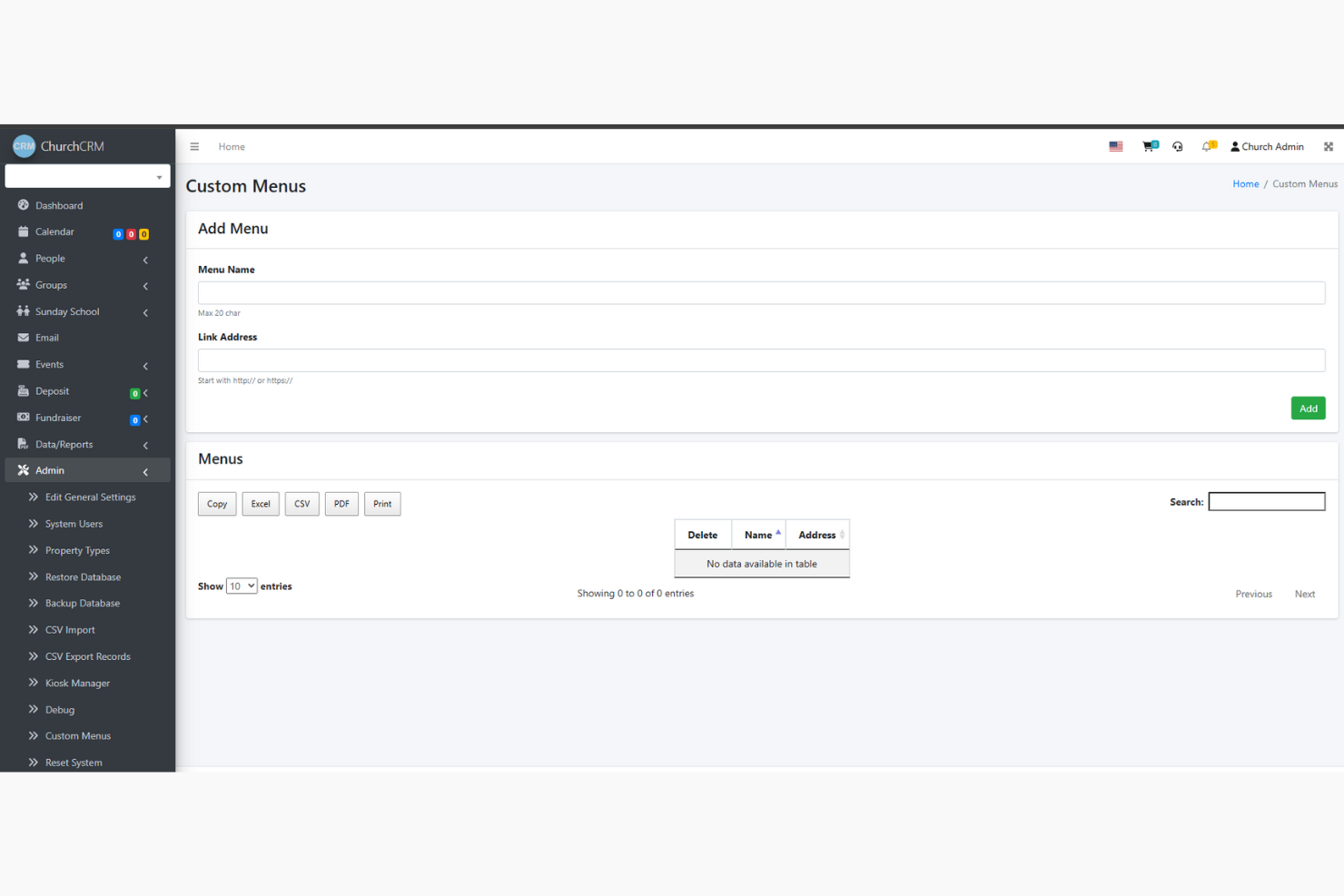
ChurchCRM offers a decent level of user-friendliness, though its interface isn't the most intuitive compared to some alternatives. You might find the initial navigation a bit challenging, especially if you're not tech-savvy. However, once you get familiar with its layout, managing tasks like member data and event scheduling becomes straightforward. Many users appreciate the customization options, which let you adapt the software to your needs, but it may require a bit of a learning curve to fully utilize its features.

Onboarding
ChurchCRM provides a smooth onboarding experience with ample support resources to help you get started. The setup process is straightforward, and the community-driven support offers quick assistance for any initial challenges. You can access detailed documentation and forums that guide you through each step, making it easier to understand the software's functionalities. Compared to other options, ChurchCRM's onboarding is efficient, allowing your team to quickly realize its value and integrate it into your daily operations.
Customer Support
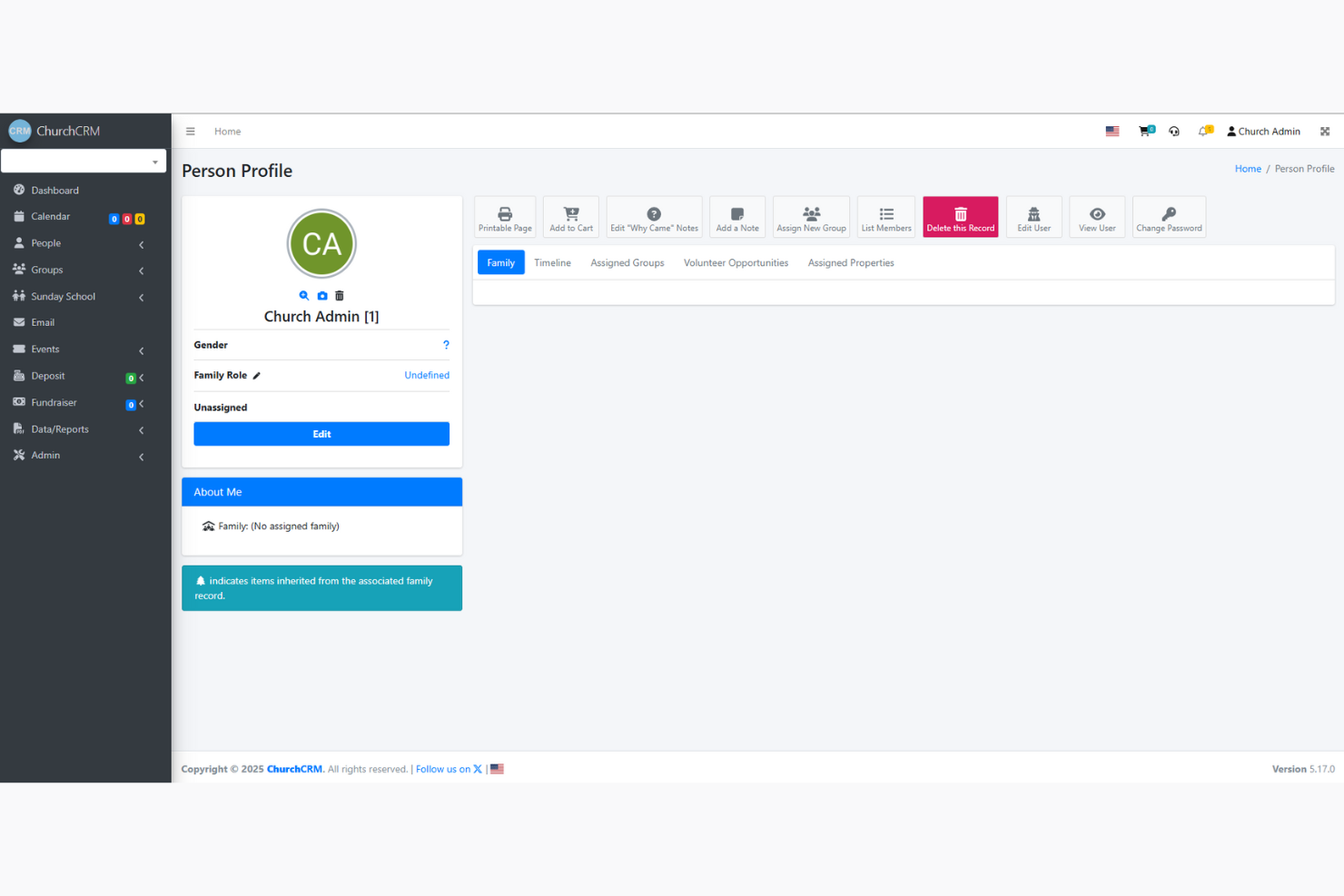
ChurchCRM excels in customer support, offering a robust community-driven assistance network. You can rely on forums and documentation to solve issues quickly, which users find helpful and responsive. The support community is active, providing timely guidance and sharing solutions to common problems. This level of support ensures that your team can address challenges efficiently and focus on managing your church effectively, giving you peace of mind as you navigate the software.

Value for Money
ChurchCRM pricing is highly appealing due to its open-source model, offering unmatched value. You can access essential church management features without any licensing fees, making it ideal for budget-conscious organizations. This cost-effective approach allows you to allocate resources to other critical areas while still benefiting from a comprehensive management tool.
- Open-Source: Offers full access to features at no cost, allowing customization.
- Community Support: Provides assistance through active user forums and documentation.
ChurchCRM Specs
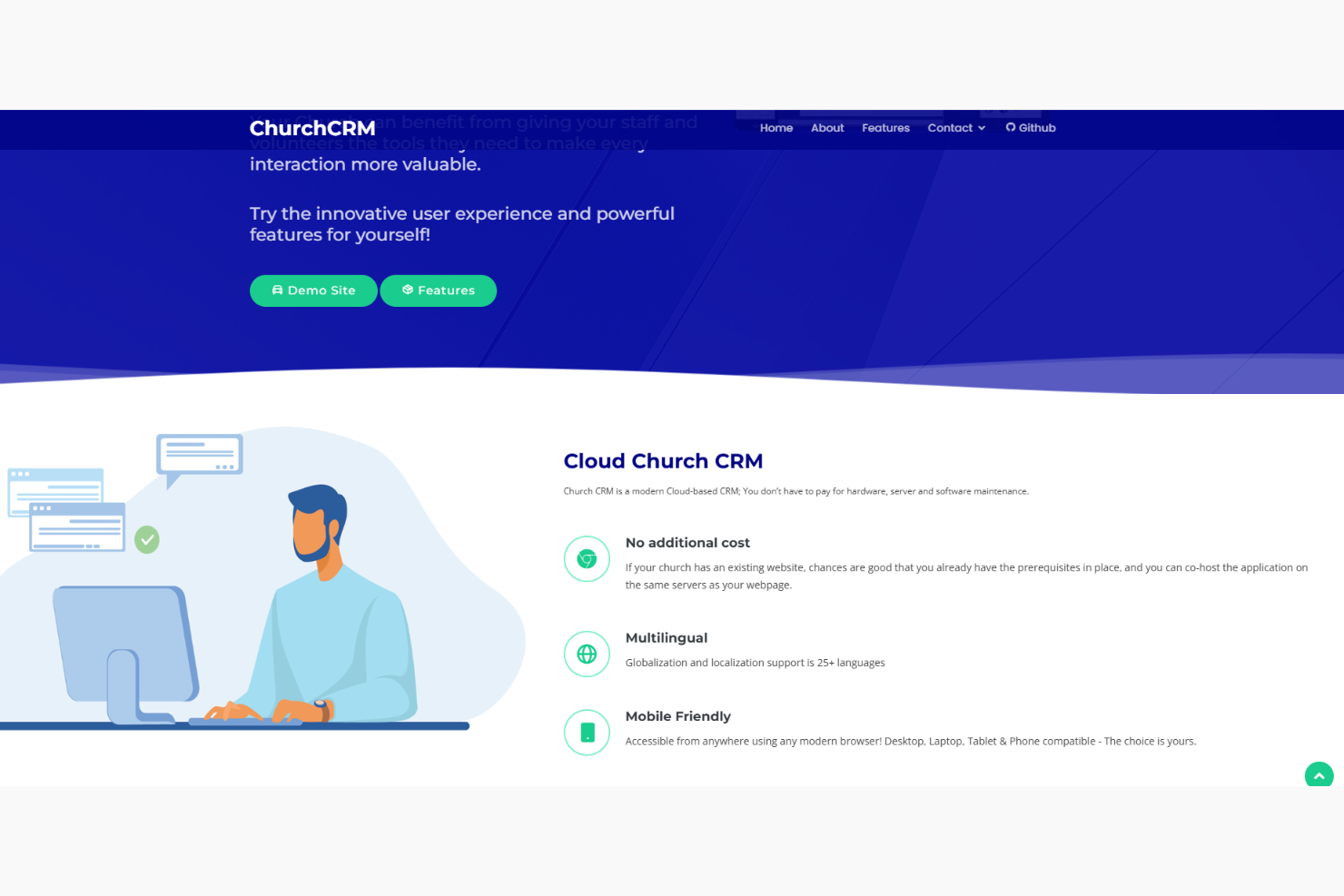
- API
- Calendar Management
- Contact Management
- Dashboards
- Data Export
- Data Import
- Document Management
- External Integrations
- Multi-User
- Notifications
- Payment Gateway Integration
- Scheduling
- Workflow Management
ChurchCRM FAQs
How easy is it to customize ChurchCRM?
Is ChurchCRM suitable for large congregations?
What kind of support is available for ChurchCRM?
Can I use ChurchCRM on mobile devices?
How secure is ChurchCRM for managing sensitive data?
Does ChurchCRM offer training resources?
How does ChurchCRM handle updates and maintenance?
Is ChurchCRM compliant with data protection regulations?
What's Next?
Subscribe to our newsletter to get the latest resources, best practices, and insights on managing churches from expert pastors and church leaders.