

Dirigir una iglesia implica una larga lista de responsabilidades: planificar los servicios, coordinar a los voluntarios y al personal de la iglesia, mantenerse al día con los mensajes y asegurarse de que todos se sientan apoyados. Es mucho que gestionar y puede consumir fácilmente todo tu tiempo y energía.
Por eso he estado prestando mucha atención a las herramientas que realmente aligeran la carga. Algunas de estas plataformas pueden hacerse cargo de las tareas administrativas y ministeriales rutinarias, organizar la información con mayor claridad y ayudarte a mantenerte conectado con tu comunidad de una forma más personal.
En esta guía, comparto las herramientas de IA para iglesias de alta calidad que más destacaron después de probar diferentes opciones. Te explicaré qué ofrece cada una, cómo puede ayudar con las tareas del día a día y cuáles son sus ventajas y limitaciones para que puedas compararlas.
Por qué confiar en nuestras recomendaciones de software
6,700+
Reviews
20
Industry experts
16+
Evaluation factors
14
Years
Nuestro equipo lleva probando y evaluando software desde 2012. Como líderes eclesiásticos, sabemos lo difícil —y lo importante— que es elegir el software adecuado.
Para esta guía, evaluamos las herramientas mediante pruebas prácticas e investigación independiente, puntuando las herramientas según nuestros criterios de selección.
Nuestras reseñas reflejan nuestro criterio editorial humano, no un discurso de ventas.
Tabla comparativa de herramientas de IA para iglesias
Esta tabla comparativa resume los detalles de precios de mi selección de las mejores herramientas de IA para iglesias:
| Tool | Best For | Trial Info | Price | ||
|---|---|---|---|---|---|
| 1 | Lo mejor para la traducción de sermones multilingües en vivo | Prueba gratuita disponible | Desde $150/mes | Website | |
| 2 | Ideal para la automatización de preguntas y respuestas de miembros | Prueba gratuita de 60 días disponible | Desde $99/mes | Website | |
| 3 | Ideal para flujos de trabajo multicanal basados en IA | Demostración gratuita disponible | Precio a consultar | Website | |
| 4 | Lo mejor para la investigación bíblica impulsada por IA | Prueba gratuita de 30 días | Desde $9.99/mes | Website | |
| 5 | Ideal para sincronización inteligente de datos con IA | Demo gratuita disponible | Precios bajo consulta | Website | |
| 6 | Ideal para la preparación de sermones asistida por IA | Prueba gratuita disponible | Desde $39/mes | Website | |
| 7 | Ideal para inteligencia artificial conversacional | Plan gratuito disponible | Desde $5/mes | Website | |
| 8 | Ideal para generar ideas para sermones con inteligencia artificial | Consulta gratuita con expertos disponible | Precio bajo consulta | Website | |
| 9 | Ideal para obtener perspectivas de liderazgo eclesiástico potenciadas por IA | Demostración gratuita disponible | Desde $27/mes | Website | |
| 10 | Ideal para integrar herramientas de IA con tus sistemas existentes | Plan gratuito disponible | Desde $65/mes | Website |


Reseñas de las mejores herramientas de IA para iglesias
A continuación, encontrarás mis resúmenes detallados de las mejores herramientas de IA para iglesias que entraron en mi selección. Mis reseñas ofrecen un análisis detallado de las funciones principales, ventajas & desventajas, integraciones y casos de uso ideales de cada herramienta para ayudarte a encontrar la más adecuada para ti.
 Lo mejor para la traducción de sermones multilingües en vivo
- Prueba gratuita disponible
- Desde $150/mes

La aplicación de traducción impulsada por IA de OneAccord permite la comunicación multilingüe en tiempo real para iglesias, ayudando a las congregaciones a conectarse sin barreras de idioma durante los servicios y las sesiones grupales. OneAccord es una plataforma de IA para iglesias que ofrece traducción de sermones en vivo, monitoreo de audio en tiempo real y acceso a la congregación desde el navegador para entornos de culto multilingües e híbridos.
¿Para Quién es Mejor OneAccord?
Líderes de iglesias y equipos técnicos que necesitan herramientas impulsadas por IA para servicios de adoración multilingües y participación accesible de la congregación en línea.
Por Qué Elegí OneAccord
Elegí OneAccord como una de las mejores opciones porque puedo ofrecer traducción en vivo de sermones multilingües a mi congregación sin necesitar hardware adicional ni instalaciones complejas. Mi equipo utiliza su traducción impulsada por IA para llegar a las personas en sus lenguas maternas durante la adoración. Me gusta que los oyentes puedan acceder a las traducciones en tiempo real directamente desde sus propios dispositivos, lo que facilita incluir a todos en el servicio.
Características Clave de OneAccord
- Monitoreo de calidad de audio en tiempo real: Supervisa y gestiona la claridad del audio durante los servicios en vivo desde un panel centralizado.
- Acceso para la congregación desde el navegador: Los asistentes se unen y escuchan las traducciones utilizando cualquier navegador web en sus dispositivos.
- Opciones de personalización de marca: Agregue el logo y los colores de su iglesia a la interfaz de escucha para una experiencia coherente.
Integraciones de OneAccord
Las integraciones nativas no están claramente documentadas. OneAccord proporciona una API para integraciones personalizadas.
Pros and Cons
Pros:
- La personalización de la marca mantiene una experiencia coherente de iglesia
- El acceso basado en navegador apoya la participación de la congregación multilingüe
- El panel de análisis rastrea el compromiso de los oyentes
Cons:
- La documentación es limitada para la configuración avanzada
- No tiene soporte integrado para transmisión de video
Learn more about OneAccord: Ideal para la automatización de preguntas y respuestas de miembros
- Prueba gratuita de 60 días disponible
- Desde $99/mes
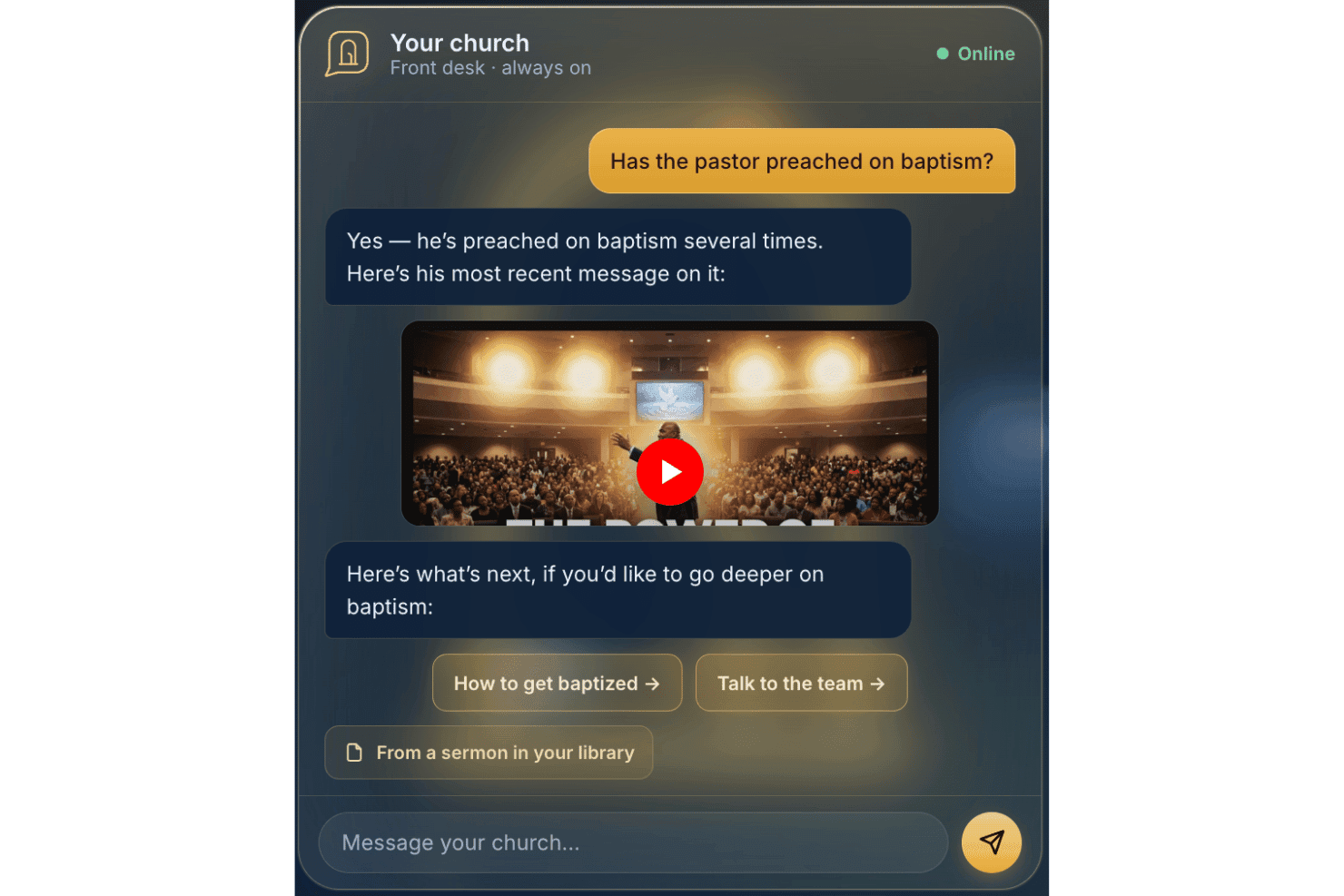
AskMyChurch ofrece un servicio de respuesta para iglesias impulsado por IA las 24 horas. AskMyChurch es un asistente de IA para iglesias que responde preguntas de los miembros a partir de tu propio contenido publicado, indexa los sermones de tu pastor y deriva conversaciones sensibles al equipo de cuidado pastoral.
¿Para quién es mejor AskMyChurch?
Es una excelente opción para iglesias de cualquier tamaño que reciban un gran volumen de preguntas repetidas de miembros pero no cuenten con personal disponible para responderlas las 24 horas.
Por qué elegí AskMyChurch
Elegí AskMyChurch porque solo responde utilizando el contenido publicado de tu iglesia y realiza una segunda verificación antes de enviar cualquier respuesta. Si no encuentra una respuesta respaldada, lo indica en lugar de adivinar. También me gusta Canon, que indexa los sermones de tu pastor y enlaza cada respuesta al minuto exacto en que fue dicha, para que los miembros reciban una respuesta fundamentada, citando directamente la enseñanza real de tu iglesia.
Características clave de AskMyChurch
- Filtro de crisis: Detecta señales de angustia y las deriva a la línea de ayuda 988 Suicide & Crisis Lifeline y al equipo de cuidado antes de cualquier respuesta de IA.
- Informe de temas: Rastrea anónimamente los temas de las preguntas y muestra cada semana las preocupaciones más frecuentes de los miembros.
- Controles temáticos en lenguaje sencillo: Te permite establecer límites sobre los temas que la IA debe transferir al personal, usando simples comandos en el panel de control.
- Soporte multilingüe: Ofrece automatización de preguntas y respuestas para miembros tanto en inglés como en español desde el principio.
Integraciones de AskMyChurch
Las integraciones nativas no están documentadas públicamente. El contenido se ingiere desde tu sitio web público y medios de sermones, pero no se anuncian conexiones con otros sistemas de gestión o comunicación para iglesias.
Pros and Cons
Pros:
- Responde solo con el contenido de tu iglesia
- Deriva temas sensibles al personal pastoral
- Soporta preguntas y respuestas de miembros en inglés y español
Cons:
- No se conecta con software de gestión de iglesias
- No disponible soporte mediante app móvil y SMS
Learn more about AskMyChurch: Ideal para flujos de trabajo multicanal basados en IA
- Demostración gratuita disponible
- Precio a consultar
Visit WebsiteCustomer Rating:4.5/5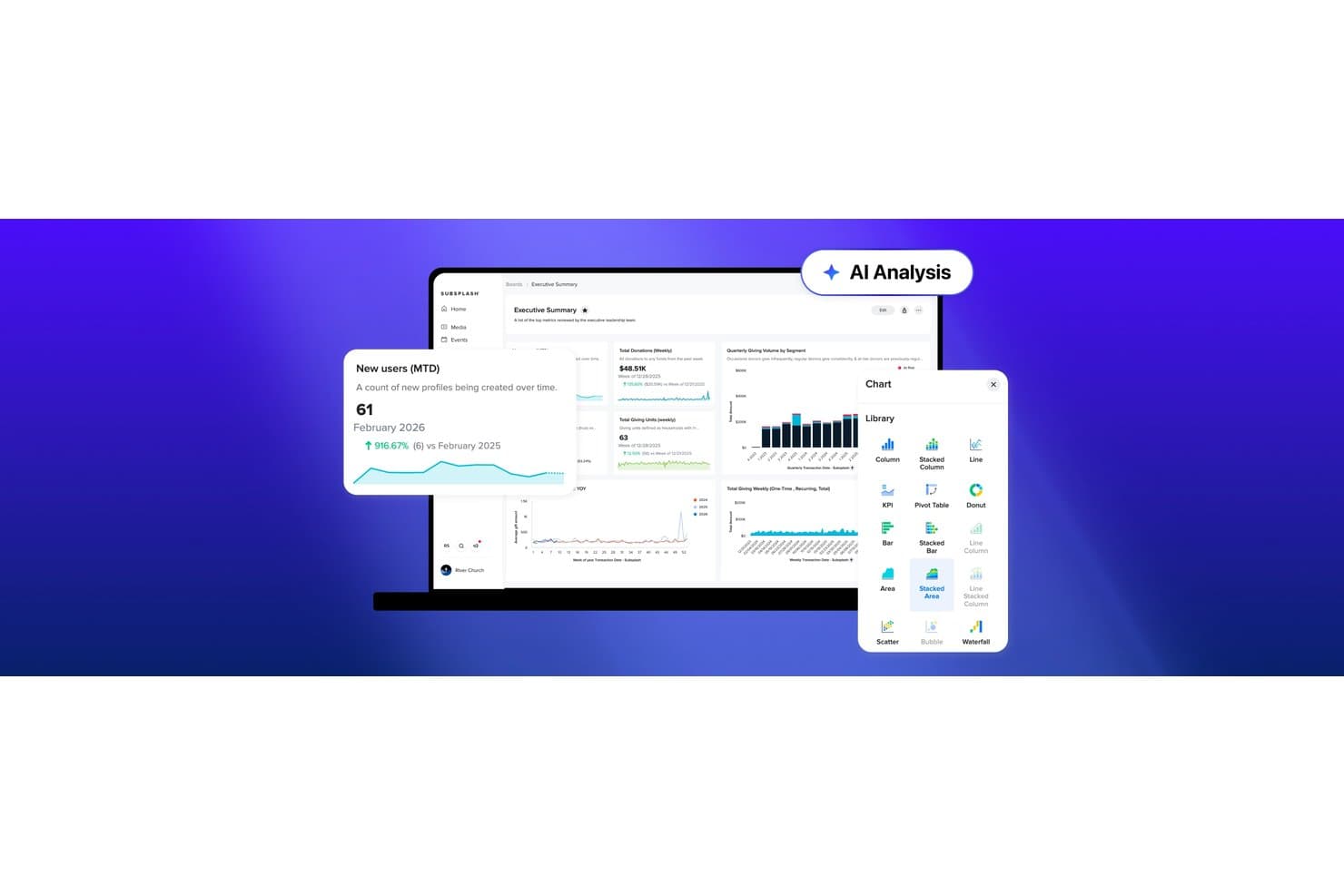
Subsplash ofrece una función de Análisis IA con un panel de análisis que muestra métricas de nuevos usuarios, totales de donaciones, tendencias de donativos y una biblioteca de gráficos con múltiples opciones de visualización. Subsplash es una plataforma integral para iglesias que combina aplicaciones móviles, donaciones, transmisión en vivo, gestión eclesiástica y herramientas de IA para reutilización de sermones, automatización de flujos de trabajo y participación de los congregantes.
¿Para quién es mejor Subsplash?
Subsplash es ideal para iglesias en crecimiento que necesitan una sola plataforma para coordinar comunicaciones, medios, donaciones y operaciones ministeriales entre personal, voluntarios y miembros de la congregación.
Por qué elegí Subsplash
Subsplash se gana su lugar en mi lista porque su función de Flujos de Trabajo utiliza IA para generar procesos ministeriales completos en segundos. Puedo describir un proceso de incorporación de voluntarios o una secuencia de seguimiento de nuevos visitantes, y Subsplash crea todo el tablero Kanban, listas de verificación y correos electrónicos automatizados. Lo que más me gusta es que esos correos se envían automáticamente en cuanto una tarjeta pasa a una nueva etapa, llegando a las personas por la app, correo electrónico y SMS sin intervención manual.
Características clave de Subsplash
- Reutilización de medios con Pulpit AI: Crea al instante clips de sermones, materiales de discipulado y publicaciones sociales a partir de sermones cargados.
- Base de datos centralizada de personas: Almacena todos los registros de congregantes, donantes y voluntarios en una sola plataforma integrada.
- Paneles de tendencias con IA: Genera visualizaciones de datos en vivo para donaciones, asistencia y participación de grupos.
- Publicación de eventos multicanal: Programa y distribuye eventos simultáneamente en sitio web, app y canales de mensajería.
Integraciones de Subsplash
Subsplash ofrece integraciones nativas con Planning Center, Zapier, Breeze, MortarStone y más, y proporciona una API para integraciones personalizadas.
Pros and Cons
Pros:
- Los flujos de trabajo de IA generan procesos ministeriales completos al instante
- Pulpit AI convierte sermones en contenido social
- Los paneles de tendencias muestran datos de donativos y asistencia
Cons:
- El conjunto de herramientas de IA es reciente y aún está madurando
- No cuenta con salvaguardas doctrinales sensibles a las escrituras incorporadas
 Lo mejor para la investigación bíblica impulsada por IA
- Prueba gratuita de 30 días
- Desde $9.99/mes
Visit WebsiteCustomer Rating:4.5/5
Logos Bible Software enriquece el estudio de las escrituras y mejora la preparación de sermones. Logos Bible Software está diseñado para pastores, teólogos y estudiosos que necesitan herramientas dedicadas para la investigación y el estudio bíblico. Ofrece una extensa biblioteca y capacidades de búsqueda impulsadas por IA que mejoran el estudio de las escrituras y la preparación de sermones.
Por qué elegí Logos Bible Software: Proporciona herramientas avanzadas de investigación bíblica con funciones como búsqueda potenciada por IA y análisis de las escrituras. Puedes acceder a una vasta biblioteca de recursos para profundizar en tu comprensión de la Biblia. El software también ofrece herramientas para la preparación de sermones, ayudándote a crear mensajes profundos. Estas características lo convierten en una herramienta útil para cualquiera que tome en serio el estudio bíblico.
Características y compatibilidades destacadas:
Características incluyen una amplia biblioteca digital, herramientas para la preparación de sermones y un entorno de estudio personalizable. Estas funciones te ayudan a explorar los textos bíblicos en profundidad. La interfaz intuitiva del software facilita la navegación y el uso efectivo de sus recursos.
Compatibilidades incluyen BibleWorks, Evernote, Microsoft Word, Dropbox, OneDrive, Kindle, Zotero, Scrivener, Google Drive y Microsoft PowerPoint.
Pros and Cons
Pros:
- Acceso a extensos recursos bíblicos
- Capacidades avanzadas de búsqueda potenciada por IA
- Permite un estudio detallado de las escrituras
Cons:
- Curva de aprendizaje para principiantes
- Requiere un espacio de almacenamiento significativo
Learn more about Logos Bible Software: Ideal para sincronización inteligente de datos con IA
- Demo gratuita disponible
- Precios bajo consulta

Church Community Builder organiza la información de miembros, eventos y grupos. Church Community Builder es un sistema de gestión de iglesias basado en la nube con IA que te ayuda a organizar y compartir información clave sobre tu congregación. Está diseñado para ayudar a tu equipo a mantener los datos de miembros, eventos y detalles de grupos en un solo lugar y asegurar que las actualizaciones fluyan donde las necesitas.
Por qué elegí Church Community Builder: Church Community Builder sincroniza los datos de los miembros, por lo que las actualizaciones que realicen las personas aparecen de inmediato en tus registros, y envía actualizaciones de eventos y grupos a los canales que tu congregación ya utiliza. Crea páginas para eventos y grupos automáticamente, manteniendo la información coherente en todas las ubicaciones. Los miembros pueden actualizar sus propios datos de contacto, lo que reduce la limpieza manual de datos.
Características destacadas e integraciones:
Características incluyen la sincronización automática de la información de los miembros para que tus registros estén siempre al día, la transferencia de datos de eventos desde tu sistema de gestión directamente a tu sitio web o aplicación, y una búsqueda de grupos con filtros y vista de mapa para que tu gente encuentre la comunidad adecuada. Estas opciones te ayudan a mantener a tu congregación informada y comprometida.
Integraciones incluyen el creador de sitios web The Church Co y el Members Portal que se sincroniza con Church Community Builder, páginas de eventos a través de la integración con The Church Co, y páginas de grupos mediante la integración con The Church Co.
Pros and Cons
Pros:
- Sincronización sencilla de actualizaciones de miembros
- Creación automática de páginas para eventos
- Búsqueda de grupos con filtros de mapa
Cons:
- Puede llevar tiempo aprender a usar todas las herramientas
- La interfaz puede sentirse saturada
Learn more about Church Community Builder: Ideal para la preparación de sermones asistida por IA
- Prueba gratuita disponible
- Desde $39/mes

Pulpit AI apoya la redacción de sermones y fortalece la investigación y organización. Pulpit AI está diseñado para pastores y líderes de iglesias que buscan mejorar su proceso de preparación de sermones. Ofrece herramientas impulsadas por IA para ayudar con la redacción, investigación y organización de sermones, convirtiéndolo en un recurso valioso para el desarrollo de sermones.
Por qué elegí Pulpit AI: Proporciona soporte en la preparación de sermones con funciones como esquemas de sermones asistidos por IA y herramientas de investigación. Puedes generar rápidamente borradores de sermones y acceder a recursos bíblicos relevantes.
Funciones e integraciones destacadas:
Las funciones incluyen esquemas de sermones asistidos por IA, herramientas de investigación y capacidades de organización de sermones. Estas funciones te ayudan a elaborar sermones bien estructurados de forma eficiente. El diseño intuitivo de la plataforma asegura que puedas concentrarte en entregar mensajes impactantes. Además, puedes reutilizar tus sermones para compartirlos en redes sociales o en el sitio web de tu iglesia como videoclips, preguntas para discusión, devocionales, blogs y más.
Las integraciones incluyen Subsplash y CrowdVibe.
Pros and Cons
Pros:
- Creación de esquemas de sermones asistidos por IA
- Acceso a recursos bíblicos relevantes
- Amplias capacidades orientadas al discipulado
Cons:
- Limitado a tareas relacionadas con los sermones
- Requiere tiempo para aprender sus funciones
Learn more about Pulpit AI: Ideal para inteligencia artificial conversacional
- Plan gratuito disponible
- Desde $5/mes

ChatGPT impulsa la IA conversacional y permite experiencias de chat interactivas. Chat GPT es una herramienta de IA diseñada para desarrolladores y empresas que buscan implementar soluciones de inteligencia artificial conversacional. Ofrece capacidades de procesamiento de lenguaje natural que facilitan experiencias de chat interactivas e inteligentes para los usuarios.
Por qué elegí Chat GPT: Proporciona inteligencia artificial conversacional con características como respuestas contextuales y generación de lenguaje. Se pueden crear chatbots que comprendan y respondan a las consultas de los usuarios de manera similar a la humana. La capacidad de la herramienta para manejar conversaciones complejas la convierte en un recurso valioso para el servicio y la atención al cliente. Estas funcionalidades la hacen ideal para empresas que buscan mejorar sus estrategias de comunicación.
Características destacadas e integraciones:
Características incluyen procesamiento de lenguaje natural, respuestas contextuales y capacidades de generación de lenguaje. Estas funciones te ayudan a crear experiencias de chat atractivas e inteligentes. La interfaz intuitiva de la plataforma permite implementar soluciones de IA de manera sencilla.
Integraciones incluyen Slack, Microsoft Teams, Zoom, Facebook Messenger, WhatsApp, Google Assistant, Amazon Alexa, Zendesk, Salesforce y Shopify.
Pros and Cons
Pros:
- Proporciona respuestas conversacionales contextuales
- Soporta procesamiento de lenguaje natural
- Mejora las estrategias de comunicación
Cons:
- Puede "alucinar" y requiere verificación manual de hechos
- Limitado a tareas conversacionales
Learn more about Chat GPT: Ideal para generar ideas para sermones con inteligencia artificial
- Consulta gratuita con expertos disponible
- Precio bajo consulta

AI for Churches automatiza tareas ministeriales y apoya la preparación de sermones. AI for Churches está diseñado para líderes de iglesias que buscan integrar la inteligencia artificial en sus ministerios. Ayuda a automatizar tareas rutinarias y proporciona ideas para la preparación de sermones y el compromiso de la congregación.
Por qué elegí AI for Churches: Destaca en el análisis de sermones, ofreciendo funciones como SermonSpark, que genera ideas y esquemas de sermones basados en versículos bíblicos. La función AI Tech Coach guía a tu equipo sobre cómo utilizar la inteligencia artificial generativa de manera efectiva. AI for Churches también ofrece estrategias claras de IA, ayudándote a implementar la inteligencia artificial sin comprometer los valores de tu iglesia. Estas características lo convierten en una excelente opción para mejorar las tareas relacionadas con los sermones.
Características destacadas e integraciones:
Las características incluyen generación de ideas para sermones, coaching de IA para el personal y herramientas para el compromiso de la congregación. Estas funciones te permiten centrarte más en el cuidado pastoral y el ministerio mientras las herramientas de IA ahorran tiempo al gestionar tareas rutinarias. La orientación de IA de la plataforma garantiza que tu equipo use la tecnología con confianza.
Integraciones no se mencionan por el momento.
Pros and Cons
Pros:
- Estrategias personalizadas de IA para iglesias
- Herramientas impulsadas por IA para la preparación de sermones
- Mejora el compromiso de la congregación
Cons:
- Limitado a funciones específicas de IA
- Requiere una configuración y aprendizaje iniciales
Learn more about AI for Churches: Ideal para obtener perspectivas de liderazgo eclesiástico potenciadas por IA
- Demostración gratuita disponible
- Desde $27/mes

IA para Líderes de Iglesias ofrece perspectivas de liderazgo y fortalece la participación comunitaria. IA para Líderes de Iglesias está diseñado para administradores y líderes de iglesias que buscan perspectivas impulsadas por IA para mejorar sus roles de liderazgo. Se enfoca en ofrecer herramientas analíticas y recursos para mejorar la toma de decisiones y la participación comunitaria.
Por qué elegí IA para Líderes de Iglesias: Ofrece perspectivas de liderazgo a través de funciones como análisis y paneles impulsados por IA. Estas herramientas te ayudan a comprender las tendencias de la congregación y a mejorar las estrategias de participación. La plataforma también incluye recursos de coaching para guiarte en la implementación efectiva de la IA. Estas perspectivas y herramientas la hacen ideal para líderes que buscan potenciar su toma de decisiones estratégicas.
Características e Integraciones destacadas:
Características incluyen análisis impulsados por IA, recursos de coaching para el liderazgo y herramientas de participación comunitaria. Estas funciones te ayudan a tomar decisiones informadas y a fortalecer tu eficacia como líder. Los recursos de coaching de la plataforma aseguran que aproveches al máximo los beneficios de la IA.
Las integraciones no están listadas en este momento.
Pros and Cons
Pros:
- Proporciona detalladas perspectivas de liderazgo
- Ofrece herramientas de análisis impulsadas por IA
- Incluye coaching para implementación de IA
Cons:
- Puede requerir tiempo para aprender sus funciones
- Opciones de personalización limitadas
Learn more about AI for Church Leaders: Ideal para integrar herramientas de IA con tus sistemas existentes
- Plan gratuito disponible
- Desde $65/mes

Church.tech respalda las operaciones de la iglesia y mejora la comunicación con herramientas tecnológicas. Church.tech es una plataforma diseñada para iglesias que buscan integrar la tecnología en sus operaciones. Ofrece herramientas para gestionar actividades eclesiásticas, mejorar la comunicación y aumentar la eficiencia general mediante soluciones impulsadas por IA.
Por qué elegí Church.tech: Destaca en la integración tecnológica, ofreciendo funciones de IA como programación automatizada y herramientas de comunicación que se sincronizan con tus sistemas existentes. La plataforma brinda información sobre la participación de los miembros, lo que te ayuda a adaptar tus esfuerzos de alcance. Sus capacidades de integración tecnológica aseguran que el ecosistema digital de tu iglesia sea coherente. Estas características la convierten en una excelente opción para iglesias que desean fusionar tecnología y ministerio.
Características e integraciones destacadas:
Las características incluyen programación automatizada, herramientas de comunicación e informes sobre la participación de los miembros. Estas funciones te ayudan a gestionar actividades de la iglesia de manera eficiente. La capacidad de la plataforma para sincronizarse con sistemas existentes aumenta su utilidad.
Las integraciones incluyen Planning Center, Tithe.ly, Breeze, Slack, Google Calendar, Microsoft Outlook, Zoom, Mailchimp, QuickBooks y Microsoft Teams.
Pros and Cons
Pros:
- Fuertes capacidades de integración tecnológica
- Funciones de programación automatizada
- Información útil sobre la participación de los miembros
Cons:
- Puede requerir conocimientos técnicos
- Opciones de personalización limitadas
Learn more about Church.tech:
Otras herramientas de IA para iglesias
Estas son algunas opciones adicionales de herramientas de IA para iglesias que no entraron en mi selección, pero que aún merece la pena consultar:
- 11Pastors.aiIdeal para convertir sermones en contenido de estudio y de fácil difusión generado por IA
- 12Sermon ShotsIdeal para ilustraciones de sermones generadas con IA
- 13Dall-EIdeal para crear imágenes de iglesia pulidas usando IA
- 14Church AI NowIdeal para asistentes de IA en comunicación y administración en iglesias
- 15Doctrinally AILo mejor para sincronizar bibliotecas completas de sermones de YouTube
Wie ich KI-Tools für Kirchen bewerte
Damit ein Tool auf diese Liste kommt, muss es mehr leisten, als nur ein KI-Label auf grundlegende Gemeindeverwaltung zu kleben – es muss echten, nutzbaren KI-Mehrwert für Aufgaben wie Predigtvorbereitung, Nachverfolgung von Gemeindemitgliedern oder Gottesdienstplanung bieten. Ich unterteile meine Bewertung in zwei Ebenen: die Kernfunktionen, die ein Tool unbedingt haben muss, und die Unterscheidungsmerkmale, die gute von herausragenden Optionen trennen.
Kernfunktionen (Grundvoraussetzungen für diese Liste)
Wenn ich Tools für meine Liste auswähle, bewerte ich jedes auf einer Skala von 0 (bietet die Funktion nicht) bis 5 (in diesem Bereich herausragend) für jede unten aufgeführte Kernfunktion. Anschließend berechne ich die Gesamtpunktzahl des Tools als Prozentsatz. Jedes Tool muss eine minimale Gesamtpunktzahl von 55 % erreichen, um berücksichtigt zu werden.
- KI-gestützte Predigt- & Inhaltserstellung: Ich prüfe, ob das Tool Predigtgliederungen entwerfen, Gesprächsleitfäden generieren oder eine Sonntagsbotschaft in Andachten und Social-Media-Beiträge umwandeln kann.
- Intelligente Mitgliederansprache: Hier zählen automatisierte Nachfassaktionen – etwa Nachrichten für Erstbesucher, Geburtstagsgrüße oder Anstupser zur Rückkehr inaktive Mitglieder.
- Ministeriumsspezifische KI-Unterstützung: Ich achte darauf, dass die KI den biblischen Kontext und den pastoralen Ton versteht, nicht nur generische Chatbot-Antworten ohne theologische Tiefe liefert.
- KI-basierte Daten & Einblicke: Tools sollten Trends bei Spenden, Teilnahme oder Engagement erkennen – zum Beispiel einen Rückgang bei Kleingruppenbeteiligung melden, bevor Leitungspersonen es bemerken.
- Gottesdienst- & Ablaufplanung mit KI: Ich bewerte, ob die KI dabei hilft, Gottesdienstabläufe zu erstellen, passende Lieder zu Predigtthemen vorschlägt oder Präsentationsfolien automatisch generiert.
- Administrative Automatisierung: Ehrenamtliche einteilen, Spendenquittungen versenden, Veranstaltungslogistik koordinieren – ich suche nach KI, die solche wiederkehrenden Aufgaben ohne ständiges manuelles Eingreifen übernimmt.
Wenn ich eine Liste mit Tools habe, die die Kriterien erfüllen, prüfe ich, was jede Plattform besonders macht.
Unterscheidungsmerkmale (Was Anbieter voneinander abhebt)
So vergleiche und kontrastiere ich verschiedene Anbieter:
Herausragende Funktionen
Bibelkundige Schutzmechanismen sind besonders wichtig – ich suche nach KI, die theologisch fragwürdige Ergebnisse erkennt, bevor sie an eine Gemeinde gelangen. Sprach- und Video-KI sind ebenso hervorzuheben, besonders Tools, die automatisch Predigthighlights für Social Media zu Kurzvideos verarbeiten. Auch Gebets- und Fürsorge-Tracking ist ein Unterscheidungsmerkmal: Hier prüfe ich, ob KI Gebetsanliegen direkt an das richtige Team weiterleitet und pastorale Nachverfolgung anstößt, damit niemand durch das Raster fällt.
Mehr als nur Funktionen
Datenschutz ist hier essenziell – Gemeindemitglieder teilen sensible Gebetsanliegen und Spendeninformationen, daher prüfe ich, ob ein Anbieter transparent macht, wie diese Daten mit KI-Modellen interagieren. Die Integration in bestehende Kirchentechnologien ist ein weiteres Kriterium. Ein Tool, das mit Plattformen wie Planning Center oder ProPresenter synchronisiert, spart wöchentlich viele Stunden doppelter Arbeit. Auch Preismodelle bewerte ich, da die meisten Gemeinden mit knappen Budgets arbeiten und Tarife brauchen, die vom kleinen Gemeindegründungsprojekt bis zum Multi-Standort-Dienst ohne Überraschungskosten skalieren.
Cómo elegir herramientas de IA para iglesias
Es fácil perderse entre largas listas de funciones y complejas estructuras de precios. Para ayudarte a mantenerte centrado mientras avanzas en tu proceso único de selección de software, aquí tienes una lista de factores que debes tener en cuenta:
| Factor | Qué debes considerar |
|---|---|
| FactorEscalabilidad | Qué debes considerar¿Puede la herramienta crecer junto con tu iglesia? Considera la expansión futura y si la herramienta puede gestionar un aumento de datos y usuarios sin problemas de rendimiento. |
| FactorIntegraciones | Qué debes considerar¿Se conecta con tus sistemas actuales? Comprueba la compatibilidad con el software existente, como las plataformas de programación y comunicación, para evitar interrupciones en el flujo de trabajo |
| FactorPersonalización | Qué debes considerar¿Puedes adaptarla a tus necesidades? Busca opciones para ajustar la configuración y los flujos de trabajo a los procesos únicos de tu iglesia sin necesidad de conocimientos técnicos. |
| FactorFacilidad de uso | Qué debes considerar¿Es fácil de usar para todos los miembros del equipo? Evalúa si el personal sin conocimientos técnicos puede navegar fácilmente por la herramienta y completar tareas sin una formación extensa. |
| FactorImplementación e incorporación | Qué debes considerar¿Con qué rapidez puedes empezar a utilizarla? Considera el tiempo y los recursos necesarios para la configuración, incluida la formación y el soporte disponible para lograr una transición fluida. |
| FactorCoste | Qué debes considerar¿Se ajusta a tu presupuesto? Compara los planes de precios y considera los costes totales, incluidas las posibles tarifas ocultas o los cargos por funciones o soporte adicionales. |
| FactorMedidas de seguridad | Qué debes considerar¿Cómo protege tus datos? Asegúrate de que la herramienta cumple la normativa de protección de datos y ofrece cifrado, copias de seguridad y controles de acceso de usuarios. |
¿Qué son las herramientas de IA para iglesias?
Las herramientas de IA para iglesias son soluciones de software que aprovechan la inteligencia artificial para ayudar a las iglesias a gestionar sus operaciones y relacionarse con sus comunidades. Estas herramientas suelen ser utilizadas por líderes, administradores y voluntarios de iglesias para automatizar tareas, mejorar la comunicación y optimizar la toma de decisiones.
Funciones como la preparación de sermones, la participación de la congregación y la gestión de donaciones contribuyen a la eficiencia administrativa y a la participación de la comunidad. En general, estas herramientas proporcionan a las iglesias los medios para operar de forma más eficaz y conectar mejor con sus miembros.
Funciones
Al seleccionar herramientas de IA para iglesias, presta atención a las siguientes funciones clave:
- Asistencia para la preparación de sermones: Proporciona esquemas y herramientas de investigación basados en IA para ayudar a los pastores a preparar sermones significativos de forma eficiente.
- Análisis de la participación de la congregación: Ofrece información sobre el comportamiento y las preferencias de los miembros para mejorar la participación de la comunidad y las iniciativas de alcance.
- Seguimiento de donaciones: Utiliza la IA para supervisar y analizar los patrones de donación, ayudando a las iglesias a gestionar sus finanzas de forma eficaz.
- Comunicación automatizada: Envía mensajes y actualizaciones personalizados a los miembros a través de diversos canales, mejorando la comunicación.
- Chatbots personalizables: Facilita la interacción en tiempo real con visitantes y miembros, proporcionando asistencia e información inmediatas.
- Herramientas de programación de eventos: Automatiza la planificación y gestión de eventos de la iglesia, garantizando un uso eficiente de los recursos y del tiempo.
- Recursos para el estudio de la Biblia: Proporciona herramientas asistidas por IA para un análisis y estudio más profundos de las Escrituras, apoyando el crecimiento educativo y espiritual.
- Capacidades de procesamiento del lenguaje: Permite comprender y generar textos similares a los humanos, mejorando las interacciones y la creación de contenidos.
- Coordinación de voluntarios: Ayuda a gestionar y organizar los esfuerzos de los voluntarios, garantizando que las tareas se asignen y supervisen de forma eficiente.
Beneficios
La implementación de herramientas de IA para iglesias ofrece varios beneficios para tu equipo y tu organización. Estos son algunos de los que puedes esperar:
- Mayor eficiencia: Automatiza tareas rutinarias como la programación y la comunicación, permitiendo que tu equipo se concentre en actividades más importantes.
- Mayor participación: Utiliza análisis para comprender las preferencias de los miembros, ayudándote a adaptar tus iniciativas de alcance para lograr una mejor conexión con la comunidad.
- Mejor gestión financiera: Realiza un seguimiento y analiza los patrones de donación mediante IA, garantizando una supervisión y planificación financieras eficaces.
- Preparación de sermones optimizada: Proporciona herramientas basadas en IA para ayudar a preparar sermones, ahorrando tiempo y esfuerzo a los pastores en la creación de sus mensajes.
- Asistencia en tiempo real: Ofrece chatbots personalizables que proporcionan asistencia inmediata a miembros y visitantes, mejorando su satisfacción.
- Toma de decisiones informada: Ofrece información basada en datos sobre las operaciones de la iglesia y el comportamiento de los miembros, orientando la planificación y las acciones estratégicas.
- Optimización de recursos: Ayuda a coordinar eventos y esfuerzos de voluntariado, garantizando que los recursos se utilicen de forma eficaz y eficiente.
Costes y precios
Seleccionar herramientas de IA para iglesias requiere comprender los distintos modelos de precios y planes disponibles. Los costes varían según las funciones, el tamaño del equipo, los complementos y otros factores. La tabla siguiente resume los planes habituales, sus precios medios y las funciones que suelen incluir las soluciones de herramientas de IA para iglesias:
Tabla comparativa de planes para herramientas de IA para iglesias
| Tipo de plan | Precio medio | Funciones habituales |
|---|---|---|
| Tipo de planPlan gratuito | Precio medio$0 | Funciones habitualesPreparación básica de sermones, herramientas de comunicación limitadas y análisis mínimos. |
| Tipo de planPlan personal | Precio medio$5-$25/usuario/mes | Funciones habitualesHerramientas mejoradas para sermones, seguimiento básico de donaciones y funciones de participación de nivel inicial. |
| Tipo de planPlan empresarial | Precio medio$30-$75/usuario/mes | Funciones habitualesAnálisis avanzados, conjunto completo de herramientas de comunicación y gestión integral de donaciones. |
| Tipo de planPlan para empresas | Precio medio$100-$200/usuario/mes | Funciones habitualesIntegraciones personalizadas, asistencia personalizada y conjunto completo de funciones basadas en IA. |
Preguntas frecuentes sobre herramientas de IA para iglesias
Estas son algunas respuestas a preguntas frecuentes sobre herramientas de IA para iglesias:
¿Pueden las herramientas de IA para iglesias abordar las cuestiones relacionadas con la privacidad de los datos?
Sí, muchas herramientas de IA para iglesias cuentan con funciones integradas para abordar la privacidad de los datos. Busca herramientas que cumplan normativas de protección de datos como el RGPD o la CCPA. Deben ofrecer cifrado, controles de acceso y auditorías de seguridad periódicas. Asegúrate de que tu equipo entienda estas funciones y sepa utilizarlas eficazmente. También puedes considerar la posibilidad de que un experto legal revise las políticas de privacidad de la herramienta para garantizar que cumplen los estándares de tu iglesia. De este modo, podrás mantener a salvo los datos de tu congregación y conservar su confianza.
¿Pueden estas herramientas de IA gestionar tareas de varios ministerios o departamentos sin crear confusión?
Sí, la mayoría de las plataformas dividen los ministerios en espacios de trabajo independientes para que cada equipo se mantenga organizado. Cada grupo puede gestionar sus propias tareas sin interferir con las de los demás. Puedes configurar permisos para que solo las personas adecuadas vean determinada información. Esto ayuda a reducir las confusiones durante las semanas de mayor actividad. También mantiene las comunicaciones más claras y fáciles de seguir.