

El software de marketing para iglesias con IA utiliza inteligencia artificial para ayudar a las iglesias a automatizar el alcance, personalizar la comunicación y analizar la interacción en canales digitales. Si buscas formas de conectar con tu congregación, atraer nuevos visitantes o gestionar las comunicaciones ministeriales con recursos limitados, estas herramientas pueden ayudarte a lograr más con menos.
En esta lista, encontrarás opciones confiables que facilitan el seguimiento de invitados, la promoción de eventos, la organización de servicios en línea y la toma de decisiones basada en datos, para que puedas centrarte en el ministerio mientras la tecnología se encarga de los detalles.
Por qué confiar en nuestras recomendaciones de software
6,700+
Reviews
20
Industry experts
16+
Evaluation factors
14
Years
Nuestro equipo lleva probando y evaluando software desde 2012. Como líderes eclesiásticos, sabemos lo difícil —y lo importante— que es elegir el software adecuado.
Para esta guía, evaluamos las herramientas mediante pruebas prácticas e investigación independiente, puntuando las herramientas según nuestros criterios de selección.
Nuestras reseñas reflejan nuestro criterio editorial humano, no un discurso de ventas.
Resumen del mejor software de marketing para iglesias con IA
Esta tabla comparativa resume los detalles de precios de mis principales selecciones de software de marketing para iglesias con IA para ayudarte a encontrar el que mejor se adapte a tu presupuesto y necesidades ministeriales.rn
| Tool | Best For | Trial Info | Price | ||
|---|---|---|---|---|---|
| 1 | Ideal para programar clips de sermones en redes sociales | Plan gratuito disponible | Desde $15/mes | Website | |
| 2 | La mejor opción para obtener información sobre donaciones y datos de miembros impulsada por AI | Demostración gratuita disponible | Precios disponibles previa solicitud | Website | |
| 3 | Ideal para obtener una semana completa de contenido a partir de un solo sermón | Prueba gratuita de 14 días | Precios bajo solicitud | Website | |
| 4 | La mejor opción para reutilizar contenido de sermones multilingüe | Prueba gratuita de 14 días | Desde $63/mes | Website | |
| 5 | Ideal para convertir sermones en contenido para redes sociales con un equipo reducido | Prueba gratuita + demostración gratuita disponibles | Desde $15/mes | Website | |
| 6 | Ideal para análisis de IA sobre donaciones y asistencia | Demostración gratuita disponible | Precio bajo consulta | Website | |
| 7 | Ideal para la creación de contenido de sermones con IA adaptada al ministerio | Plan gratuito disponible | Desde $65/mes | Website | |
| 8 | Ideal para contenido de IA basado en límites ministeriales | Plan gratuito disponible | Desde $49/mes | Website | |
| 9 | Ideal para el alcance de miembros impulsado por AI a gran escala | Demostración gratuita disponible | Precio bajo solicitud | Website | |
| 10 | Ideal para el seguimiento de visitantes y el contacto con los miembros | Plan gratuito disponible | Desde £9/mes | Website |


Opiniones sobre el mejor software de marketing para iglesias con IA
A continuación tienes mis resúmenes detallados del mejor software de marketing para iglesias con IA que forman parte de mi selección principal. Mis reseñas ofrecen un análisis detallado de las funciones, mejores usos e integraciones de cada plataforma para ayudarte a encontrar la que más te convenga.rn
 Ideal para programar clips de sermones en redes sociales
- Plan gratuito disponible
- Desde $15/mes
Visit WebsiteCustomer Rating:4.6/5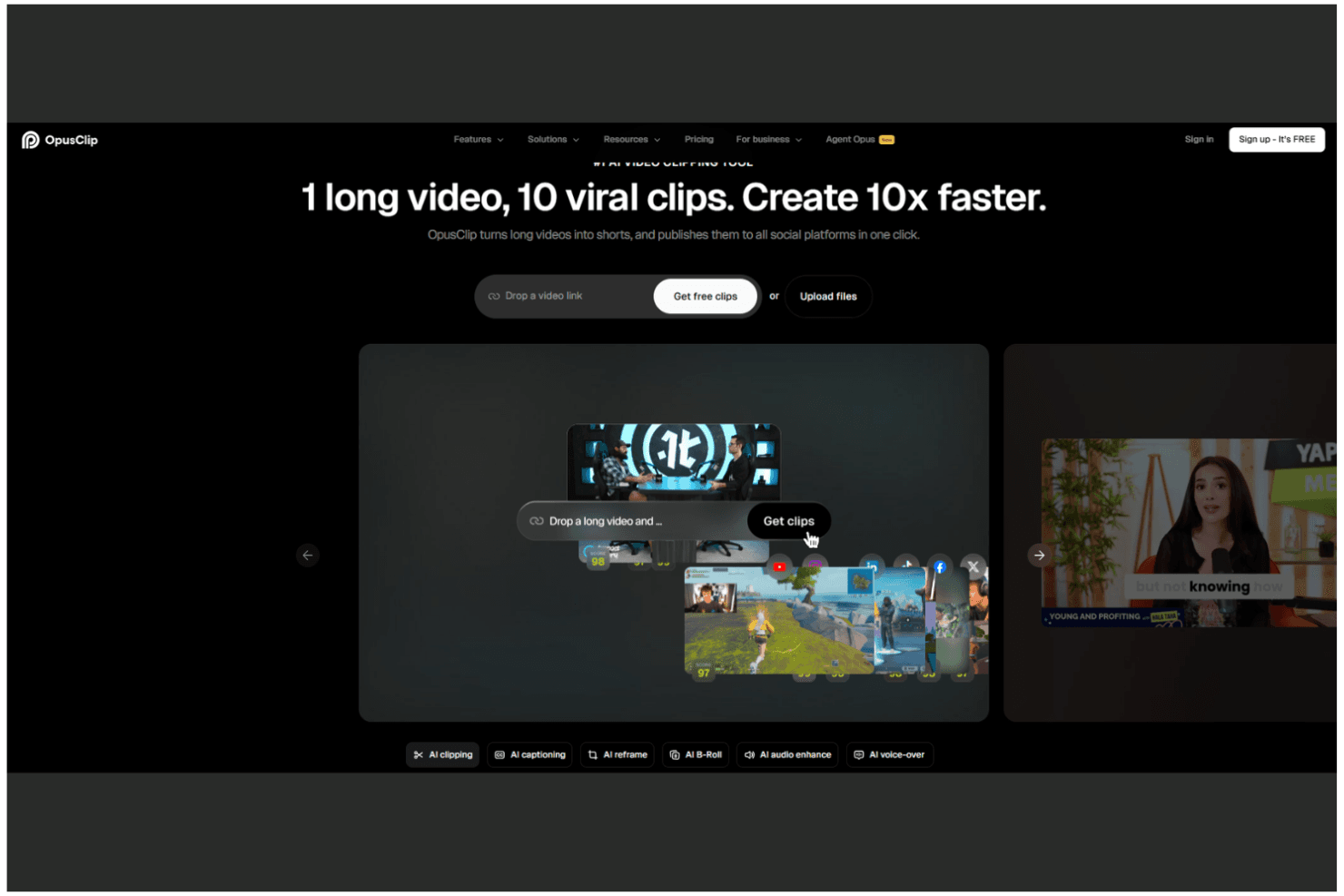
OpusClip convierte videos largos en clips cortos virales con un solo clic. OpusClip es una herramienta de recorte de videos con IA que reutiliza automáticamente grabaciones largas de sermones en clips cortos, listos para plataformas, con subtítulos, metraje complementario y programación para canales de redes sociales.
¿Para quién es mejor OpusClip?
OpusClip es una opción ideal para los coordinadores de medios de iglesias cuyo trabajo principal consiste en convertir las grabaciones semanales de sermones en contenido de video corto listo para publicar en redes sociales.
Por qué elegí OpusClip
Elegí OpusClip como una de las mejores opciones porque hace excepcionalmente bien una sola cosa: convertir una grabación completa de un sermón en varios clips cortos listos para publicar sin edición manual. Me encanta cómo el motor de recorte con IA analiza todo el sermón y muestra automáticamente los momentos con mayor potencial de interacción, mientras que los subtítulos animados con IA superponen texto preciso y con estilo en más de 20 idiomas. La función de producción con IA va más allá y crea un video corto completo con metraje complementario, diseño de movimiento y música a partir de una única grabación original.
Funciones principales de OpusClip
- Eliminación de muletillas y silencios con IA: Detecta y elimina automáticamente palabras de relleno como 'um' y 'uh', además de las pausas incómodas, de las grabaciones de sermones antes de generar los clips.
- Generación de subtítulos en varios idiomas: Produce subtítulos animados en más de 20 idiomas, lo que hace que los clips de sermones sean accesibles para congregaciones multilingües.
- Espacio de trabajo para equipos: Los créditos compartidos, las plantillas de marca y hasta 10 puestos permiten que los equipos de medios de las iglesias colaboren en la producción de clips desde una sola cuenta.
- Programador de redes sociales: Programa y publica automáticamente los clips directamente en YouTube Shorts, TikTok, Instagram Reels, Facebook, LinkedIn y X desde la plataforma.
Integraciones de OpusClip
OpusClip se conecta con YouTube, Google Drive, Vimeo, Zoom, StreamYard, Riverside, TikTok, Instagram, Facebook, LinkedIn y X para importar videos y publicarlos en redes sociales. El plan Pro incluye exportaciones a Adobe Premiere Pro y DaVinci Resolve; el plan para empresas añade una API para integraciones personalizadas.
Pros and Cons
Pros:
- Convierte automáticamente los sermones en clips listos para redes sociales
- Los subtítulos multilingües generados por IA mejoran la accesibilidad
- Espacio de trabajo para equipos que facilita la colaboración
Cons:
- No incluye funciones de marketing por correo electrónico ni SMS
- No ofrece opciones de segmentación ni personalización de la audiencia
Learn more about OpusClip: La mejor opción para obtener información sobre donaciones y datos de miembros impulsada por AI
- Demostración gratuita disponible
- Precios disponibles previa solicitud
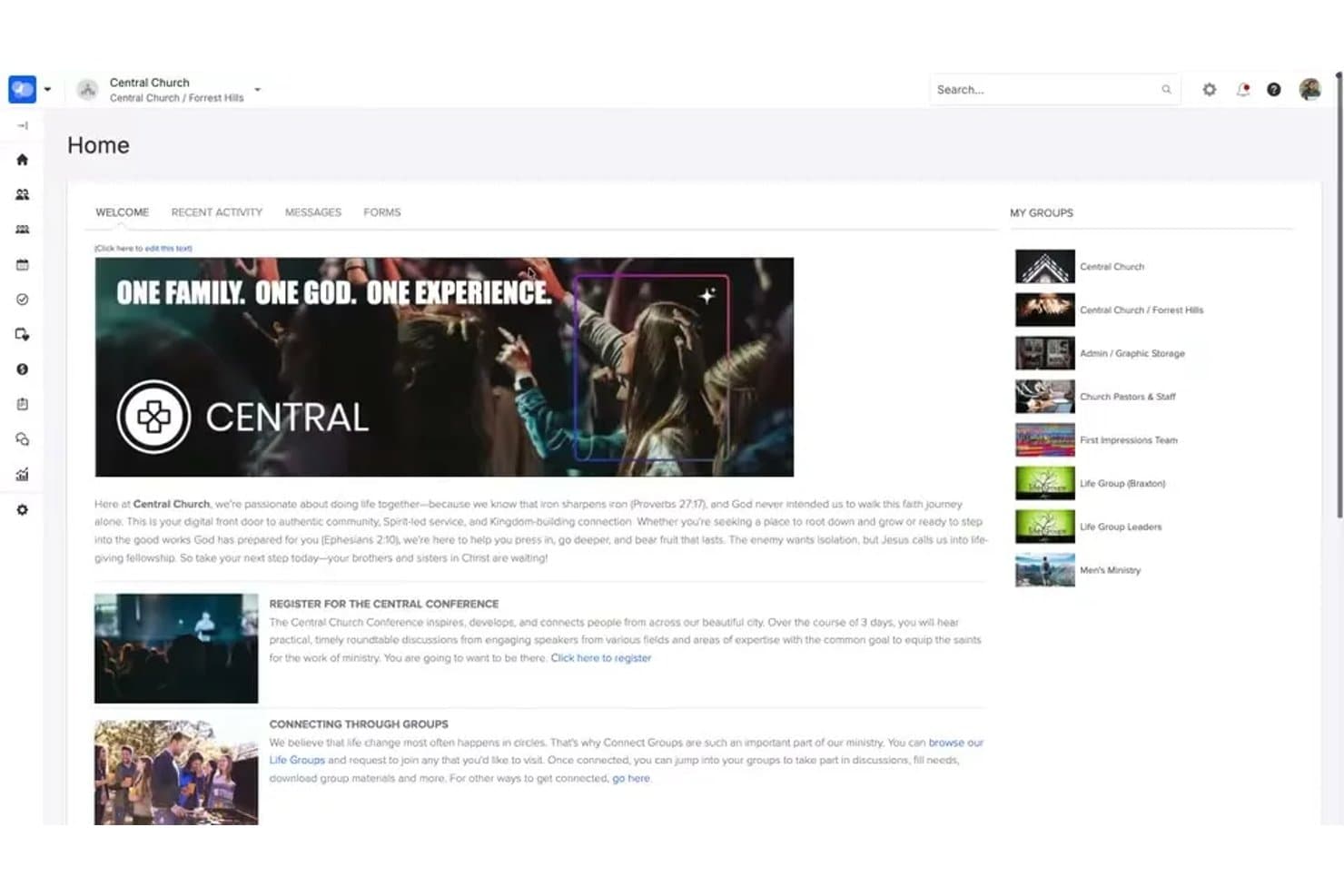
ChurchStaq centraliza los grupos de miembros y las comunicaciones de la iglesia en un solo centro. ChurchStaq es una plataforma integrada de gestión eclesial de Pushpay que combina donaciones digitales, datos de miembros, comunicaciones, herramientas para grupos y una aplicación de iglesia con marca personalizada, con búsqueda de personas y análisis de donaciones impulsados por AI.
¿Para quién es más adecuado ChurchStaq?
ChurchStaq es una excelente opción para pastores y líderes ministeriales de iglesias medianas y grandes que desean tener en un solo lugar los datos de donaciones, la información sobre los miembros y las herramientas de comunicación.
Por qué elegí ChurchStaq
Elegí ChurchStaq como una de las mejores opciones porque sus herramientas de AI para donaciones y datos de miembros ofrecen a los líderes ministeriales un nivel de inteligencia congregacional que no he visto en ningún otro lugar. La búsqueda de personas con AI permite obtener listas segmentadas mediante consultas en lenguaje sencillo, como encontrar a quienes donaron por primera vez durante el último trimestre o a familias a las que les falta información de contacto. Si a eso le sumas el análisis de datos de donaciones con AI, que genera gráficos de tendencias al instante a partir de preguntas en lenguaje natural, obtienes una imagen realmente clara de la situación de tu congregación.
Características principales de ChurchStaq
- Sincronización con Mailchimp: Sincroniza bidireccionalmente contactos, grupos y búsquedas guardadas de los perfiles de miembros de ChurchStaq con Mailchimp para campañas de marketing por correo electrónico.
- Procesos automatizados de seguimiento: Activa secuencias de comunicación por correo electrónico, SMS y notificaciones push en función de acciones como el registro de visitas o el envío de formularios de interés en el voluntariado.
- Aplicación de iglesia con marca personalizada: Una aplicación móvil con marca personalizada que ofrece anuncios, notificaciones push, contenido de sermones, eventos y donaciones dentro de la aplicación a los miembros de la congregación.
- Flujos de trabajo para volver a involucrar a donantes inactivos: Identifica automáticamente a los donantes en riesgo e inicia secuencias para recuperar sus donaciones y ayudarte a volver a conectar con los miembros que han dejado de donar.
Integraciones de ChurchStaq
ChurchStaq ofrece más de 80 integraciones documentadas, incluidas Mailchimp, Resi, Clearstream, Planning Center, Rock RMS, QuickBooks Online, Nurture.io, MortarStone, Fishhook y Gusto. El acceso a la API permite realizar integraciones personalizadas.
Pros and Cons
Pros:
- AI en lenguaje natural para segmentar miembros
- Seguimientos automatizados de donantes inactivos y visitantes
- Paneles sólidos para donaciones y asistencia
Cons:
- No genera contenido con AI ni permite publicar en redes sociales
- No permite reutilizar contenido de sermones o medios
Learn more about ChurchStaq: Ideal para obtener una semana completa de contenido a partir de un solo sermón
- Prueba gratuita de 14 días
- Precios bajo solicitud
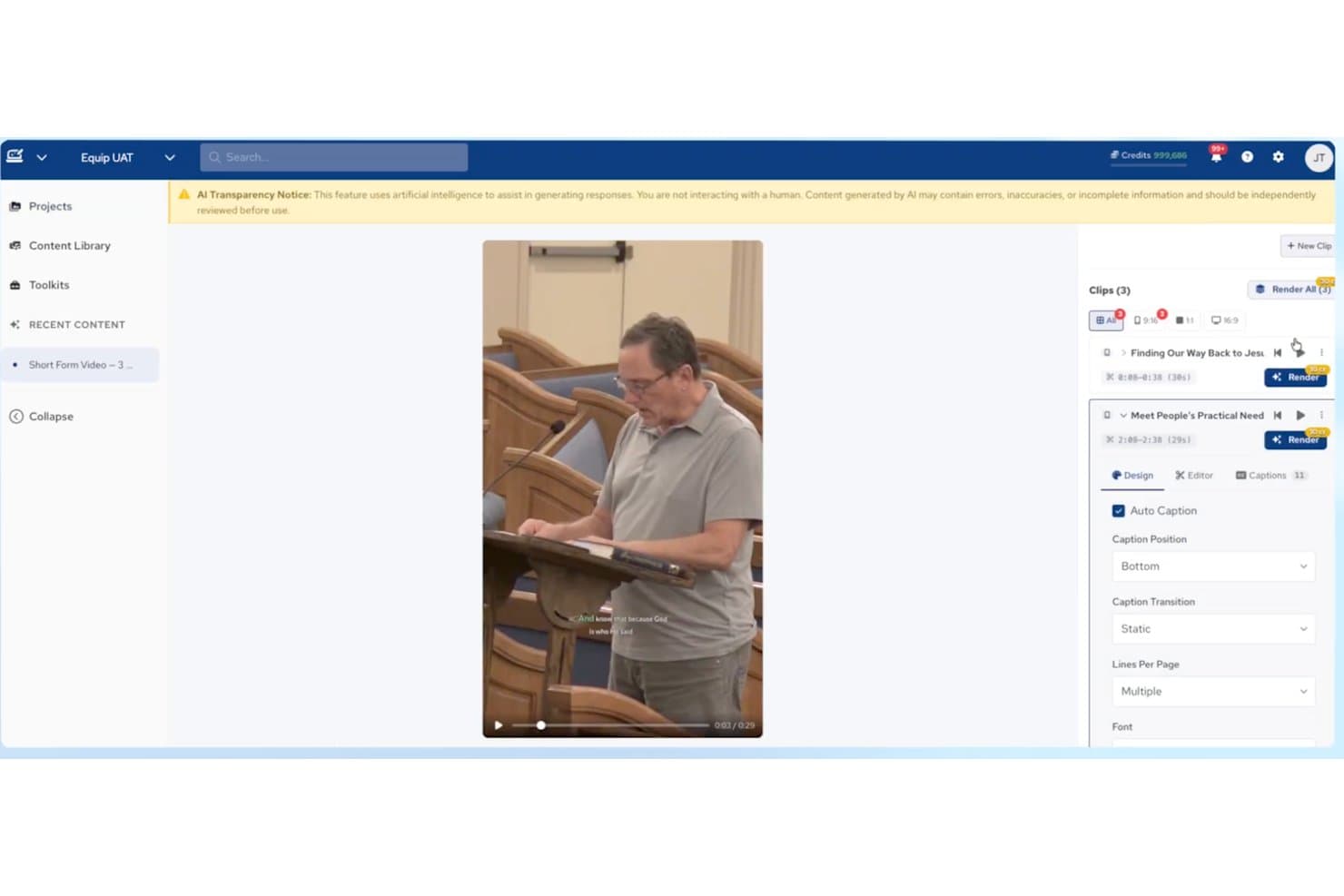
Amplify genera automáticamente subtítulos y clips cortos a partir de videos de sermones. Amplify es una plataforma de marketing y contenido para iglesias impulsada por IA de Ministry Brands que genera publicaciones para redes sociales, correos electrónicos, devocionales, clips de video cortos y contenido multilingüe basados en sermones a partir de una sola carga de sermón.
¿Para quién es mejor Amplify?
Amplify es una excelente opción para iglesias que quieren convertir un solo sermón dominical en una semana completa de publicaciones para redes sociales, correos electrónicos, devocionales y videos cortos sin contratar un equipo de contenido más grande.
Por qué elegí Amplify
He incluido Amplify entre mis principales opciones porque su módulo Equip AI hace algo que sinceramente no he visto en ningún otro lugar: convierte un solo sermón cargado en publicaciones para redes sociales, devocionales, campañas de correo electrónico, clips de video cortos y guías para grupos pequeños, todo en un mismo flujo de trabajo. El generador de planes de series es especialmente destacado para mí: pega un mensaje o tema y Equip organiza una serie completa de predicación de varias semanas con contenido derivado para cada semana. Su función de aprendizaje de voz también se entrena con el estilo específico de predicación de tu pastor, por lo que el texto generado suena como si lo hubiera escrito tu equipo y no una IA genérica.
Características principales de Amplify
- Doblaje en más de 30 idiomas: Cambia la voz de videos completos de sermones a más de 30 idiomas sin volver a grabar una sola palabra.
- Chat bíblico con IA: Un asistente de IA integrado en la plataforma, basado en las Escrituras, para investigación teológica y consultas de contenido.
- Segmentación mediante palabras clave con suscripción voluntaria: Los miembros de la congregación se seleccionan a sí mismos para grupos basados en temas, lo que permite enviar mensajes de seguimiento específicos.
- Flujo de trabajo de equipo desde el borrador hasta la publicación: El proceso de revisión y aprobación de contenido basado en roles, con comentarios, permite que el personal y los voluntarios colaboren antes de que algo se publique.
Integraciones de Amplify
Amplify cuenta con integraciones nativas en todo su propio ecosistema, incluidos Personas, Donaciones, Sitio web, Aplicación móvil, Streaming y Comunicaciones. Equip también se conecta con Amplify Streaming para importar transmisiones en directo y con los módulos Sitio web y Comunicaciones para publicar contenido generado; las integraciones de terceros no están documentadas claramente.
Pros and Cons
Pros:
- Genera una semana completa de contenido a partir de sermones
- Doblaje multilingüe para contenido de video y escrito
- La política de privacidad excluye los datos del entrenamiento de modelos de IA
Cons:
- No cuenta con funciones de segmentación de audiencia impulsadas por IA
- Carece de integraciones directas para publicar en redes sociales
Learn more about Amplify: La mejor opción para reutilizar contenido de sermones multilingüe
- Prueba gratuita de 14 días
- Desde $63/mes
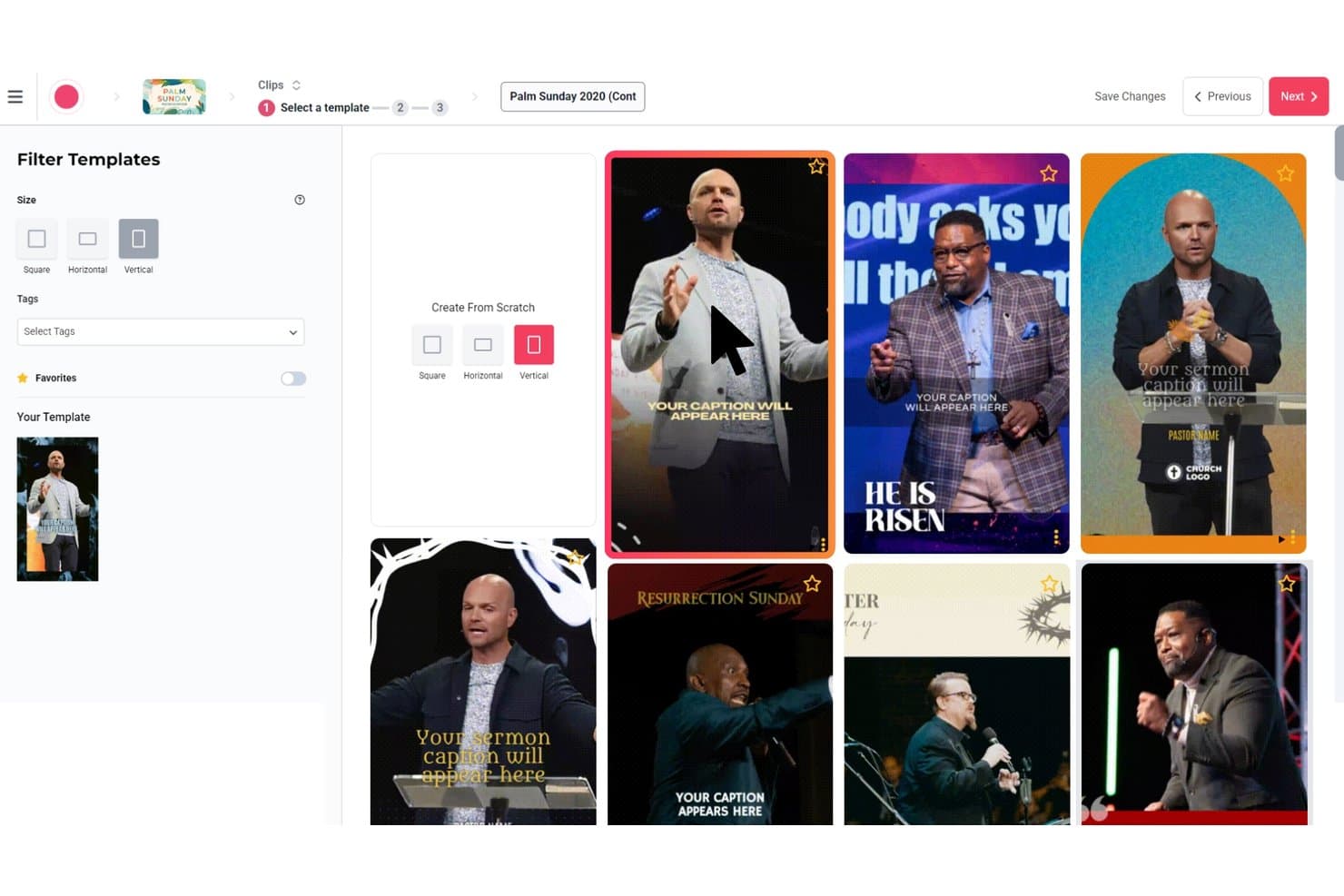
Sermon Shots permite a los usuarios elegir plantillas de video verticales para clips de sermones. Sermon Shots es una plataforma para reutilizar sermones que utiliza IA para transformar videos de sermones cargados en clips, subtítulos, devocionales, publicaciones de blog, guías de discusión, gráficos con citas y contenido doblado en varios idiomas.
¿Para quién es mejor Sermon Shots?
Sermon Shots es ideal para iglesias y ministerios que necesitan convertir la carga de un solo sermón en contenido multilingüe y multiformato para toda una semana sin contar con un equipo de medios grande.
Por qué elegí Sermon Shots
Sermon Shots está en mi lista de opciones principales por lo que hace con el contenido multilingüe: la carga de un solo sermón puede generar un video doblado en 33 idiomas y recursos escritos traducidos en más de 40 idiomas, algo realmente poco común en la tecnología para iglesias. También me encantan las opciones de denominación y versión de la Biblia, que garantizan que los devocionales, las guías de discusión y las publicaciones de blog generados por IA utilicen la traducción bíblica y el lenguaje teológico preferidos por tu iglesia. El equipo de cámara con IA es otro aspecto destacado, ya que sigue y reencuadra automáticamente al pastor en videos verticales sin necesidad de un editor dedicado.
Características principales de Sermon Shots
- Generador de series devocionales de 5 días: Convierte un solo sermón en cinco lecturas devocionales diarias, cada una con pasajes bíblicos, preguntas de reflexión y citas extraídas.
- Publicación directa en redes sociales: Publica clips e imágenes con citas directamente en Facebook e Instagram desde el panel de Sermon Shots, sin descargar ni cargar archivos manualmente.
- Páginas de SermonSend: Crea páginas de destino de sermones compartibles y personalizadas con la marca, con clips incrustados, devocionales, resúmenes y reflexiones que pueden vincularse al dominio de tu iglesia.
- Integraciones con Make.com y Zapier: Conecta Sermon Shots con herramientas externas de correo electrónico, sitios web o plataformas sociales para crear flujos de trabajo automatizados de distribución de contenido semanal.
Integraciones de Sermon Shots
Sermon Shots ofrece integraciones nativas con Resi.io, Switcher, WordPress, Facebook e Instagram, además de conexiones documentadas con Church Visuals, Remix y StreamingChurch.tv. También proporciona una API, integración con Make.com y Zapier.
Pros and Cons
Pros:
- Convierte sermones en clips y blogs multilingües
- La IA genera devocionales y guías adaptados a la denominación
- Publica directamente el contenido de los sermones en las redes sociales
Cons:
- No incluye funciones de correo electrónico, SMS ni análisis
- No puede segmentar ni personalizar las audiencias de difusión
Learn more about Sermon Shots: Ideal para convertir sermones en contenido para redes sociales con un equipo reducido
- Prueba gratuita + demostración gratuita disponibles
- Desde $15/mes
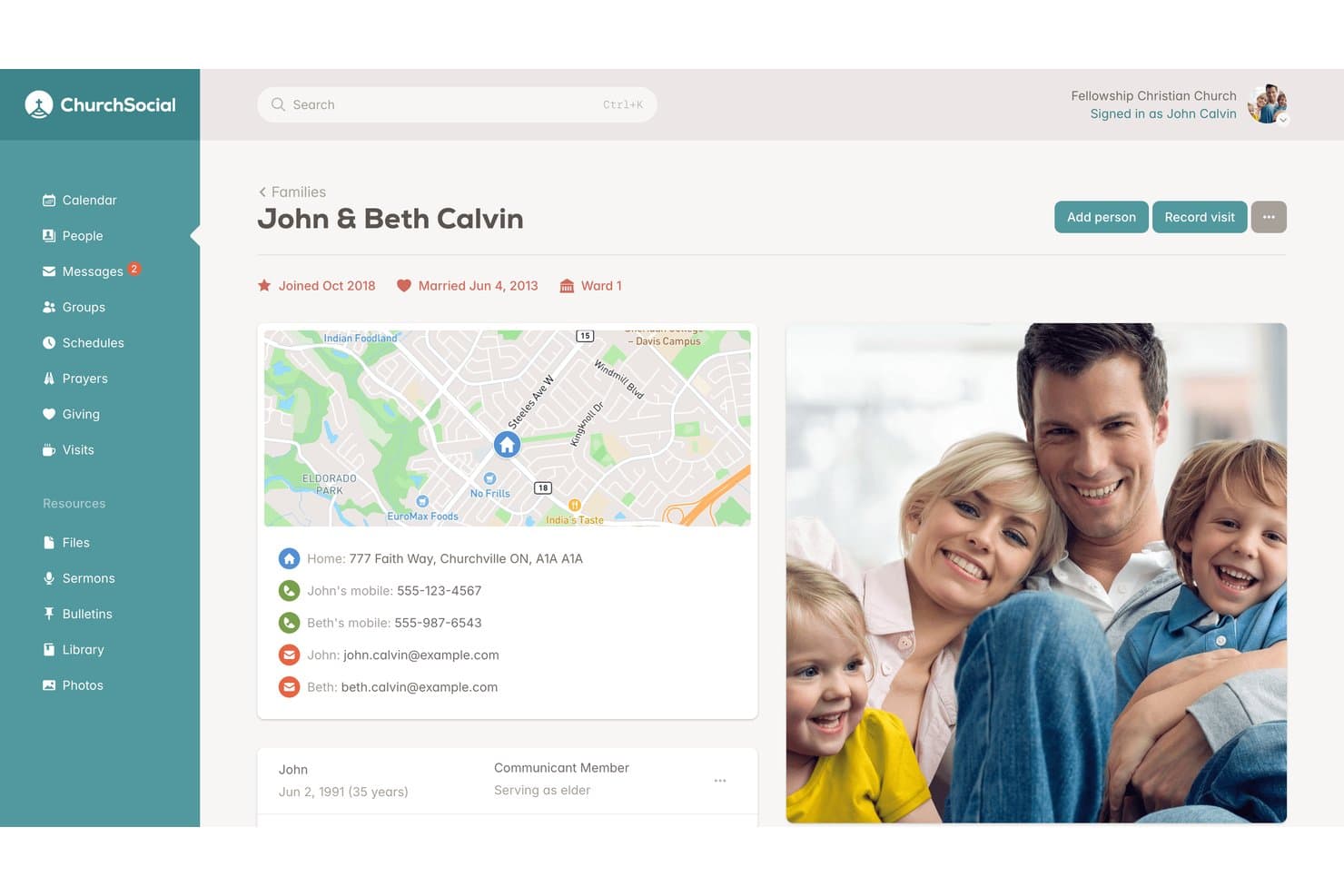
ChurchSocial centraliza los perfiles familiares con datos de contacto y roles de los miembros. ChurchSocial es una plataforma de gestión de redes sociales y contenido con IA enfocada en ministerios que se encarga de la programación en redes sociales, la redacción de subtítulos con IA y la reutilización de sermones para redes sociales en Facebook, Instagram, TikTok, YouTube, X y Google Business Profile.
¿Para quién es más adecuado ChurchSocial?
ChurchSocial es una opción ideal para iglesias pequeñas y medianas con equipos de comunicación reducidos que necesitan convertir rápidamente un sermón semanal en una programación completa de contenido para redes sociales.
Por qué elegí ChurchSocial
Elegí ChurchSocial como una de las mejores opciones porque su Estudio de sermones convierte una sola carga en una semana completa de contenido, que es exactamente lo que necesita un equipo de comunicación reducido. Sube la grabación de un sermón y la IA la transcribe, recorta clips y te permite editar directamente la transcripción, sigue automáticamente al orador y genera subtítulos animados, todo sin necesidad de un editor de video. Además, obtienes una publicación de blog, un borrador de boletín informativo y una guía para grupos pequeños a partir de la misma sesión.
Características principales de ChurchSocial
- Redactor de subtítulos con IA: Genera subtítulos para redes sociales a partir de una indicación o del contenido de un sermón cargado, lo que ofrece a tu equipo un punto de partida en lugar de una página en blanco.
- Programador de redes sociales multiplataforma: Planifica, programa y publica automáticamente contenido en Facebook, Instagram, TikTok, YouTube, X y Google Business Profile desde un único calendario visual.
- Sincronización con el calendario de la iglesia: Se conecta con Planning Center, Pushpay/CCB y Tithely/Breeze para incorporar directamente los próximos eventos a tu calendario de contenido.
- Gráficos generados por IA: Aplica la identidad de marca de tu iglesia a plantillas personalizables y genera imágenes adaptadas al tema de tu contenido dentro del complemento Estudio de diseño.
Integraciones de ChurchSocial
ChurchSocial ofrece integraciones nativas con Planning Center, Pushpay/Church Community Builder y Tithely/Breeze para sincronizar el calendario de la iglesia. También hace referencia a Zapier para ampliar los flujos de trabajo, pero no envía mensajes de correo electrónico ni SMS de forma nativa.
Pros and Cons
Pros:
- Convierte un solo sermón en un paquete completo de contenido
- La IA con lenguaje ministerial hace que las publicaciones suenen pastorales
- La edición de clips de video basada en la transcripción ahorra horas
Cons:
- No incluye envío integrado de correo electrónico ni SMS
- Carece de funciones de segmentación y personalización de la audiencia
Learn more about ChurchSocial: Ideal para análisis de IA sobre donaciones y asistencia
- Demostración gratuita disponible
- Precio bajo consulta
Visit WebsiteCustomer Rating:4.5/5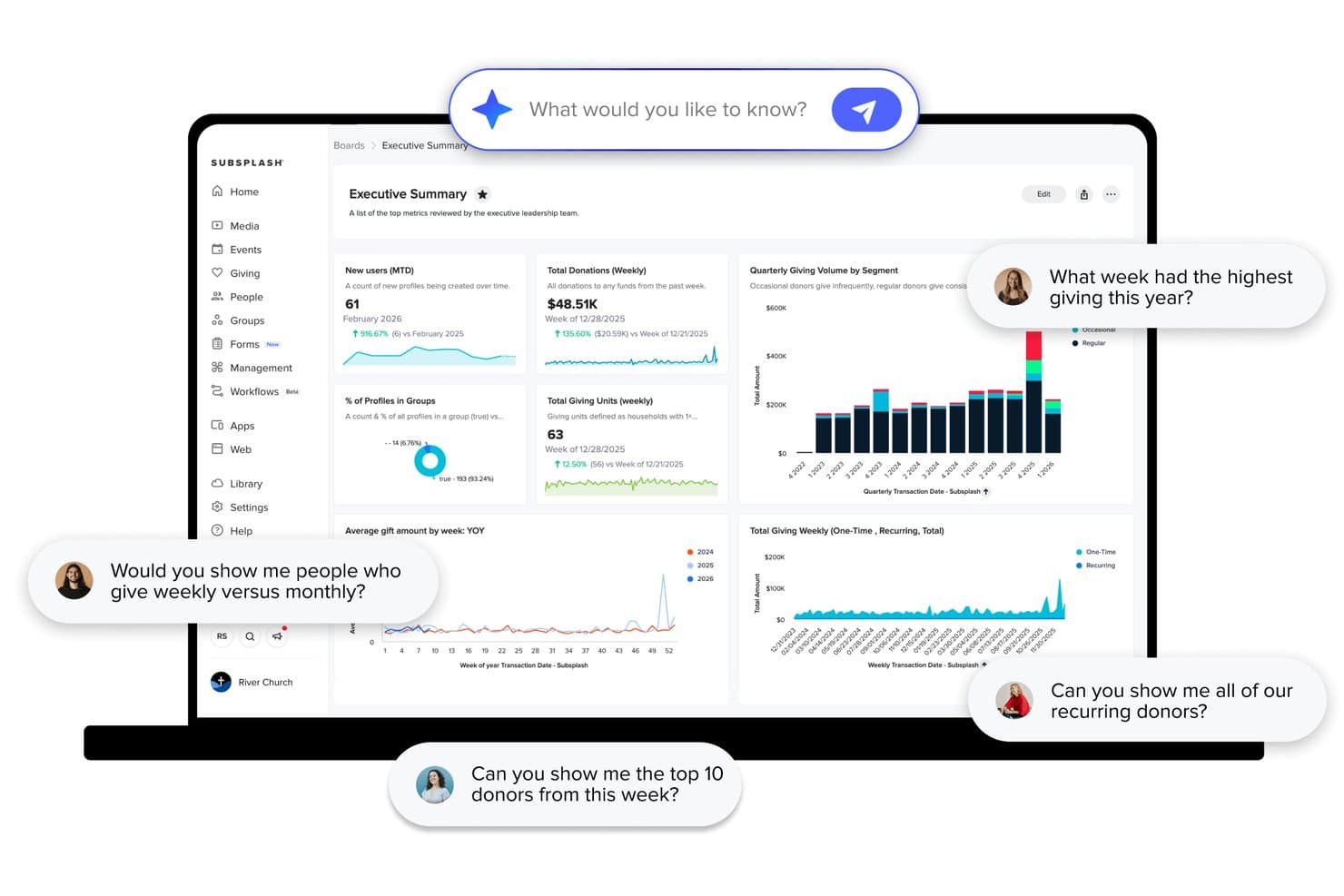
Subsplash permite a los usuarios consultar datos de donaciones e información sobre donantes mediante IA. Subsplash es una plataforma eclesiástica todo en uno que combina la reutilización de sermones impulsada por IA, la mensajería multicanal, herramientas de donaciones, ChMS, alojamiento multimedia y análisis en un solo sistema.
¿Para quién es más adecuado Subsplash?
Subsplash es una opción sólida para iglesias establecidas que quieren que una sola plataforma gestione las donaciones, el seguimiento de la asistencia y los análisis impulsados por IA sin tener que combinar varias herramientas.
Por qué elegí Subsplash
Subsplash ocupa un lugar en mi lista de finalistas porque Trends AI conecta los datos de donaciones, los registros de asistencia y las métricas de participación en un solo panel que tu equipo puede consultar en lenguaje natural. Lo elegí específicamente por la forma en que vincula esas fuentes de datos: puedes preguntar algo como 'qué servicios tuvieron el mayor número de donaciones de personas que donaban por primera vez este trimestre' y obtener una respuesta clara, sin necesidad de usar una hoja de cálculo. Pulpit AI añade otra capa, ya que convierte automáticamente la carga de un sermón en más de 20 recursos de contenido.
Características principales de Subsplash
- Asistente de sermones Pulpit AI: Ayuda a los pastores a perfeccionar los esquemas y encontrar referencias bíblicas, ilustraciones y aplicaciones prácticas antes de pronunciar un sermón.
- Segmentación de notificaciones push basada en grupos: Envía notificaciones push a segmentos específicos de la audiencia, como voluntarios, nuevos visitantes o miembros de grupos pequeños, dentro de la aplicación de la iglesia.
- Gestión de tareas con Workflows: Una herramienta de estilo Kanban que crea automáticamente tarjetas de seguimiento para el personal cuando alguien envía una tarjeta de contacto o un formulario de solicitud para ser voluntario.
- Integración con SongSelect: Importa más de 100.000 canciones de adoración directamente al módulo de planificación de servicios para crear sin complicaciones el orden del servicio.
Integraciones de Subsplash
Subsplash se integra con Planning Center, Breeze, Rock RMS, Ministry Platform, StudioC, MortarStone, Engiven y SongSelect. Los planes Enterprise y Pro Package admiten integraciones de API personalizadas, y Zapier también está disponible.
Pros and Cons
Pros:
- Reutiliza los sermones para crear más de 20 recursos de contenido
- Los análisis de IA vinculan las donaciones, los contenidos multimedia y la asistencia
- El panel admite consultas de datos en lenguaje natural
Cons:
- No incluye una función directa para publicar en redes sociales
- El contenido generado por IA se limita a material basado en sermones
 Ideal para la creación de contenido de sermones con IA adaptada al ministerio
- Plan gratuito disponible
- Desde $65/mes
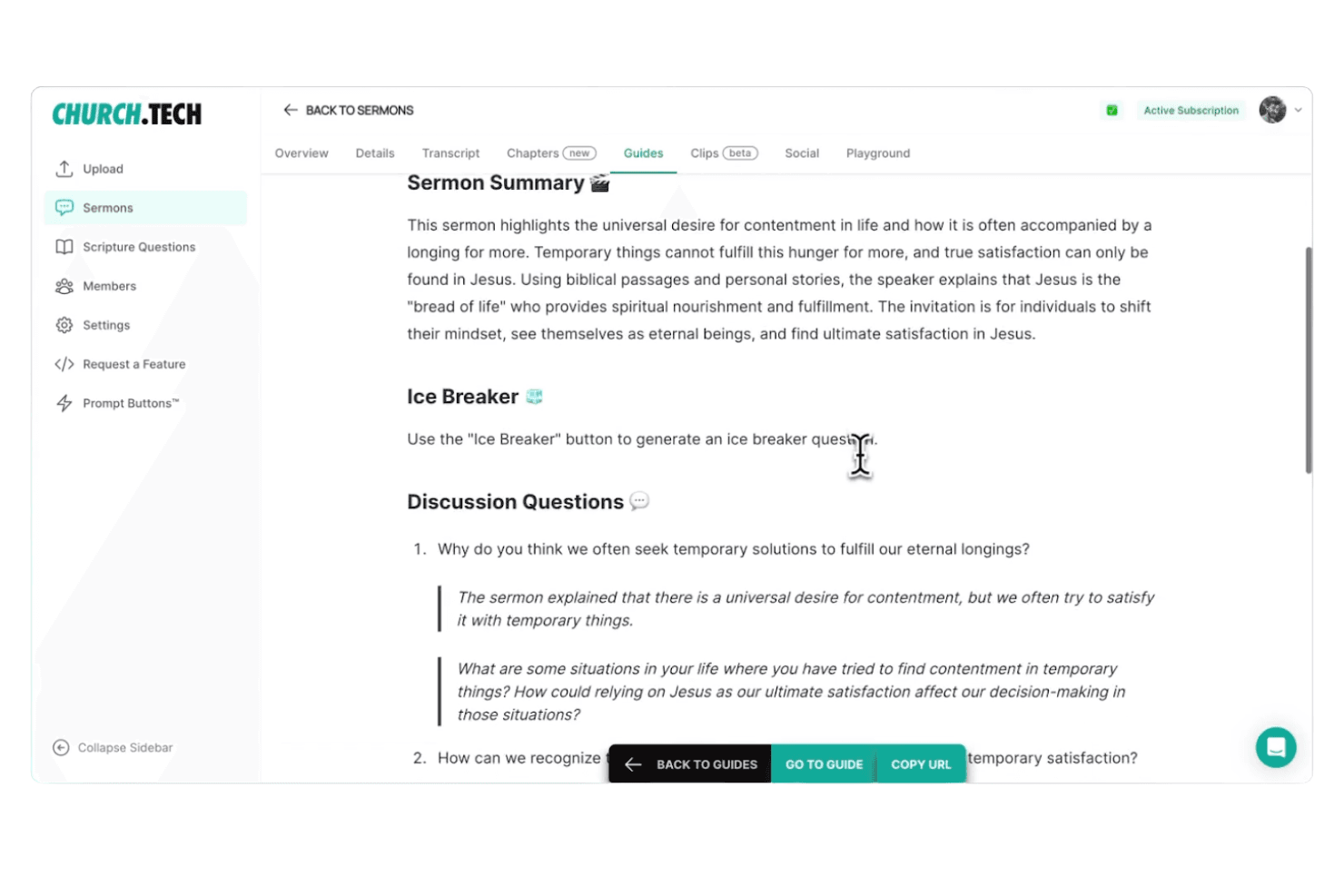
Church.tech ayuda a los pastores a crear, gestionar y distribuir contenido de sermones mediante herramientas impulsadas por IA. Church.tech es una plataforma de contenido con IA centrada en el ministerio que convierte audio, video o notas de sermones en publicaciones para redes sociales, clips de video, gráficos con citas, devocionales, guías de discusión y contenido listo para correo electrónico en múltiples canales.
¿Para quién es más adecuada Church.tech?
Church.tech es una excelente opción para directores de comunicaciones y coordinadores de medios de iglesias medianas y grandes que necesitan producir un gran volumen de contenido basado en sermones para múltiples canales cada semana.
Por qué elegí Church.tech
Elegí Church.tech como una de las mejores opciones porque ninguna otra herramienta de esta lista convierte un solo sermón en una semana completa de contenido ministerial de forma tan automática. Sube una vez el audio o video de tu sermón y la plataforma genera simultáneamente publicaciones para redes sociales, gráficos con citas, devocionales, guías de discusión para grupos pequeños y una sinopsis lista para correo electrónico. Me gusta especialmente Sermon Playground del plan Pro, que te permite generar variaciones ilimitadas de contenido a partir de una sola entrada de sermón.
Características clave de Church.tech
- Biblioteca de herramientas para ministerios: Un catálogo de más de 100 herramientas de IA que cubren anuncios, mensajes para líderes de grupos, promoción de eventos, contenido para el ministerio infantil y administración de la iglesia.
- Salvaguardas para una IA segura para la fe: Los filtros de contenido integrados garantizan que todos los resultados generados por IA mantengan la coherencia teológica y estén alineados con la voz de tu iglesia.
- Editor de clips: Un editor de video integrado en la plataforma para perfeccionar clips sociales generados por IA en formatos vertical, horizontal o cuadrado para cada plataforma.
- Espacio de trabajo para la colaboración en equipo: Varios miembros del personal y voluntarios pueden crear y gestionar contenido juntos sin necesidad de conocimientos técnicos ni de edición.
Integraciones de Church.tech
Las conexiones documentadas incluyen Facebook, Instagram Reels, TikTok, YouTube Shorts, Google, Gmail, Apple Mail y Microsoft 365. Se indica que hay acceso a la API para integraciones personalizadas; Planning Center, HubSpot y Mailchimp corresponden a módulos más amplios de Gloo Workspace.
Pros and Cons
Pros:
- Las cargas de sermones crean al instante varios tipos de contenido
- Desarrollada con salvaguardas de IA seguras para la fe
- Los equipos de voluntarios pueden producir contenido fácilmente
Cons:
- Carece de herramientas integradas para segmentar la congregación
- El envío de correos electrónicos requiere herramientas externas o actualizaciones
Learn more about Church.tech: 8Ideal para contenido de IA basado en límites ministeriales
Gloo
- Plan gratuito disponible
- Desde $49/mes
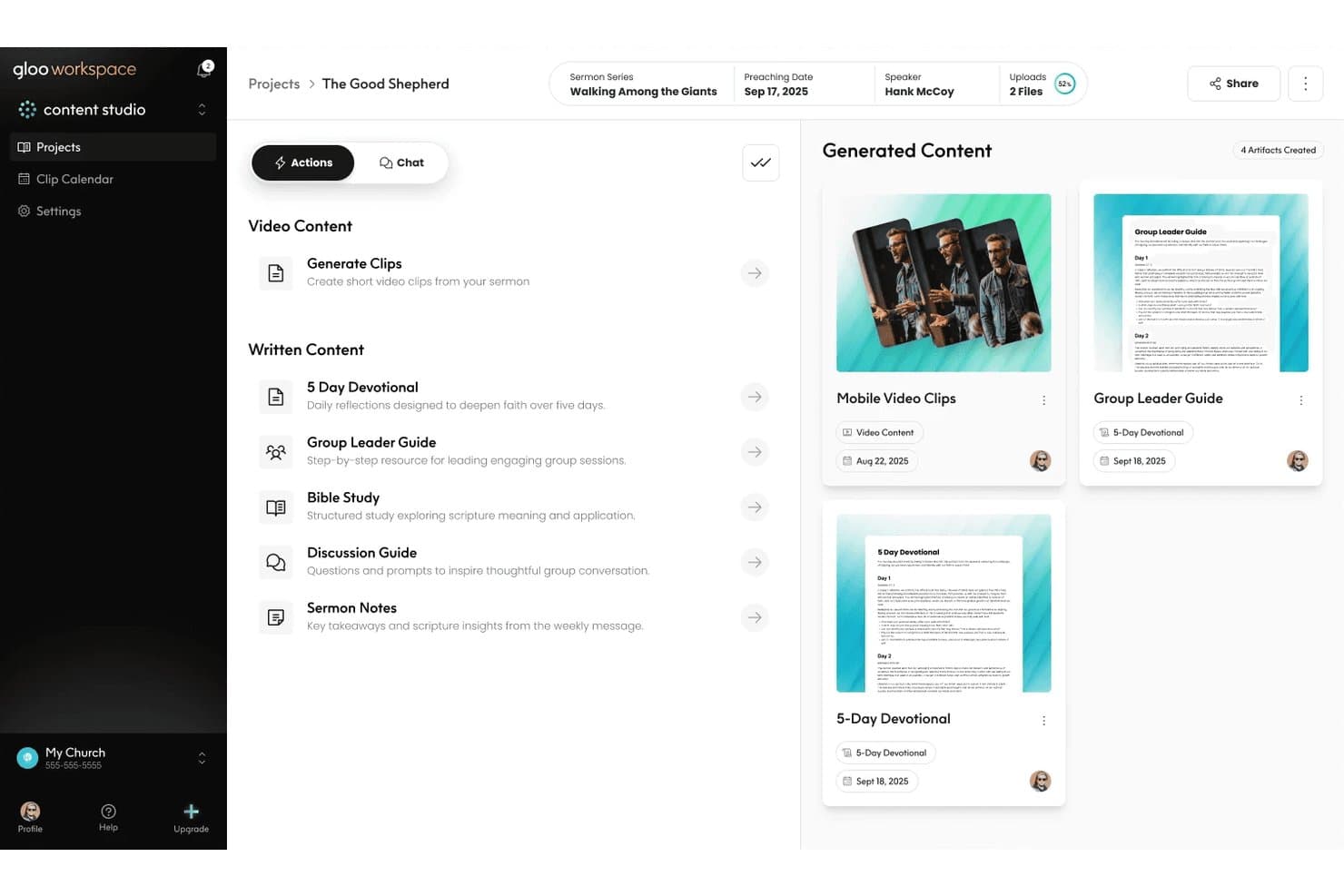
Gloo genera automáticamente devocionales, guías y clips a partir de sermones. Gloo es un espacio de trabajo de IA orientado a ministerios que combina la reutilización de sermones, la mensajería multicanal para la congregación, los flujos de trabajo pastorales asistidos por IA y el análisis de la salud de la iglesia en una sola plataforma.
¿Para quién es más adecuado Gloo?
Gloo es una opción excelente para iglesias que quieren herramientas de contenido con IA desarrolladas dentro de límites ministeriales y teológicos claros.
Por qué elegí Gloo
Gloo está en mi lista de favoritos porque es el único espacio de trabajo de IA que he visto que aplica límites de fe explícitos a cada contenido generado, desde clips de sermones hasta borradores de atención pastoral. Sube un solo sermón y el Estudio de contenido genera automáticamente clips para redes sociales, devocionales, guías de debate y una versión para niños, todo filtrado mediante una IA alineada con el ministerio. El Chat ministerial añade otra capa, ya que proporciona a los pastores acceso a modelos de vanguardia ajustados específicamente para el contexto teológico.
Características principales de Gloo
- Automatización de flujos de trabajo activada por palabras clave: Configura secuencias automatizadas de respuesta por SMS que se activan cuando los miembros de la congregación envían una palabra específica, como 'CONNECT' o 'GIVE.'
- Mensajería de difusión multicanal: Envía mensajes SMS y correos electrónicos masivos de uno a muchos a toda tu congregación o a grupos de contactos segmentados desde un solo panel.
- Evaluaciones de la salud de la congregación: Distribuye encuestas sobre bienestar y salud ministerial —desarrolladas con socios como Barna— directamente a los miembros por mensaje de texto o correo electrónico.
- Panel de comparación nacional: Compara las métricas de asistencia, participación y salud de tu iglesia con las de ministerios similares mediante el módulo de análisis de Gloo.
Integraciones de Gloo
Gloo Workspace se integra con Planning Center, Church Community Builder, Rock RMS, MinistryPlatform, Mailchimp, HubSpot y Google Workspace. Asana, Slack y Canva aparecen como próximas integraciones.
Pros and Cons
Pros:
- Mantiene el contenido de IA dentro de los límites ministeriales
- Reutiliza los sermones en varios tipos de contenido
- Compara las métricas ministeriales con datos nacionales
Cons:
- Los créditos gratuitos de mensajería se redujeron considerablemente recientemente
- No ofrece análisis predictivos para obtener información sobre la participación
Learn more about Gloo: Ideal para el alcance de miembros impulsado por AI a gran escala
- Demostración gratuita disponible
- Precio bajo solicitud
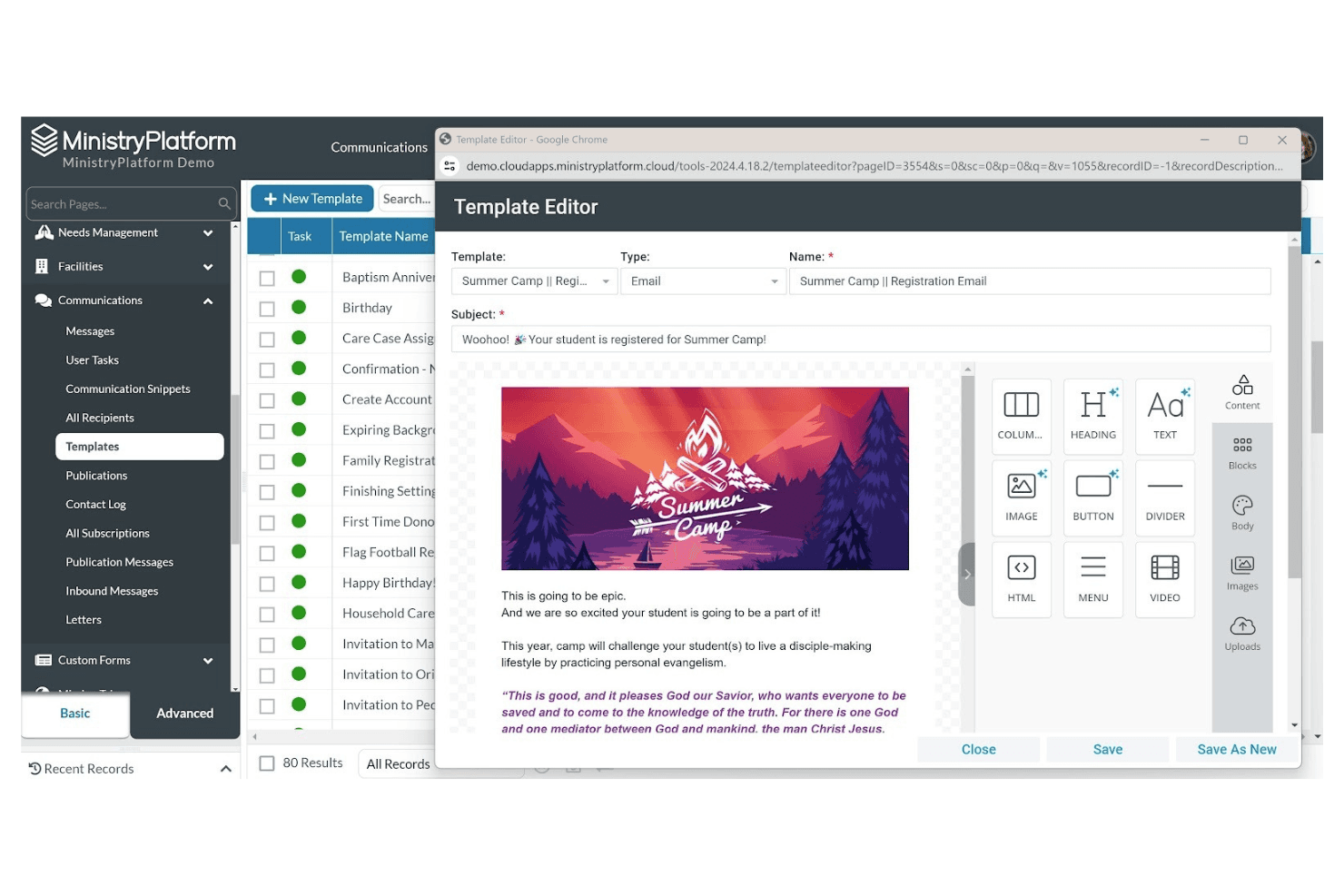
Ministry Platform permite a los usuarios diseñar y gestionar visualmente plantillas de correo electrónico. Si buscas un sistema de gestión eclesiástica que se adapte a las necesidades únicas de tu ministerio, Ministry Platform merece ser considerado. Esta plataforma está diseñada para iglesias y organizaciones religiosas que desean centralizar los datos de los miembros, realizar un seguimiento de la participación y gestionar eventos. Ministry Platform te ayuda a organizar información compleja para que puedas conectar mejor con tu congregación y respaldar los objetivos de tu ministerio.
¿Para quién es más adecuado Ministry Platform?
Ministry Platform es una buena opción para iglesias medianas y grandes que necesitan herramientas flexibles para gestionar los datos de los miembros, los eventos y la participación.
Por qué elegí Ministry Platform
Elegí Ministry Platform porque sus herramientas personalizables de gestión de miembros te permiten adaptar el sistema a las necesidades únicas de alcance y participación de tu iglesia. Puedes crear campos, flujos de trabajo e informes personalizados para hacer un seguimiento de todo, desde el seguimiento de visitantes hasta la participación de voluntarios. Esta flexibilidad significa que no estás limitado a un enfoque único para todos y que puedes adaptar la plataforma a medida que tu ministerio crece o cambia. Para las iglesias que desean personalizar sus estrategias de comunicación y mercadotecnia basándose en datos detallados de los miembros, Ministry Platform ofrece una base sólida.
Principales características de Ministry Platform
Algunas otras características que hacen que Ministry Platform sea útil para los equipos de mercadotecnia de iglesias incluyen:
- Herramientas de gestión de eventos: Programa, promociona y realiza un seguimiento de la asistencia a eventos de la iglesia y actividades de alcance.
- Mensajería integrada por correo electrónico y SMS: Envía comunicaciones dirigidas directamente desde la plataforma a grupos o personas específicas.
- Donaciones en línea y seguimiento de contribuciones: Acepta y supervisa las contribuciones mediante herramientas de donación digital conectadas a los registros de los miembros.
- Gestión de voluntarios: Organiza, programa y comunícate con los voluntarios para programas del ministerio y eventos especiales.
Integraciones de Ministry Platform
Las integraciones incluyen Realm Accounting, Growth Method, Verified First, MinistrySafe, Intulse, Twilio, MortarStone, SendGrid, eSPACE e iDonate.
Pros and Cons
Pros:
- Perfiles de miembros personalizables para un alcance dirigido
- Herramientas integradas de registro y seguimiento de eventos
- Donaciones en línea integradas y seguimiento de contribuciones
Cons:
- No incluye automatización de mercadotecnia impulsada por AI
- Requiere herramientas independientes para la gestión del sitio web
Learn more about Ministry Platform: 10Ideal para el seguimiento de visitantes y el contacto con los miembros
sendifai
- Plan gratuito disponible
- Desde £9/mes
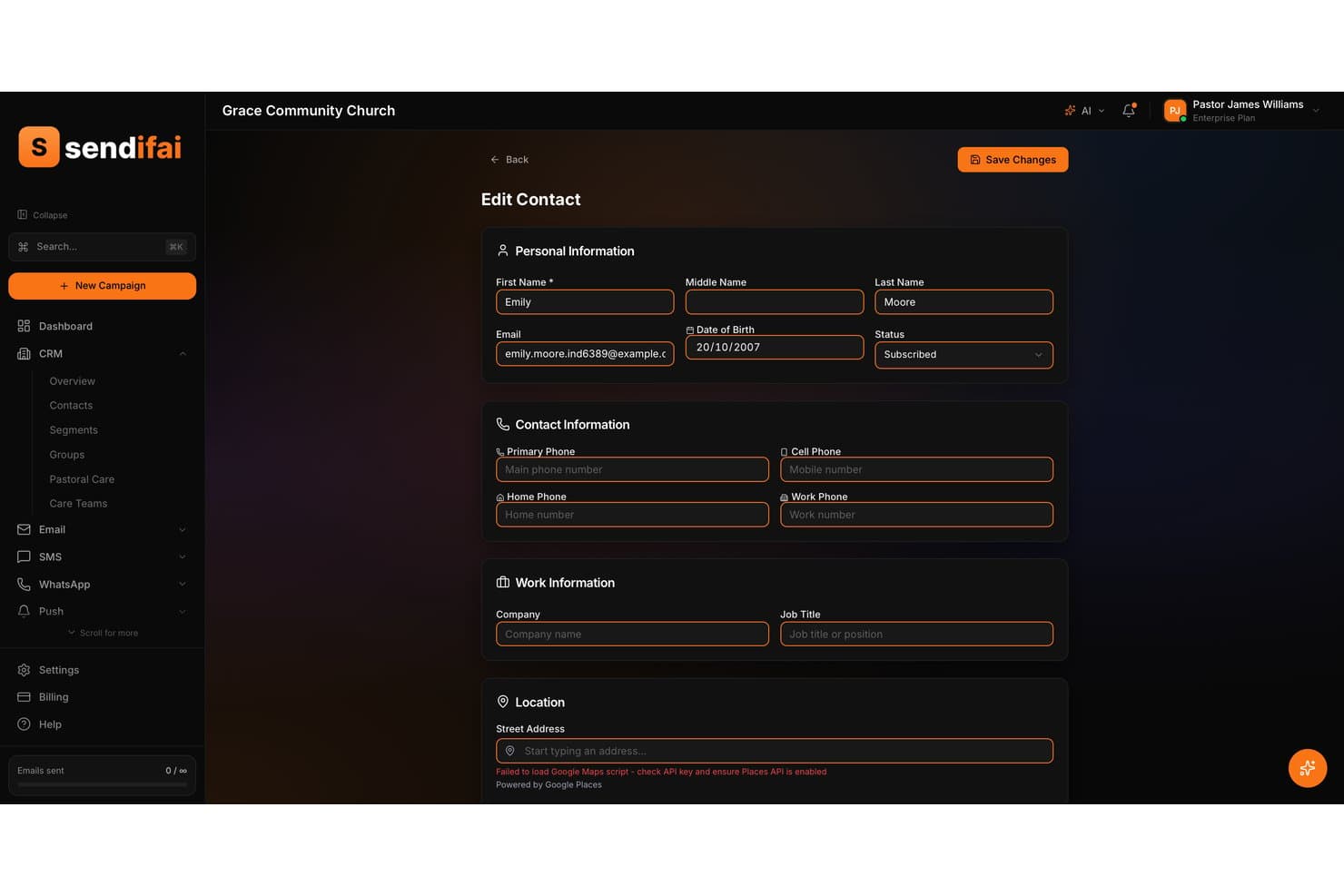
Sendifai permite a los usuarios gestionar perfiles y registros detallados de contactos de la iglesia. sendifai es una plataforma de marketing de IA centrada en la iglesia que combina CRM, mensajería multicanal (correo electrónico, SMS y WhatsApp), automatización del seguimiento de visitantes, segmentación de la congregación y un asistente de IA llamado Isla para generar contenido de campañas específico para el ministerio.
¿Para quién es más adecuado sendifai?
sendifai es una opción excelente para los equipos de comunicación de iglesias y el personal pastoral que desean un CRM diseñado específicamente para sus necesidades, con automatización del seguimiento de visitantes y alcance multicanal en un solo lugar.
Por qué elegí sendifai
Elegí sendifai como una de las mejores opciones porque ninguna otra herramienta de esta lista gestiona el seguimiento de visitantes con el mismo nivel de intencionalidad. Cuando un visitante por primera vez se registra, sendifai activa automáticamente una secuencia de bienvenida por correo electrónico, SMS y WhatsApp, para que nadie quede desatendido entre el domingo y la semana siguiente. Su asistente de IA, Isla, redacta las notas de atención y los mensajes de seguimiento con un tono que realmente suena pastoral, no promocional.
Características principales de sendifai
- Mapeo de relaciones familiares: Vincula a los miembros de una familia en un solo perfil para que puedas ver y enviar mensajes a todo el hogar de una vez.
- Motor de información proactiva: Analiza diariamente los datos de contactos y campañas para identificar riesgos de pérdida de miembros, oportunidades de interacción y recomendaciones de optimización.
- Constructor visual de flujos de trabajo: Te permite diseñar automatizaciones multicanal con lógica basada en activadores, ramificaciones condicionales y pruebas A/B en una sola interfaz de arrastrar y soltar.
- Precios modulares de complementos: Cada conjunto de funciones —correo electrónico, SMS, donaciones y eventos— tiene su propio nivel gratuito y puede ampliarse de forma independiente, para que solo pagues por lo que tu iglesia realmente utiliza.
Integraciones de sendifai
sendifai no tiene integraciones nativas. Utiliza Stripe Connect para los pagos de donaciones, pero las integraciones con Planning Center, YouTube, Canva, Meta Business Suite u otras herramientas de marketing para iglesias no están documentadas con claridad.
Pros and Cons
Pros:
- Incluye automatización del seguimiento de visitantes y notas de atención
- Ofrece un alcance multicanal avanzado en una sola plataforma
- Admite el mapeo de relaciones familiares para las familias
Cons:
- El flujo de trabajo para reutilizar sermones no está documentado ni verificado
- No ofrece conexiones nativas con aplicaciones de terceros ni herramientas multimedia
Learn more about sendifai:
Otros programas de marketing para iglesias con IA
Aquí tienes algunas otras opciones de software de marketing para iglesias con IA que no entraron en mi selección principal, pero que aún valen la pena revisar:
- 11ChurchSocial.AIIdeal para automatizar publicaciones en redes sociales
- 12Quso.aiMejor con programación de contenido basada en IA
- 13Tithe.lyIdeal para mensajería y donaciones integrales para iglesias
- 14Text In ChurchIdeal para enviar mensajes de seguimiento a huéspedes mediante IA
- 15Pulpit AIIdeal para convertir sermones en devocionales y contenido para grupos pequeños
- 16Pastors.aiIdeal para convertir sermones en clips multilingües
- 17ClearstreamIdeal para el alcance congregacional por SMS y correo electrónico
Cómo evalúo el software de marketing de iglesias con IA
Cada herramienta de esta lista debe hacer más que simplemente colocar una etiqueta de IA en una programación básica de correos electrónicos; busco plataformas que realmente ayuden a un equipo de iglesia a convertir un sermón dominical en una semana completa de publicaciones en redes sociales, correos electrónicos y alcance sin requerir personal adicional. Divido mi evaluación entre la funcionalidad central que toda herramienta debe ofrecer y los factores diferenciadores que separan las opciones buenas de las excelentes.
Funcionalidad central (requisitos mínimos para esta lista)
Cuando selecciono herramientas para mi lista, califico cada una en una escala del 0 (no ofrece la funcionalidad) al 5 (destaca en esta área) para cada funcionalidad central que aparece a continuación. Luego, calculo el puntaje total de la herramienta en porcentaje. Cada herramienta debe alcanzar un puntaje total mínimo del 55% para ser considerada para inclusión.
- Generación de contenido impulsada por IA: Evalúo si una herramienta puede redactar contenido real para iglesias—como correos de invitación para Pascua o promociones de grupos pequeños—con resultados útiles, no solo copias de marketing genéricas.
- Distribución multicanal: Cada herramienta debe permitir que tu equipo envíe contenido a correo electrónico, SMS y redes sociales desde un solo lugar, en lugar de copiar y pegar entre plataformas.
- Reutilización de sermones y medios: Busco IA capaz de tomar una grabación completa de un sermón y transformarla automáticamente en clips compartibles, gráficos con citas o transcripciones listas para blogs.
- Segmentación y personalización para la congregación: La herramienta debe dirigir los mensajes según el grupo—los nuevos visitantes reciben una serie de bienvenida mientras que los miembros antiguos ven oportunidades de voluntariado.
- Plantillas y contexto específicos para iglesias: Reviso la existencia de plantillas listas adaptadas a necesidades ministeriales como lanzamientos de series de sermones, anuncios de bautismos o campañas de donación.
- Análisis de participación: Los reportes deben mostrar qué acciones de alcance generan resultados reales, como inscripciones a eventos o primeras visitas, para que tu equipo sepa qué está funcionando.
Una vez tengo una lista de herramientas que cumplen con los criterios, considero qué distingue a cada plataforma.
Factores diferenciadores (lo que distingue a los proveedores)
Así es como comparo y contrasto diferentes proveedores:
Funciones destacadas
Uno fundamental es el entrenamiento en la voz de marca—busco IA que aprenda el tono específico de tu iglesia para que una publicación de ministerio juvenil suene diferente a un boletín para adultos mayores sin necesidad de reescritura manual. También es clave que la IA conozca las escrituras, ya que citar mal un versículo puede dañar la confianza rápidamente. Evalúo si la herramienta puede extraer y citar referencias bíblicas con precisión y en contexto. La automatización del seguimiento a visitantes completa el conjunto, activando secuencias personalizadas de bienvenida en cuanto un invitado llena una tarjeta de conexión.
Más allá de las funciones
Verifico si una herramienta se integra con la pila tecnológica eclesial que tu equipo ya utiliza—plataformas como Planning Center o Breeze—de modo que los datos de miembros fluyan a las campañas sin exportaciones manuales. La estructura de precios también es relevante, ya que la mayoría de las iglesias tienen presupuestos limitados; busco planes que escalen según el tamaño de la congregación y no modelos por usuario pensados para equipos corporativos. Considero también la privacidad de los datos, especialmente cómo cada proveedor maneja información sensible de los congregantes y si los datos de los miembros se usan para entrenar modelos de IA externos.
Cómo elegir un software de marketing para iglesias con IA
Es fácil perderse entre largas listas de funciones y estructuras de precios complejas. Para ayudarte a mantener el enfoque durante tu propio proceso de selección de software, aquí tienes una lista de verificación con factores clave que debes tener en cuenta:
| Factor | Qué tener en cuenta |
|---|---|
| FactorEscalabilidad | Qué tener en cuenta¿El software apoyará a tu iglesia a medida que crece, añade campus o amplía su alcance digital? |
| FactorIntegraciones | Qué tener en cuenta¿Se conecta de forma nativa con tus sistemas actuales de gestión de iglesia, donaciones o comunicación? |
| FactorPersonalización | Qué tener en cuenta¿Puedes adaptar flujos de trabajo, marca y mensajes a las necesidades y voz únicas de tu ministerio? |
| FactorFacilidad de uso | Qué tener en cuenta¿El personal y los voluntarios con distintos niveles de habilidad tecnológica podrán utilizar la plataforma con confianza? |
| FactorPuesta en marcha y adopción | Qué tener en cuenta¿Cuánto tiempo llevará implementarlo y qué recursos o capacitaciones hay disponibles para ayudarte? |
| FactorCosto | Qué tener en cuenta¿Los niveles de precios son claros y se ajustan a tu presupuesto y uso esperado a largo plazo? |
| FactorSeguridad | Qué tener en cuenta¿El proveedor ofrece cifrado de datos, permisos de usuario y cumplimiento de normas de privacidad? |
| FactorDisponibilidad de soporte | Qué tener en cuenta¿Qué canales de soporte ofrece y están disponibles durante los momentos de mayor actividad de tu ministerio? |
¿Qué es un software de marketing para iglesias con IA?
El software de marketing para iglesias con IA es una categoría de herramientas digitales que utilizan inteligencia artificial para ayudar a las iglesias a automatizar, personalizar y gestionar sus esfuerzos de comunicación y alcance.
Estas plataformas facilitan tareas como programar mensajes, segmentar audiencias, generar contenido y realizar seguimiento de la interacción en diferentes canales. Aprovechando la IA, las iglesias pueden llegar a sus comunidades de manera más eficiente y adaptar sus mensajes para conectar mejor con miembros y visitantes.
Características
Al seleccionar un software de marketing con IA para iglesias, preste atención a las siguientes características clave:
- Generación de contenido mediante IA: Cree automáticamente correos electrónicos, publicaciones en redes sociales o anuncios utilizando inteligencia artificial que se adapte al tono y las necesidades de comunicación de su iglesia.
- Segmentación de audiencia: Agrupe miembros y visitantes según demografía, intereses o historial de interacción para enviar comunicaciones dirigidas.
- Programación automatizada de campañas: Configure campañas recurrentes o puntuales que envían mensajes en los momentos óptimos sin intervención manual.
- Mensajería multicanal: Gestione y envíe comunicaciones a través de correo electrónico, SMS y redes sociales desde un único panel de control.
- Análisis de participación: Supervise tasas de apertura, clics y respuestas para medir la efectividad de sus esfuerzos de alcance.
- Herramientas para promoción de eventos: Cree, programe y promocione eventos de la iglesia con funciones integradas de registro y recordatorios.
- Integración con sistemas de gestión de iglesias: Sincronice datos con su base de miembros existente, plataforma de donaciones o planificador de voluntarios para un flujo de trabajo unificado.
- Herramientas de personalización: Utilice la IA para personalizar mensajes con nombres, intereses o interacciones previas y lograr una conexión más significativa.
- Controles de privacidad y cumplimiento: Garantice que las comunicaciones cumplan con los estándares de protección de datos y permita que los destinatarios gestionen sus preferencias.
- Biblioteca de plantillas: Acceda a plantillas prediseñadas para comunicaciones habituales de la iglesia, ahorrando tiempo y asegurando consistencia en su divulgación.
Beneficios
Implementar un software de marketing con IA para iglesias brinda varios beneficios para su equipo y su organización. Estos son algunos que podrá aprovechar:
- Ahorro de tiempo: Automatice tareas repetitivas de divulgación como la programación de mensajes y la segmentación de audiencias, liberando horas de personal y voluntarios.
- Comunicación personalizada: Use herramientas impulsadas por IA para adaptar mensajes según intereses, nivel de compromiso o datos demográficos de los miembros, logrando conexiones más profundas.
- Mejor seguimiento del compromiso: Acceda a análisis en tiempo real para ver qué mensajes generan interés y ajuste su enfoque para obtener mejores resultados.
- Divulgación multicanal consistente: Gestione las comunicaciones por correo electrónico, SMS y redes sociales desde una sola plataforma, asegurando un mensaje unificado.
- Toma de decisiones basada en datos: Aproveche las funciones de informes y análisis para orientar sus estrategias de marketing y asignación de recursos.
- Alcance escalable: Expanda fácilmente sus esfuerzos de comunicación a medida que su iglesia crece, sin aumentar la carga manual de trabajo.
- Mejor promoción de eventos: Promocione eventos con recordatorios automáticos y herramientas de registro, aumentando la participación y reduciendo el esfuerzo administrativo.
Costos y precios
Seleccionar un software de marketing con IA para iglesias requiere comprender los diferentes modelos y planes de precios disponibles. Los costos varían en función de las características, el tamaño del equipo, complementos y más. La tabla a continuación resume los planes comunes, sus precios promedio y las características típicas incluidas en soluciones de software de marketing con IA para iglesias:
Tabla comparativa de planes para software de marketing con IA para iglesias
| Tipo de plan | Precio promedio | Características comunes |
|---|---|---|
| Tipo de planPlan gratuito | Precio promedio$0 | Características comunesHerramientas básicas de mensajería, segmentación de audiencia limitada, análisis simples y acceso a una biblioteca de plantillas. |
| Tipo de planPlan personal | Precio promedio$10-$25/mes | Características comunesMensajería multicanal, automatización básica, segmentación de audiencia y opciones de integración limitadas. |
| Tipo de planPlan empresarial | Precio promedio$30-$75/mes | Características comunesAutomatización avanzada, generación de contenido mediante IA, análisis detallados, herramientas para promoción de eventos e integración con sistemas de gestión de iglesias. |
| Tipo de planPlan corporativo | Precio promedio$100-$300/mes | Características comunesFlujos de trabajo personalizados, soporte prioritario, medidas avanzadas de seguridad, usuarios ilimitados y asistencia dedicada para la incorporación. |
Preguntas frecuentes sobre el software de marketing para iglesias con IA
Aquí tienes algunas respuestas a preguntas comunes sobre el software de marketing para iglesias con IA:rn
¿Puede el software de marketing para iglesias con IA integrarse con mi sistema de gestión eclesiástica existente?
Sí, la mayoría de las plataformas de software de marketing para iglesias con IA ofrecen integraciones con los sistemas de gestión eclesiástica más populares. Esto te permite sincronizar los datos de los miembros, automatizar las comunicaciones y evitar la introducción duplicada de datos, haciendo que tus flujos de trabajo sean más eficientes.
¿Es difícil configurar el software de marketing para iglesias con IA para el personal sin conocimientos técnicos?
No, muchas plataformas están diseñadas con interfaces fáciles de usar y proporcionan recursos de incorporación como tutoriales, plantillas y soporte en vivo. Esto ayuda a que el personal y los voluntarios, con diferentes niveles de habilidades técnicas, puedan comenzar de manera rápida y segura.
¿Cómo ayuda el software de marketing para iglesias con IA en la promoción de eventos?
El software de marketing para iglesias con IA puede automatizar los recordatorios de eventos, segmentar invitaciones para grupos específicos y realizar un seguimiento de las confirmaciones de asistencia (RSVP). Estas funciones ayudan a aumentar la asistencia y reducir el esfuerzo manual requerido para organizar y promocionar los eventos de la iglesia.
¿Qué medidas de seguridad debo buscar en un software de marketing para iglesias con IA?
Busca funciones como el cifrado de datos, permisos de usuario y cumplimiento de normas de privacidad como el RGPD. Estas medidas ayudan a proteger la información sensible de los miembros y aseguran que tu iglesia cumpla con los requisitos legales.
¿Puedo personalizar los mensajes usando el software de marketing para iglesias con IA?
Sí, la mayoría de las plataformas utilizan IA para personalizar mensajes en función de los nombres, intereses o historial de interacción de los miembros. Esto ayuda a que tus comunicaciones sean más relevantes y significativas para cada destinatario.