

I migliori strumenti software per il culto del 2026 per guidare la musica

10 Elenco dei migliori software per il culto


Il software per il culto può determinare il successo o il fallimento del servizio di culto della domenica mattina. Ho suonato in innumerevoli gruppi di culto (sono un bassista) e so per esperienza diretta che, senza gli strumenti giusti:
- Il team A/V si destreggia tra Dropbox, YouTube, CCLI e la speranza.
- Le diapositive rallentano durante il culto e, di conseguenza, i musicisti fanno confusione con i testi.
- I cambiamenti alla scaletta delle canzoni generano confusione immediata.
Nella maggior parte dei casi, i problemi derivano dal mettere insieme alla meglio strumenti che non sono mai stati progettati per un servizio dal vivo guidato dallo Spirito.
Per questo spero che questo elenco di strumenti ti sia utile.
Come pastore che ha testato, confrontato e valutato personalmente le varie opzioni, ho classificato i migliori strumenti software per il culto per aiutarti a trovare quello più adatto al ritmo della tua chiesa, senza grattacapi.
Perché fidarsi dei nostri consigli sui software
Il nostro team testa e recensisce software dal 2012. In quanto leader ecclesiastici noi stessi, sappiamo quanto sia difficile — e importante — scegliere il software giusto.
Per questa guida, abbiamo valutato gli strumenti attraverso test pratici e ricerche indipendenti, assegnando un punteggio agli strumenti in base ai nostri criteri di selezione.
Le nostre recensioni riflettono il nostro giudizio editoriale umano, non un discorso di vendita.
Riepilogo dei 10 migliori software per il culto in chiesa
| Tool | Best For | Trial Info | Price | ||
|---|---|---|---|---|---|
| 1 | Ideale per culto e amministrazione integrati | Prova gratuita di 30 giorni | Da $58/mese | Website | |
| 2 | Ideale per la gestione del culto a livello di tutta la chiesa | Prova gratuita di 30 giorni disponibile | Da $72/mese | Website | |
| 3 | Ideale per la gestione parrocchiale integrata | Non disponibile | Prezzi su richiesta | Website | |
| 4 | Miglior strumento per le prove | Prova gratuita di 30 giorni | A partire da $14/mese per un massimo di 25 membri | Website | |
| 5 | Ideale per utenti MacOS | Not available | A partire da $8,33/postazione/mese | Website | |
| 6 | Miglior catalogo online di spartiti | Not available | Da $7.35/account/mese | Website | |
| 7 | Ideale per patch e modelli di worship MainStage | Not available | Da $120/anno | Website | |
| 8 | Ideale per la gestione dei volontari | Prova gratuita di 30 giorni | Da $15/mese per un pianificatore | Website | |
| 9 | Migliore libreria di canzoni | Not available | Da $14/mese per un massimo di 5 utenti | Website | |
| 10 | Il migliore con intelligenza artificiale personalizzata addestrata sui tuoi sermoni | Prova gratuita di 14 giorni | Da $49/mese | Website |
Recensioni dei migliori software per il culto in chiesa
Ecco una breve descrizione di ciascun software per il culto in chiesa presente nel mio elenco, con le relative caratteristiche principali e schermate che mostrano alcune delle funzionalità.

Ideale per culto e amministrazione integrati
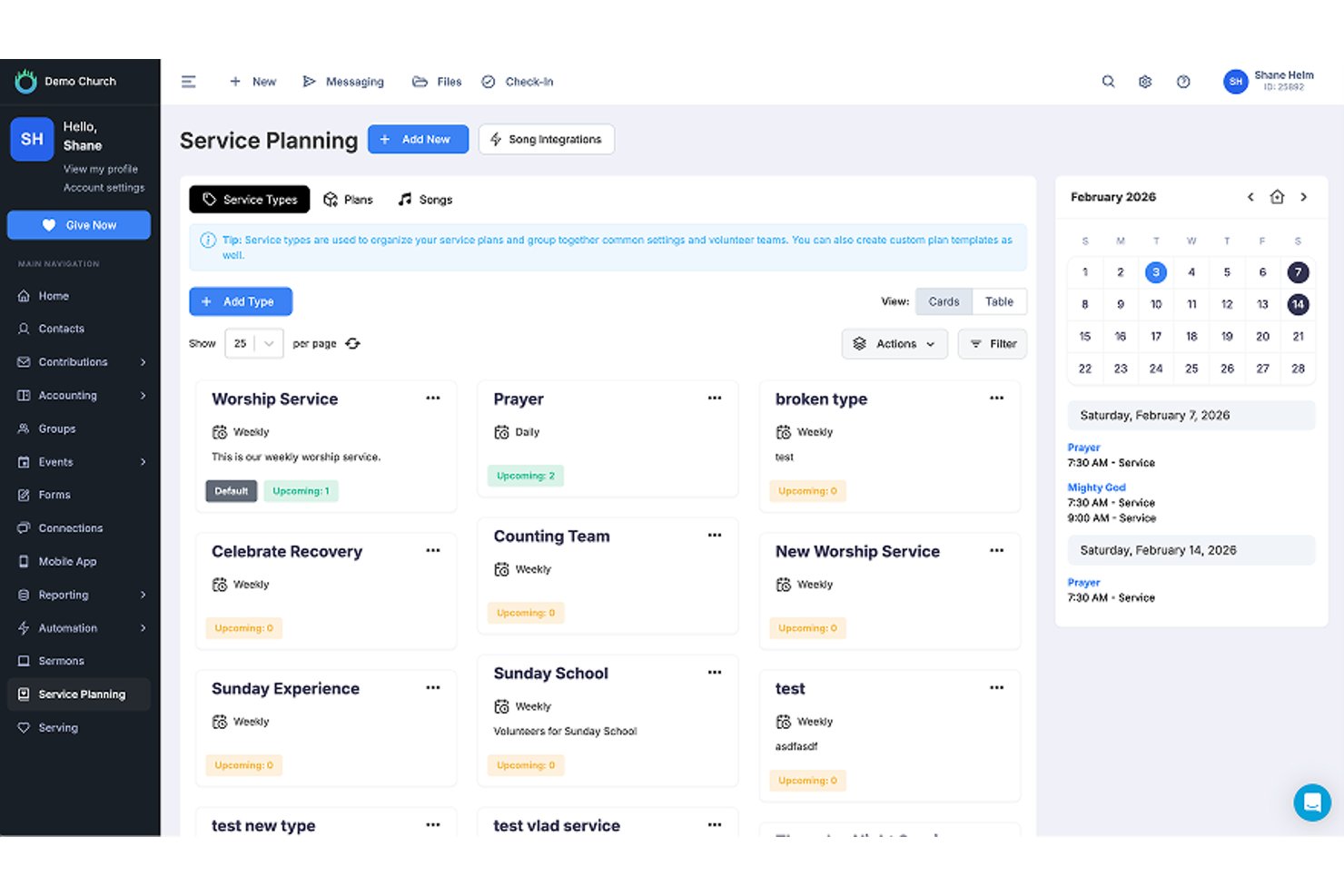
One Church Software è una piattaforma di gestione ecclesiastica che combina pianificazione dei servizi, programmazione dei volontari, un catalogo di canzoni e strumenti di automazione del flusso di lavoro in un unico sistema.
Per chi è ideale One Church Software?
È particolarmente adatto a chiese di piccole e medie dimensioni che desiderano unificare la gestione dei membri, delle donazioni, delle comunicazioni e della pianificazione dei servizi in un’unica piattaforma.
Perché ho scelto One Church Software
Ho scelto One Church Software perché unisce la pianificazione della liturgia e l’amministrazione quotidiana della chiesa in un’unica interfaccia senza obbligarti ad acquistare componenti aggiuntivi separati. Puoi creare ordini di servizio personalizzati, assegnare ruoli ai volontari e monitorare l’interazione dei membri insieme a decime e presenze. La sua contabilità dei fondi integrata e l’architettura nativa multi-campus assicurano che i team di leadership possano gestire ministeri multisede senza compartimentazioni operative.
Caratteristiche chiave di One Church Software
- Strumenti di programmazione dei volontari: Assegna e conferma musicisti, cantanti e volontari tecnici per ogni servizio.
- App mobile integrata: Accedi ai piani dei servizi, agli orari e alle liste delle canzoni sia da dispositivi iOS che Android.
- Gestione dei media dei sermoni: Organizza e condividi le registrazioni dei sermoni con integrazione YouTube o Vimeo.
- Controlli automatici dei precedenti: Richiedi e traccia i controlli dei precedenti sui volontari direttamente all’interno del sistema.
Integrazioni di One Church Software
One Church Software offre integrazioni native con Mailchimp, Square, Pushpay, SongSelect e PraiseCharts e mette a disposizione un’API per integrazioni personalizzate.
Pros and Cons
Pros:
- Donazioni online integrate insieme alla pianificazione del servizio
- Automatizza i follow up ai membri senza strumenti aggiuntivi
- Gestisce volontari, donazioni e comunicazione insieme
Cons:
- Le funzionalità della libreria di canzoni sono relativamente limitate
- I report sono poco dettagliati per congregazioni più grandi
New Product Updates from One Church Software

One Church Software Adds Apple Pay for Giving and Forms
One Church Software adds Apple Pay for online giving and form payments. This gives donors and form users another convenient way to complete payments across supported portals and embeds. For more information, visit One Church Software’s official site.
 .
.
Tithe.ly
Ideale per la gestione del culto a livello di tutta la chiesa
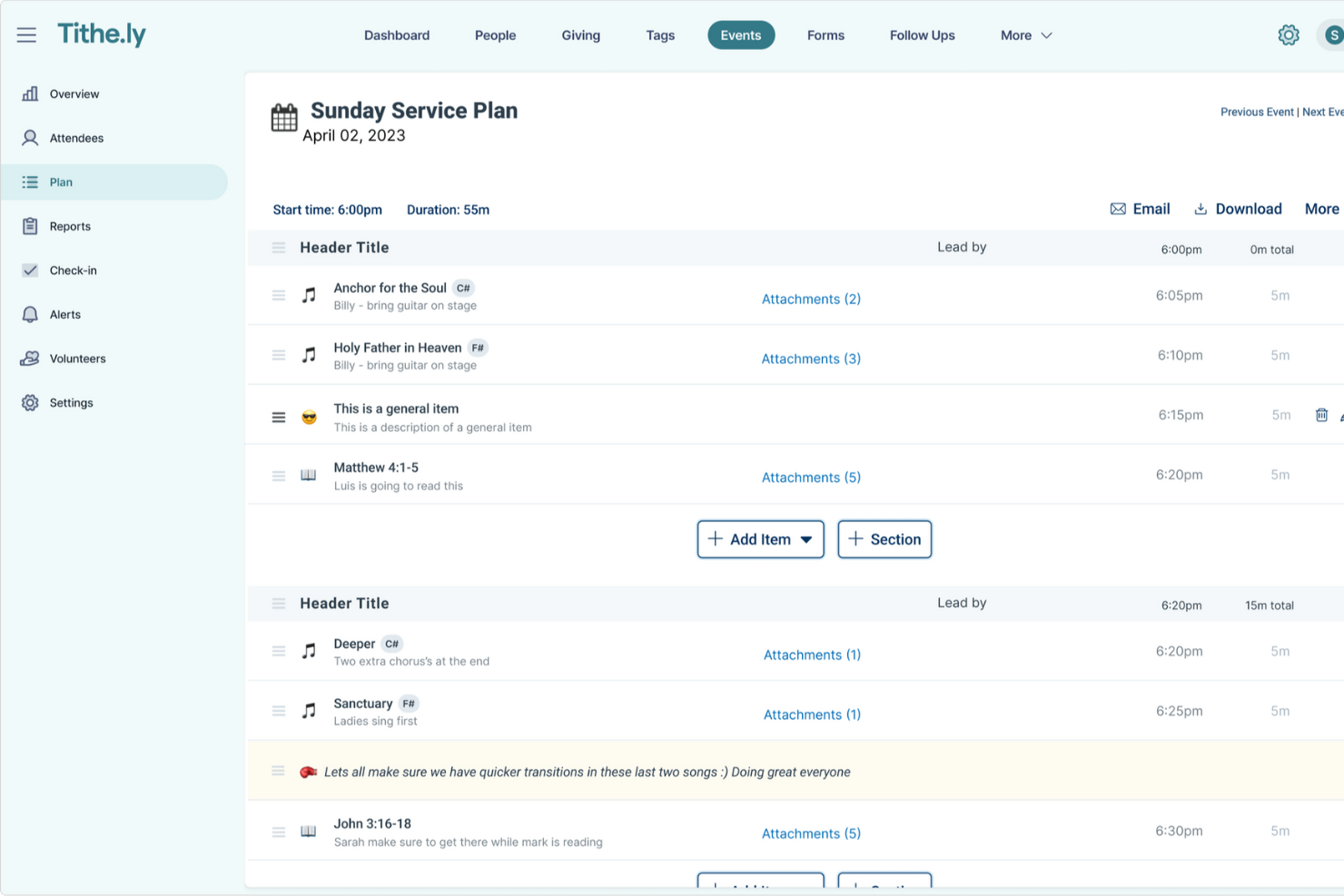
Tithe.ly è una raccolta di strumenti digitali progettati per supportare le chiese nella gestione delle attività di culto, del coinvolgimento dei membri e delle operazioni della chiesa. Offre funzionalità come strumenti per la pianificazione dei servizi per aiutare a organizzare i culti, app personalizzate per la chiesa per mantenere la congregazione connessa e opzioni di donazione digitale per sostenere l'aspetto finanziario del culto e del ministero.
Se cerchi un software per il culto che ti aiuti a coordinare i servizi, gestire la congregazione e gestire le comunicazioni in un unico posto, Tithe.ly è una scelta valida. I suoi strumenti di pianificazione consentono di organizzare le scalette dei culti, gestire i volontari e programmare i servizi in modo efficiente. Con l'app personalizzata di Tithe.ly per la chiesa, puoi condividere sermoni, aggiornamenti e risorse con la tua congregazione durante tutta la settimana. Inoltre, Tithe.ly offre strumenti per la gestione degli eventi e la pianificazione dei volontari, rendendo semplice mantenere tutti gli aspetti dei servizi di culto ben organizzati.

Realm
Ideale per la gestione parrocchiale integrata
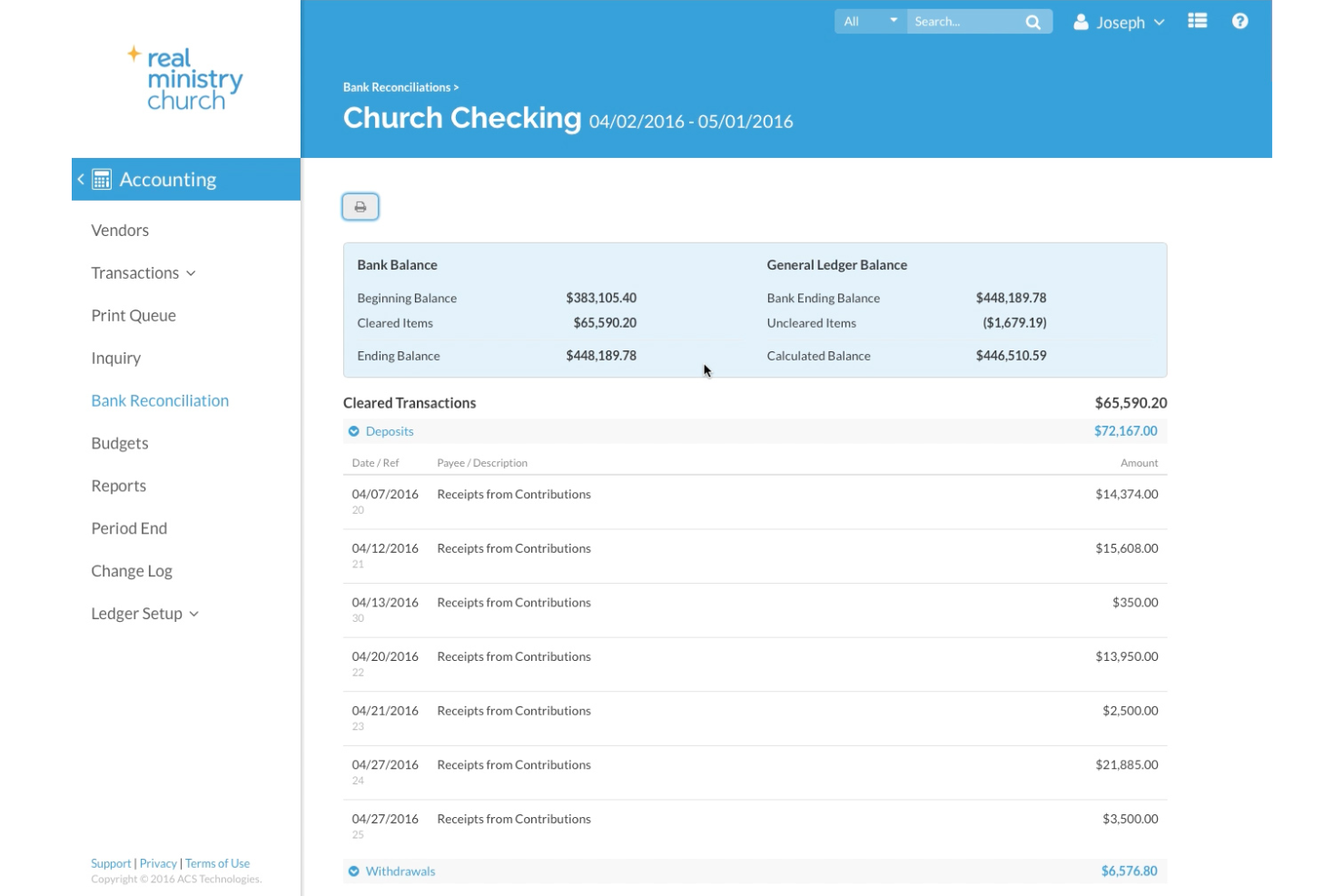
Realm di ACS Technologies è una piattaforma software cloud di gestione parrocchiale che offre strumenti e servizi integrati per i ministeri, l'amministrazione e la cura pastorale. Ho scelto Realm perché offre un'ampia gamma di strumenti e servizi integrati per tutti gli aspetti del ministero della chiesa, rendendolo la scelta migliore per gestire e far crescere una comunità parrocchiale. Il software si distingue per i suoi cruscotti e report in tempo reale, oltre che per i suoi strumenti di facile utilizzo.
La piattaforma offre una suite di strumenti per vari aspetti della gestione della chiesa, tra cui la cura pastorale, l'amministrazione, i ministeri per l'infanzia e i giovani, l'educazione e il discepolato, i media e le comunicazioni, gli eventi, la pianificazione delle funzioni religiose e la gestione delle risorse. Realm offre anche applicazioni mobili, come Realm Connect per i membri della congregazione e Realm Shepherd per la cura pastorale, che consentono allo staff e ai membri della chiesa di rimanere coinvolti nelle attività e gestire le proprie donazioni e informazioni personali. Il software supporta l'amministrazione della chiesa offrendo funzionalità come backup automatico dei dati, permessi basati sui ruoli e sicurezza delle transazioni finanziarie. Realm serve le chiese da oltre quattro decenni ed è riconosciuto per la sua utilità nelle operazioni quotidiane, con l'obiettivo di facilitare la gestione di eventi, il coinvolgimento della congregazione e l'accesso a dati e report in tempo reale.

Planning Center è una suite completa di strumenti per il culto che puoi utilizzare per pianificare, organizzare ed eseguire i servizi di culto, mantenendo la tua congregazione coinvolta. Dispone di una funzione per la programmazione dei volontari, così puoi programmare le persone in base alle loro capacità e preferenze. Puoi anche usare Planning Center per comunicare con i membri del team del culto quando invii richieste di programmazione o aggiorni tramite messaggi di testo, email o notifiche push.
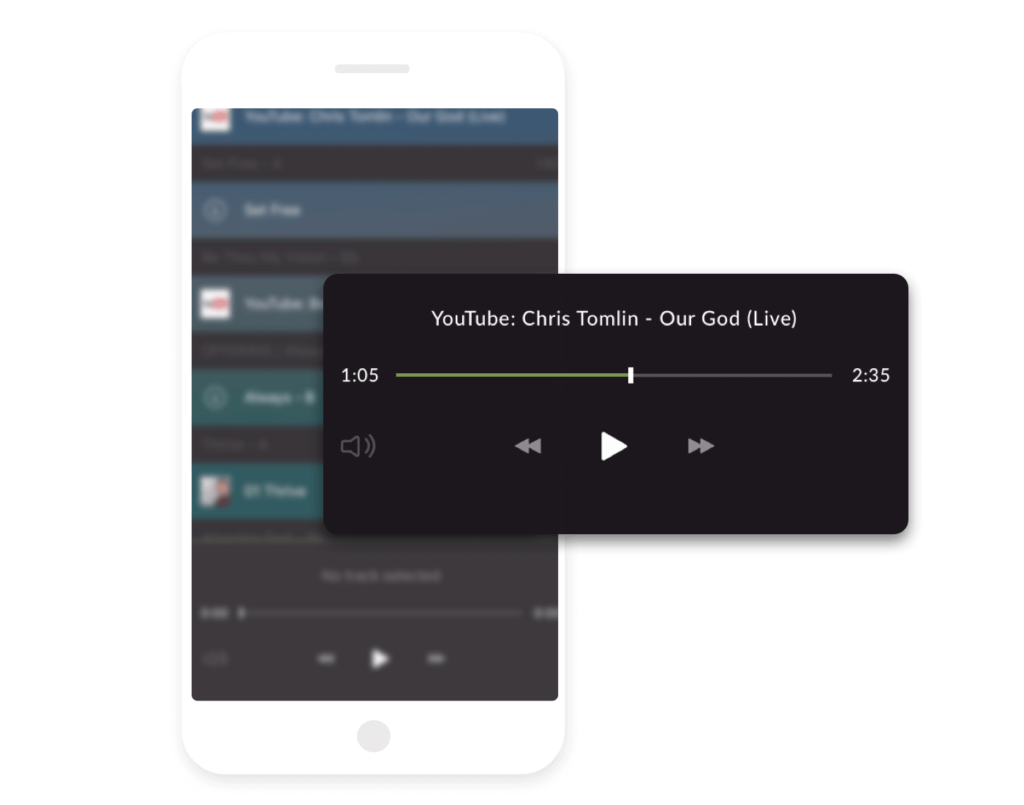
Le prove sono fondamentali per garantire che i servizi di culto si svolgano senza intoppi e Planning Center è il miglior software per presentazioni in chiesa per te se hai bisogno di uno strumento di prova eccellente. Possiede un'ampia libreria di canzoni che puoi utilizzare per garantire servizi di culto vivaci, e puoi anche caricare i tuoi brani se lo desideri. L'app mobile di Planning Center dispone di un lettore multimediale integrato, così i membri del team possono ascoltare l'audio o guardare i video per migliorare la loro esecuzione anche se non dispongono di VLC o altri lettori video installati.


MultiTrack è una raccolta di strumenti digitali che ti offre la possibilità di modellare la musica di culto della tua chiesa. Dispone di modelli ProPresenter per garantirti i testi e gli spartiti giusti per la tua scaletta. La funzione Cloud Pro ti offre una piattaforma per archiviare tutti i tuoi strumenti e risorse per un accesso facile, non solo per te ma per tutta la tua squadra.
Se desideri un software per il culto progettato specificamente per i dispositivi iOS e MacOS, allora MultiTrack è la scelta ideale. Ti permette di modificare, ripetere o saltare a qualsiasi sezione della traccia che stai suonando, così puoi personalizzare la tua musica secondo le necessità. MultiTrack ti permette anche di creare, modificare e salvare più setlist, in modo da avere una scaletta pronta all'uso per una vasta gamma di eventi e attività.
Sunday Sounds funziona con Logic Remote Control permettendoti di controllare a distanza le funzioni base di Mainstage come aggiungere, selezionare o riprodurre patch.


PraiseCharts è uno strumento per il culto che permette di ottenere tracce audio di accompagnamento per le tue canzoni di adorazione. Puoi utilizzare PraiseCharts per ottenere patch per chitarra specifiche per ogni brano, così le tue canzoni suoneranno esattamente come le registrazioni professionali. PraiseCharts ti consente anche di accedere a letture per il culto da utilizzare durante i servizi di adorazione o da trasmettere sul sito web della tua chiesa.
Gli spartiti sono fondamentali per i musicisti, e se desideri avere accesso a un vasto catalogo di spartiti, allora PraiseCharts è il miglior software per il culto della tua chiesa. Con PraiseCharts puoi consultare testi, accordi, arrangiamenti vocali e orchestrazioni delle canzoni di lode e adorazione per i tuoi servizi. Questa è un'ottima risorsa che la tua band di adorazione può utilizzare, soprattutto quando deve imparare brani che non conosce.

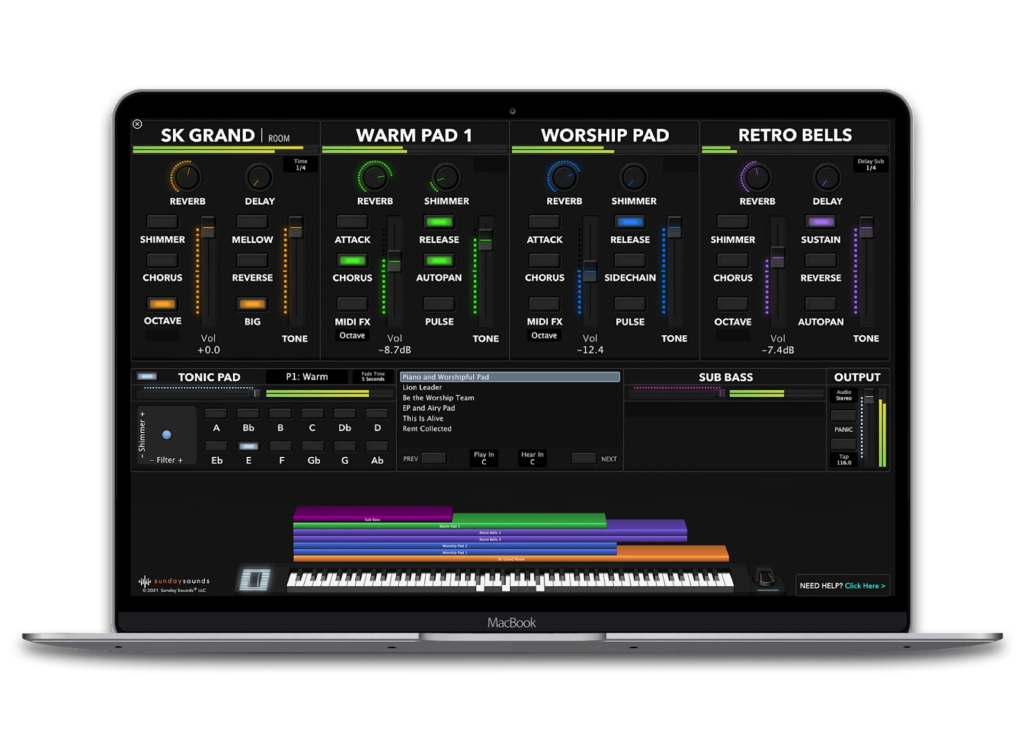
Sunday Sounds è un software musicale con modelli di tasti e patch specifiche per brani che puoi utilizzare per arricchire i tuoi servizi di culto. Dispone di una vasta libreria sonora per creare i tuoi brani e personalizzare la musica di adorazione, inclusi suoni ambientali, basso, chitarra, percussioni, voci e synth. Sunday Sounds offre modelli pre-programmati e flussi di lavoro intuitivi, così puoi trascorrere meno tempo a organizzare la musica per il culto e più tempo a prenderti cura della tua comunità.
I musicisti si affidano a MainStage per trasformare i loro computer in potenti sistemi multi-strumento, e Sunday Sounds è il miglior software per la musica di culto se vuoi sfruttare al massimo MainStage. Sunday Sounds offre più di 250 patch per la worship, dandoti la possibilità di creare brani e suoni che renderanno indimenticabile il servizio ai tuoi membri. Include un riproduttore integrato di Tonic Pad che consente di unire il suono della band e accompagnare i momenti più tranquilli della performance.

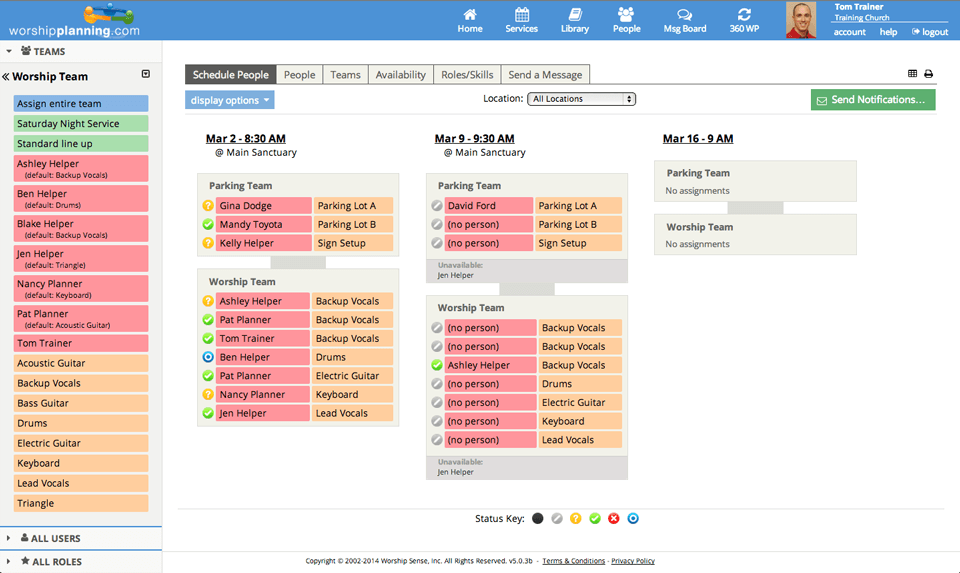
Worship Planning è un software basato su cloud per la pianificazione e l'organizzazione dei servizi di culto. Dispone di un organizzatore di canzoni che ti permette di organizzare, importare ed esportare brani da utilizzare durante i servizi religiosi. Worship Planning include uno spazio di archiviazione file, dove puoi conservare file e documenti in un luogo sicuro. Puoi usare Worship Planning per generare spartiti musicali virtuali per una migliore organizzazione e per aiutarti a risparmiare carta.
Il volontariato è il cuore di ogni congregazione e Worship Planning è il miglior software per il culto se desideri una piattaforma con un'eccellente funzione di gestione dei turni. Puoi usare Worship Planning per pianificare le persone su più servizi contemporaneamente, aiutandoti a risparmiare tempo nella preparazione dei piani di culto durante i periodi intensi. Worship Planning consente la personalizzazione dei ruoli se hai bisogno di assegnare risorse umane a un ruolo speciale.
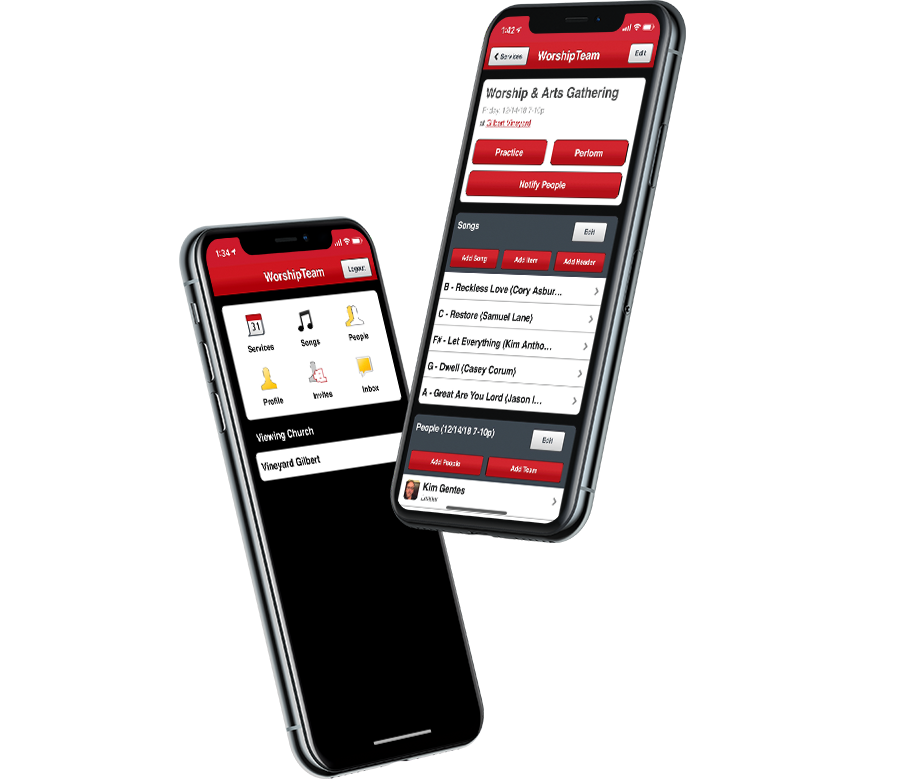
WorshipTeam è un servizio online che puoi utilizzare per gestire il tuo ministero di adorazione in un'unica posizione centralizzata. Puoi usare WorshipTeam per programmare e notificare i membri del team di adorazione e i musicisti in modo che possano accettare o rifiutare incarichi ed evitare conflitti. WorshipTeam è un software multipiattaforma accessibile dal tuo PC Windows o Mac e dispone di una versione app mobile che funziona su dispositivi Android e iOS.
WorshipTeam dispone di un'ampia libreria con oltre 14.000 brani che puoi utilizzare per rendere vivaci e coinvolgenti i tuoi servizi di adorazione. Ciò che lo rende ancora migliore è la possibilità di caricare le tue canzoni nella tua libreria WorshipTeam, e il tuo account WorshipTeam offre spazio di archiviazione illimitato per caricare tutte le canzoni che desideri. Oltre all'immensa libreria di brani, WorshipTeam aggiunge regolarmente nuove canzoni, offrendo accesso agli ultimi canti di adorazione.

Il migliore con intelligenza artificiale personalizzata addestrata sui tuoi sermoni
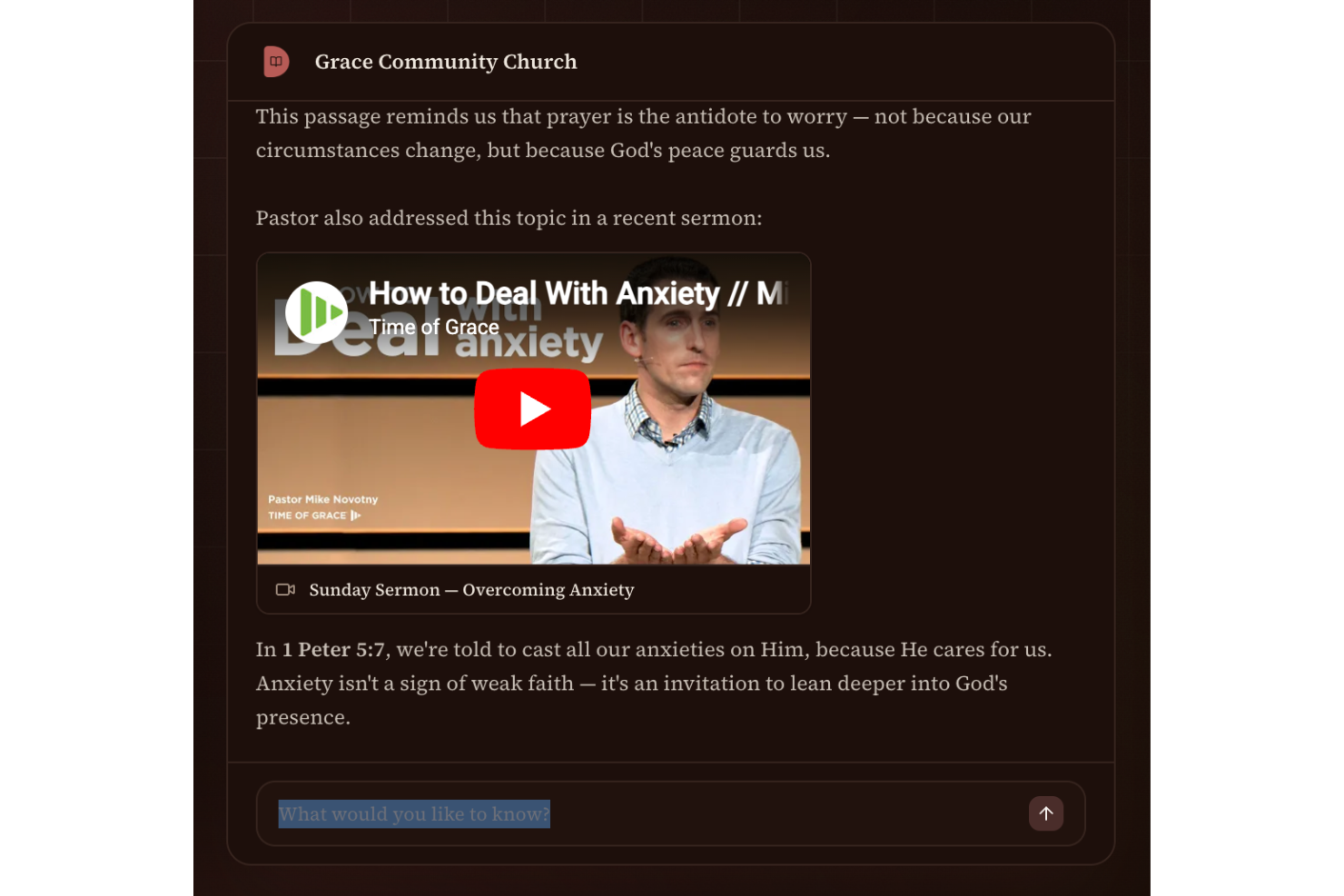
Doctrinally AI è una piattaforma software per il culto che utilizza un'intelligenza artificiale addestrata su misura per organizzare, cercare e interagire con sermoni, documenti e contenuti multimediali della tua chiesa.
Per chi è Doctrinally AI?
Pastore, staff di chiesa e i team ministeriali che necessitano di un archivio ricercabile e basato su intelligenza artificiale dei loro sermoni e materiali didattici.
Perché ho scelto Doctrinally AI
Ho scelto Doctrinally AI come uno dei migliori perché permette di addestrare l'IA sui miei sermoni personali e sui documenti della chiesa. Posso caricare anni di insegnamenti e la piattaforma costruisce una base di conoscenza personalizzata che riflette la teologia e il linguaggio della mia chiesa. Il mio team può cercare e interagire con questo archivio usando il linguaggio naturale, rendendo facile trovare materiale rilevante per studio o necessità ministeriali.
Caratteristiche principali di Doctrinally AI
- Sincronizzazione automatica dei sermoni da YouTube: Si collega al canale YouTube della tua chiesa per importare automaticamente i nuovi sermoni.
- Citazione delle fonti nelle risposte: Fornisce link diretti alle trascrizioni dei sermoni o ai documenti quando risponde alle domande.
- Supporto per il caricamento di documenti: Permette di aggiungere PDF, file Word e altri documenti per espandere l'archivio ricercabile.
- Controlli di accesso per i membri del team: Consente di gestire i permessi per staff e volontari all'interno della chiesa.
Integrazioni di Doctrinally AI
Le integrazioni native non sono chiaramente documentate. È disponibile un'API per integrazioni personalizzate.
Pros and Cons
Pros:
- L'IA personalizzata si adatta al linguaggio della tua chiesa
- Supporta il caricamento di documenti per archivi di sermoni
- Consente accesso di squadra e controlli sui permessi
Cons:
- Nessuna funzione integrata per la pianificazione o programmazione del culto
- Manca un'app mobile per accesso in mobilità
Altri software per il culto
- Worship Extreme Music Stand
Ideale per spartiti di accordi e testi
- Transposr
Miglior software gratuito per la gestione della musica di culto
- WorshipTrac
Ideale per la programmazione dei sermoni
- Proclaim
Ideale per presentazioni di culto
- MinistryPlatform
Ideale per l'organizzazione degli orari del culto


Come Valuto i Software per il Culto
Valuto i software per il culto su due livelli: le funzionalità di base di cui un team della domenica mattina dipende—come la creazione delle scalette e la reportistica CCLI—e i fattori che distinguono ciascun strumento dagli altri.
Funzionalità di Base (Requisiti Fondamentali per Questa Lista)
Quando seleziono gli strumenti per la mia lista, valuto ciascuno su una scala da 0 (non offre la funzionalità) a 5 (eccelle in quest'area) per ciascuna delle funzionalità di base elencate di seguito. Poi converto il punteggio totale dello strumento in una percentuale. Ogni strumento deve raggiungere un punteggio totale minimo del 65% per essere preso in considerazione per l'inclusione.
- Pianificazione e Sequenziamento dei Servizi: Cerco editor drag-and-drop per costruire i servizi, in cui puoi ordinare canti, letture e transizioni—oltre ad allegare note e stime di tempo per ogni elemento.
- Libreria di Canti e Accordi: Una banca dati di canti ricercabile con testi, spartiti con accordi e trasposizione di tonalità è fondamentale. Controllo se i team possono salvare arrangiamenti per stile di servizio.
- Pianificazione del Team e Disponibilità: Valuto come ogni strumento gestisce le assegnazioni ricorrenti dei ruoli, i blocchi di disponibilità e i promemoria automatici, così che i responsabili del culto spendano meno tempo a rincorrere le conferme.
- Proiezione di Testi e Media: Sia che si tratti di un motore di presentazione integrato o di un'esportazione diretta verso ProPresenter o EasyWorship, cerco opzioni affidabili per la visualizzazione di testi e media.
- Risorse per Prove e Studio: Strumenti come Planning Center e Worship Online gestiscono queste funzioni in modo diverso. Verifico la presenza di riproduzione multitraccia, accesso agli stem e mix per le prove condivisibili.
- Supporto CCLI e Licenze: Valuto se il tracciamento dell'utilizzo dei canti e l'integrazione con CCLI SongSelect sono integrati, rendendo semplice creare report e mantenere la conformità al momento del rinnovo.
Una volta che ho una lista di strumenti che soddisfano i criteri, considero ciò che distingue realmente ciascuna piattaforma.
Fattori Differenzianti (Cosa Distingue i Fornitori)
Ecco come confronto e distinguo i diversi fornitori:
Funzionalità Distintive
Le app mobili fanno davvero la differenza per i musicisti volontari che hanno bisogno di controllare i turni o consultare spartiti tra una prova e l'altra. Cerco anche una modalità apposita per il monitoraggio digitale del palco—consente ai responsabili del culto di inviare testi, cambi di accordi e timer per il countdown ai monitor sul palco, separando ciò che vede la congregazione. Anche l'integrazione con un ChMS è importante, soprattutto per le chiese che già usano Planning Center o Breeze, dove la sincronizzazione dei dati dei volontari tra i sistemi fa risparmiare molte ore di inserimento dati ogni settimana.
Oltre le Funzionalità
Pongo molta attenzione a quanto sia facile per i musicisti volontari imparare a usare ogni piattaforma. Se il batterista non riesce ad aprire una scaletta senza un tutorial, l'adozione si blocca rapidamente. Sono importanti anche le collaborazioni sui contenuti—l’accesso a cataloghi di canti con licenza tramite CCLI SongSelect o MultiTracks incide sulla velocità con cui il team può mettere in rotazione nuovi brani. Inoltre considero quanto bene si adatti uno strumento a diverse realtà, sia che tu stia gestendo un unico culto domenicale in una chiesa neonata sia che supervisioni più campus con decine di team a rotazione.
Come scegliere il software per il culto in chiesa
Non stai acquistando un software per divertimento. Stai risolvendo dei problemi. Ecco a cosa dare la priorità e cosa succede quando non lo fai:
1. Facilità d'uso Se il volontario con meno dimestichezza con la tecnologia non riesce a usarlo, è lo strumento sbagliato.
- Da evitare: strumenti che richiedono ore di formazione o vengono forniti con manuali di 100 pagine.
- Cerca: flussi con trascinamento, design chiaro e avviamento rapido.
2. Programmazione e comunicazione del team integrate... Se stai ancora mandando messaggi per comunicare gli orari delle prove, il tuo sistema non funziona.
- Da evitare: software che ignora l'aspetto umano del culto.
- Cerca: promemoria automatici, monitoraggio della disponibilità e calendari condivisi.
3. Personalizzazione in base al tuo stile... La tua chiesa non è generica: nemmeno i tuoi servizi dovrebbero esserlo.
- Da evitare: strumenti che impongono modelli rigidi o flussi lineari.
- Cerca: elementi del servizio modificabili, posizionamento flessibile dei contenuti multimediali e modelli salvabili.
4. Gestione affidabile di contenuti multimediali e testi... Durante il servizio hai una sola possibilità. La tecnologia deve funzionare.
- Da evitare: strumenti che si bloccano, vanno in crash o hanno difficoltà con le diapositive di base.
- Cerca: proiezione fluida, importazione in blocco dei testi e controllo in tempo reale.
5. Prezzi onesti... “Conveniente” non significa nulla se metà delle funzionalità è bloccata dietro un paywall.
- Evita: assurdità a livelli, costi per utente e addebiti imprevisti per gli aggiornamenti.
- Cerca: prezzi trasparenti e funzionalità che crescano insieme alla tua chiesa, non contro di essa.
Tendenze nei software per il culto in chiesa (ciò che conta davvero nel 2026)
I migliori software per il culto non si stanno semplicemente evolvendo: si stanno adattando alle pressioni reali dei servizi ibridi, del burnout e delle crescenti aspettative tecnologiche. Ecco cosa sta cambiando:
1. Multimedia che funziona davvero
Niente più rotelle che girano o formati di file non supportati. Gli strumenti ora supportano più formati, una riproduzione più fluida e transizioni migliori, perché un culto pieno di problemi tecnici rovina il momento.
2. Prima il cloud, o niente
Se il tuo team non può pianificare dal telefono o dal laptop, il tuo sistema è obsoleto. Gli strumenti basati sul cloud sono ormai lo standard e rendono la collaborazione fluida, anche durante la settimana.
3. Il culto ibrido è permanente
L'era della pandemia potrebbe essere ormai alle spalle, ma il culto ibrido è ancora presente. Le piattaforme leader offrono ora la sincronizzazione dei testi in tempo reale, il supporto per doppia uscita e funzionalità di coinvolgimento online integrate.
4. La sicurezza non è facoltativa
Le chiese stanno finalmente prendendo coscienza dei rischi legati ai dati. Gli strumenti con crittografia, controlli degli accessi e backup adeguati stanno diventando sempre più diffusi e richiesti.
5. Interfacce che non spaventano i volontari
Niente più pannelli di controllo macchinosi o formazione del tipo “ti ci abituerai”. I nuovi strumenti stanno eliminando il superfluo e vengono progettati per l'uso nel mondo reale: rapidi, essenziali e intuitivi.
Che cos'è un software per il culto in chiesa?
È un software che ti aiuta a pianificare e gestire i servizi di culto: canti, diapositive, volontari e tutto il resto. Quelli migliori gestiscono programmazione, testi e contenuti multimediali in un unico posto, così il tuo team non deve affannarsi ogni domenica.
Funzionalità dei software per il culto in chiesa
Lascia perdere i trucchi appariscenti. Ecco ciò di cui i veri pastori di chiese in crescita hanno bisogno settimana dopo settimana:
- Creazione del servizio con trascinamento – Crea rapidamente l'ordine del culto, senza bisogno di una laurea in tecnologia.
- Programmazione del team – Assegna i ruoli, controlla la disponibilità ed evita il caos della domenica mattina.
- Notifiche automatiche – Lascia che sia il sistema a rincorrere le persone, non tu.
- Libreria multimediale centralizzata – Testi, audio e video organizzati e pronti quando ne hai bisogno.
- Sincronizzazione delle presentazioni – Invia le diapositive a ProPresenter (o a qualunque strumento utilizzi) senza drammi dell'ultimo minuto.
- Accesso da dispositivi mobili – Pianifica i servizi dal telefono, dal divano o dal parcheggio.
- Modelli riutilizzabili – Non partire da zero ogni settimana: riutilizza ciò che funziona già.
- Gestione dei volontari – Mantieni tutti coordinati, informati e pronti a servire.
- Sincronizzazione cloud – Una modifica significa aggiornamento ovunque. Niente più PDF obsoleti sparsi qua e là.
- Analisi e report – Scopri cosa funziona: canti, team, tendenze, tutto.
Vantaggi dei software per il culto in chiesa
Stai già svolgendo il tuo ministero. Il software giusto semplicemente non ti ostacola.
- Pianifica più velocemente – Smetti di sprecare ore nella gestione logistica.
- Coordina meglio – Niente più “Aspetta, in quale tonalità siamo?”
- Gestisci i servizi senza intoppi – I contenuti multimediali e le diapositive funzionano come dovrebbero.
- Coinvolgi le persone – Tecnologia migliore = meno distrazioni = culto più profondo.
- Automatizza le attività noiose – Impostale una volta e poi funzioneranno da sole.
Costi e prezzi dei software per il culto in chiesa
Quando scegli un software per il culto in chiesa, è importante comprendere i diversi piani e le opzioni di prezzo disponibili. Ecco una panoramica dei tipi di piano più comuni, dei relativi prezzi medi, delle funzionalità e degli utenti a cui sono più adatti:
| Tipo di piano | Prezzo medio | Funzionalità comuni | Ideale per... |
|---|---|---|---|
| Piano gratuito | $0/mese | Strumenti di presentazione di base, libreria multimediale limitata, accesso per un singolo utente | Chiese piccole con esigenze minime |
| Piano base | $15–$20/mese | Libreria multimediale ampliata, accesso multiutente, strumenti di base per la programmazione e la pianificazione | Chiese di medie dimensioni che necessitano di più funzionalità |
| Piano standard | $25–$30/mese | Libreria multimediale completa, programmazione avanzata, gestione dei volontari, integrazione con altri strumenti per la chiesa | Chiese più grandi con esigenze complesse |
| Piano premium | $40–$50/mese | Tutte le funzionalità del piano standard, oltre a supporto prioritario, branding personalizzato e spazio di archiviazione aggiuntivo | Chiese alla ricerca di soluzioni complete |
Considera le esigenze specifiche e il budget della tua chiesa quando selezioni un piano. Iniziare con un piano gratuito o base può essere un buon modo per testare il software prima di impegnarsi con un'opzione di livello superiore.
Software per il culto della chiesa: domande comuni (con risposte dirette)
1. Lo strumento che sto valutando funzionerà con il nostro attuale software di gestione della chiesa?
Solo se controlli. Non dare nulla per scontato. Alcuni strumenti si integrano con ProPresenter, Planning Center, piattaforme per le dirette streaming, ecc.; altri no. Verificalo subito, altrimenti rischi di ricostruire l'intero flusso di lavoro.
2. Più membri del team possono utilizzare contemporaneamente il software per il culto?
Se lo strumento che stai valutando è valido, SÌ, ma la qualità varia. Gli strumenti migliori supportano la collaborazione in tempo reale e l'accesso basato sui ruoli. Quelli economici permettono a chiunque di modificare qualsiasi cosa, trasformando la pianificazione in un caos.
3. Vale davvero la pena utilizzare un software per il culto in una chiesa piccola?
Risposta breve: sì.
Risposta più lunga: solo se scegli il livello di prezzo appropriato. Esistono opzioni essenziali ed economiche che fanno ciò di cui hai bisogno senza funzionalità superflue. Evita semplicemente le piattaforme aziendali che fingono di poter “ridurre la scala”.
4. Di quali dispositivi avrà bisogno il nostro team AV?
In genere, nulla di troppo complesso: un browser moderno, un laptop o un computer desktop e, facoltativamente, un tablet. Alcuni dispongono di app per dispositivi mobili, ma non fare affidamento su un'app per la pianificazione completa dei servizi. Il diavolo si nasconde nei dettagli, quindi controlla sempre le specifiche!
5. E se il mio team non lo usasse?
Beh, onestamente, non è che avranno molta scelta, giusto? Scegli uno strumento macchinoso e fastidioso e potresti scoprire che il tuo team fatica a imparare a usarlo... o, peggio ancora, che ti abbandona.
Consiglio pratico: prova qualsiasi strumento tu stia valutando con il volontario più restio alla tecnologia. Questo è il tuo vero parametro di riferimento.
E adesso:
Se stai cercando un software per il culto della chiesa, contatta gratuitamente un consulente di SoftwareSelect per ricevere consigli.
Compili un modulo e fai una breve conversazione durante la quale vengono approfondite le tue esigenze specifiche. Poi riceverai una selezione ristretta di software da esaminare. Ti seguiranno persino durante l'intero processo di acquisto, comprese le trattative sul prezzo.