

10 Mejores Programas para Boletines de la Iglesia Evaluados en 2026

Mejores programas para boletines de iglesias


Gestionar una iglesia no es tarea fácil. Tienes que asumir múltiples responsabilidades, desde organizar eventos hasta mantener a tu congregación informada. Aquí es donde los programas para boletines de iglesias son de gran ayuda. Te ayudan a comunicarte de manera eficaz y a mantener a todos alineados.
He invertido tiempo probando y evaluando programas de forma independiente, adentrándome en el sector de la gestión eclesiástica. Quiero compartir contigo mis mejores selecciones para que tengas una visión clara de las mejores opciones disponibles.
En este artículo, encontrarás reseñas imparciales y bien investigadas de los principales programas para boletines de iglesias. Mi objetivo es facilitar tu decisión, para que puedas dedicar más tiempo a lo que realmente importa: servir a tu comunidad.
Por qué confiar en nuestras recomendaciones de software
Nuestro equipo lleva probando y evaluando software desde 2012. Como líderes eclesiásticos, sabemos lo difícil —y lo importante— que es elegir el software adecuado.
Para esta guía, evaluamos las herramientas mediante pruebas prácticas e investigación independiente, puntuando las herramientas según nuestros criterios de selección.
Nuestras reseñas reflejan nuestro criterio editorial humano, no un discurso de ventas.
Por qué confiar en nuestras reseñas de software
Hemos estado probando y analizando programas de gestión eclesiástica desde 2020. Como administradores de iglesias, sabemos lo crucial y difícil que es tomar la decisión adecuada al elegir un software. Invertimos en una investigación profunda para ayudar a nuestra audiencia a tomar mejores decisiones de compra de software.
Hemos probado más de 2,000 herramientas para diferentes casos de uso de gestión de iglesias y hemos escrito más de 1,000 reseñas exhaustivas de programas. Descubre cómo nos mantenemos transparentes y revisa nuestra metodología de evaluación de software.
Resumen de los mejores programas para boletines de iglesias
u003cspan style=u0022font-weight: 400u0022u003eEsta tabla comparativa resume los detalles de precios de mis principales selecciones de programas para boletines de iglesias para ayudarte a encontrar el que mejor se ajuste a tu presupuesto y las necesidades de tu comunidad.u003c/spanu003e
| Tool | Best For | Trial Info | Price | ||
|---|---|---|---|---|---|
| 1 | Mejor para plantillas de diseño | Plan gratuito disponible | Desde $12/mes (facturado anualmente) | Website | |
| 2 | Ideal para la colaboración en la nube | Plan gratuito + prueba disponible | Desde $7/usuario/mes (facturado anualmente) | Website | |
| 3 | Mejor para uso de código abierto | Plan gratuito disponible | Precio a consultar | Website | |
| 4 | Ideal para la edición sin conexión | Plan gratuito disponible | Desde $99.99/año | Website | |
| 5 | La mejor para personalización de impresión | Not available | Website | ||
| 6 | Ideal para iglesias ortodoxas | Not available | Website | ||
| 7 | Mejor para edición colaborativa | Not available | Website | ||
| 8 | Ideal para pantallas digitales | Not available | Website | ||
| 9 | Ideal para acceso móvil | Not available | Website | ||
| 10 | Ideal para la integración de eventos | Not available | Website |
Reseñas de los mejores programas para boletines de iglesias
u003cspan style=u0022font-weight: 400u0022u003eA continuación encontrarás mis resúmenes detallados de los mejores programas para boletines de iglesias que han llegado a mi lista de recomendaciones. Estas reseñas ofrecen un análisis detallado de las características clave, ventajas y desventajas, integraciones y casos de uso ideales de cada herramienta para ayudarte a encontrar la mejor para ti.u003c/spanu003e

Canva
Mejor para plantillas de diseño
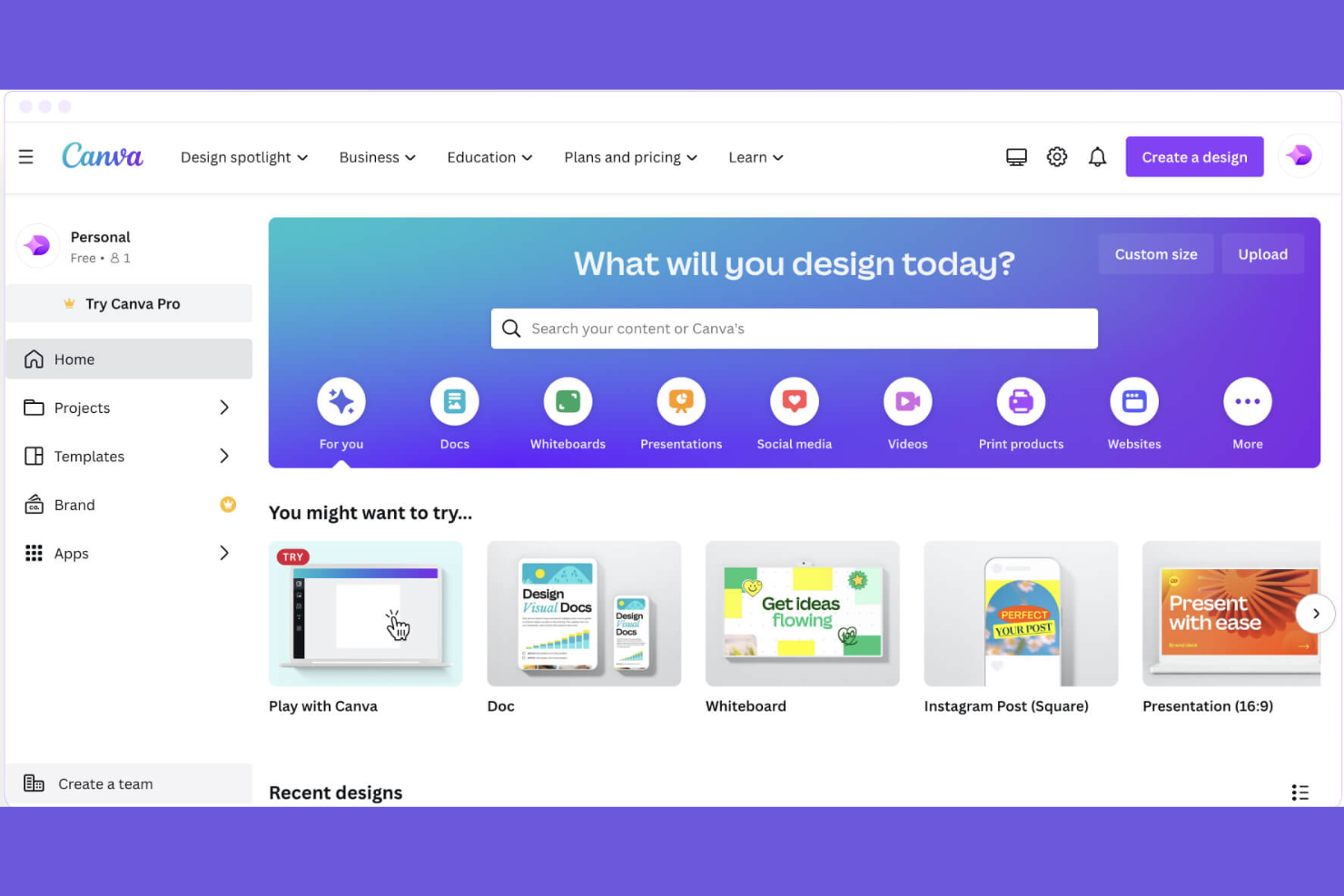
Canva es una plataforma de diseño gráfico ampliamente utilizada para crear boletines de iglesia visualmente atractivos. Está pensada para administradores y voluntarios de iglesias que desean diseñar boletines de aspecto profesional sin necesidad de tener amplios conocimientos en diseño.
Por qué elegí Canva: Ofrece una enorme biblioteca de plantillas de diseño, lo que facilita la creación de boletines impactantes. Puedes elegir entre miles de plantillas y personalizarlas con la identidad visual de tu iglesia. Canva proporciona una funcionalidad de arrastrar y soltar, permitiéndote agregar texto, imágenes y otros elementos sin esfuerzo. Con su interfaz fácil de usar, no necesitas experiencia previa en diseño para crear materiales llamativos.
Funciones destacadas e integraciones:
Funciones incluyen acceso a una gran variedad de tipografías, la capacidad de colaborar con otros miembros en tiempo real y opciones para exportar los diseños en múltiples formatos. También puedes guardar tus diseños y acceder a ellos desde cualquier dispositivo, garantizando flexibilidad. La plataforma cuenta con un editor de fotos que permite mejorar las imágenes directamente en tu boletín.
Integraciones incluyen Dropbox, Google Drive, Instagram, Facebook, Pinterest, Slack, Mailchimp, HubSpot, Typeform y LinkedIn.
Pros and Cons
Pros:
- Amplia biblioteca de plantillas
- Colaboración en tiempo real
- Acceso desde cualquier dispositivo
Cons:
- Personalización limitada para plantillas
- La calidad de exportación puede variar

Ideal para la colaboración en la nube
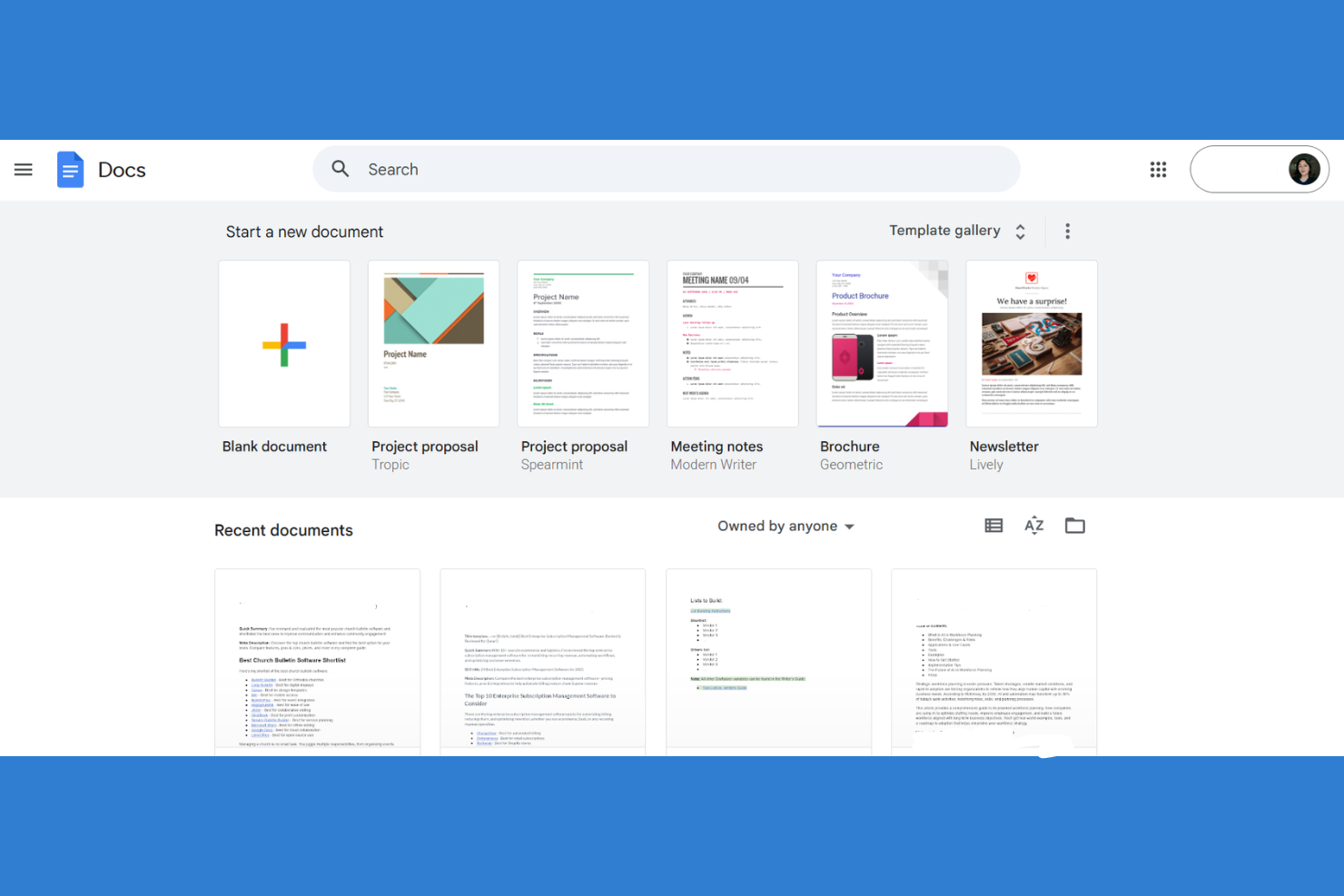
Google Docs es una herramienta de procesamiento de texto basada en la nube que permite a los usuarios crear y editar documentos en línea. Es ampliamente utilizada por los equipos de iglesias que necesitan colaborar en tiempo real en la creación de boletines y otros documentos.
Por qué elegí Google Docs: Destaca en la colaboración en la nube, permitiendo que tu equipo trabaje junto simultáneamente desde diferentes ubicaciones. Puedes comentar y sugerir ediciones en los documentos, facilitando la comunicación y revisión. La herramienta guarda automáticamente los cambios, asegurando que tu trabajo esté protegido. En mi experiencia, Google Docs ofrece una plataforma sencilla para crear y compartir boletines de la iglesia fácilmente.
Funciones destacadas & integraciones:
Funciones incluyen edición y comentarios en tiempo real, la capacidad de acceder a los documentos desde cualquier dispositivo con conexión a Internet y guardado automático de los cambios. También puedes utilizar la escritura por voz para la creación de documentos sin usar las manos. La plataforma admite historial de versiones, permitiéndote rastrear los cambios a lo largo del tiempo.
Integraciones incluyen Google Drive, Google Sheets, Google Slides, Gmail, Google Calendar, Google Meet, Google Keep, Google Forms, Google Sites y Google Chat.
Pros and Cons
Pros:
- Colaboración en tiempo real
- Guardado automático de los cambios
- Accesible desde cualquier dispositivo
Cons:
- Requiere conexión a internet constante
- Opciones de formato limitadas

Mejor para uso de código abierto
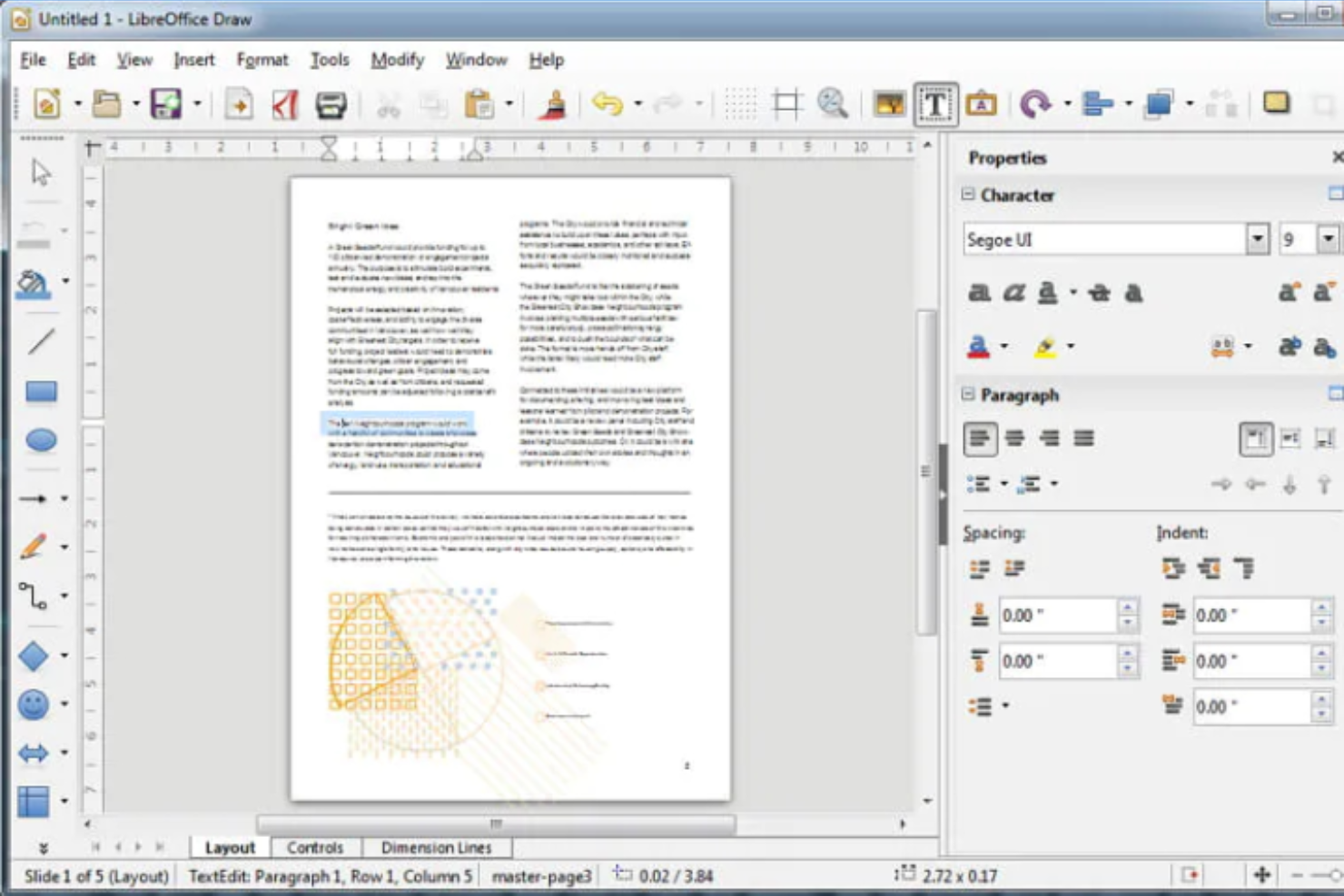
LibreOffice es una suite ofimática gratuita y de código abierto que proporciona herramientas para crear documentos, hojas de cálculo y presentaciones. Es popular entre equipos de iglesias que valoran el software de código abierto para crear boletines y otros documentos eclesiásticos.
Por qué elegí LibreOffice: Ofrece flexibilidad de código abierto, lo que permite personalizar y adaptar el software para satisfacer necesidades específicas. Puedes crear boletines detallados utilizando su procesador de textos, Writer, que admite una amplia gama de formatos. El software proporciona una interfaz familiar que facilita la transición desde otras suites de oficina. En mi experiencia, LibreOffice es una solución rentable para iglesias que buscan una herramienta versátil sin cuotas de suscripción.
Características y conexiones destacadas:
Características incluyen soporte para diversos formatos de documentos, un potente procesador de textos para crear diseños detallados y herramientas para crear gráficos y diagramas. También puedes personalizar barras de herramientas y menús según tu flujo de trabajo. El software se actualiza continuamente por una comunidad de desarrolladores, asegurando que se mantenga al día.
Conexiones incluyen compatibilidad con Microsoft Word, Microsoft Excel, Microsoft PowerPoint, PDF, HTML y CSV.
Pros and Cons
Pros:
- Flexibilidad de código abierto
- Sin cuotas de suscripción
- Actualizaciones periódicas de la comunidad
Cons:
- Curva de aprendizaje para usuarios nuevos
- Menos funciones avanzadas que los competidores

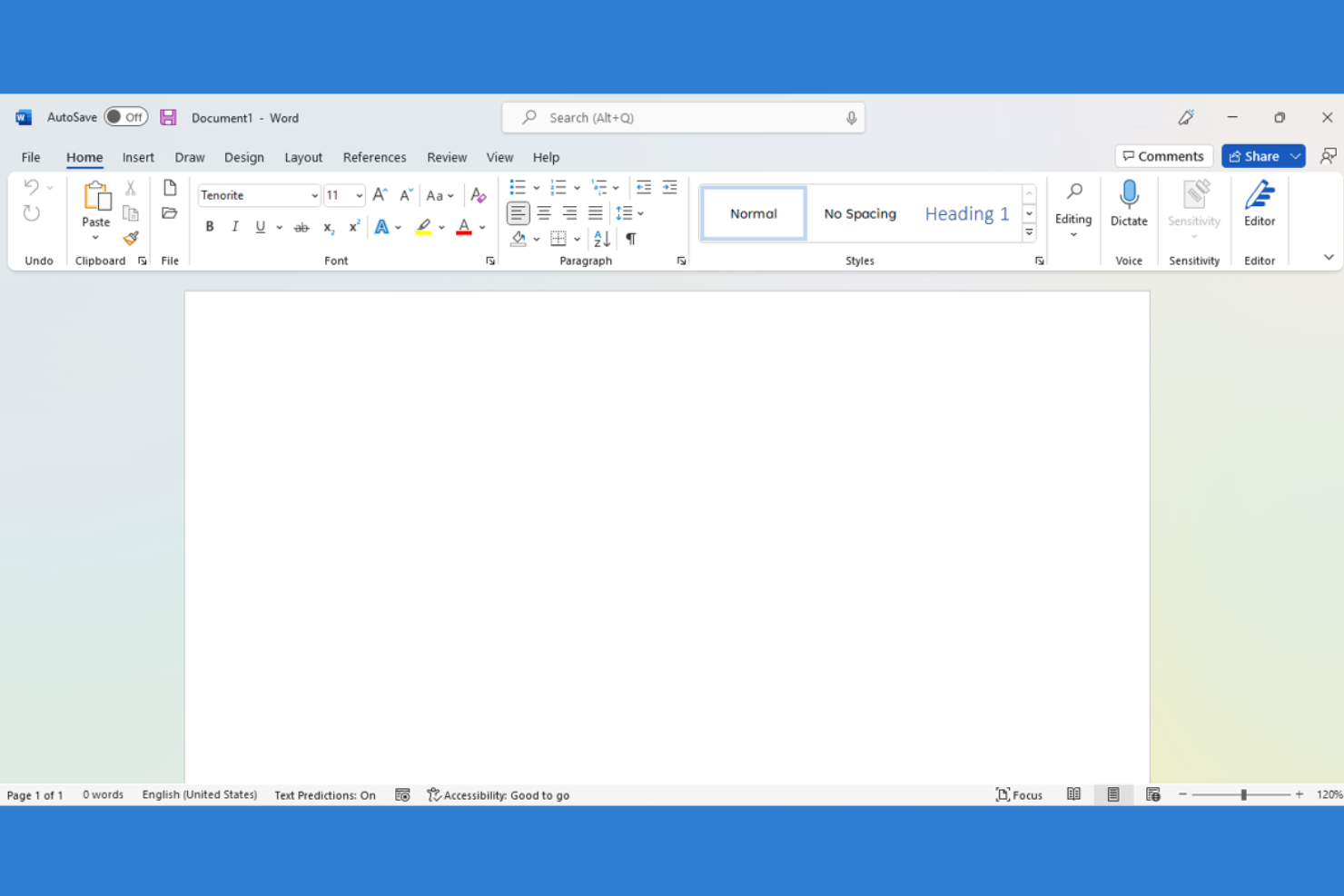
Microsoft Word es un software de procesamiento de texto ampliamente utilizado que ayuda a individuos y equipos a crear documentos, incluyendo los boletines de la iglesia. Está dirigido principalmente al personal de la iglesia que necesita una herramienta confiable para la creación y edición de documentos sin necesidad de conexión a internet.
Por qué elegí Microsoft Word: Destaca en la edición sin conexión, permitiéndote trabajar en los boletines sin necesidad de estar en línea. Puedes dar formato fácilmente al texto, insertar imágenes y crear tablas para organizar tu contenido. El software ofrece una variedad de plantillas que puedes personalizar según las necesidades de tu iglesia. En mi experiencia, Microsoft Word proporciona una interfaz familiar que te ayuda a crear boletines profesionales de manera eficiente.
Características destacadas e integraciones:
Características incluyen una amplia variedad de herramientas de formato, la posibilidad de realizar seguimiento de cambios y comentarios para la edición colaborativa, y soporte para crear diseños complejos con tablas y columnas. También puedes insertar gráficos y esquemas para mejorar el atractivo visual. Las herramientas de corrección ortográfica y gramatical del software ayudan a mantener la precisión en tus boletines.
Integraciones incluyen Microsoft Excel, Microsoft PowerPoint, Microsoft Outlook, OneDrive, SharePoint, Microsoft Teams, Adobe Acrobat, Dropbox y LinkedIn.
Pros and Cons
Pros:
- Interfaz de usuario familiar
- Permite diseños de documentos complejos
- Herramientas de corrección ortográfica y gramatical
Cons:
- Algunas funciones avanzadas requieren capacitación
- No es nativo en la nube sin OneDrive

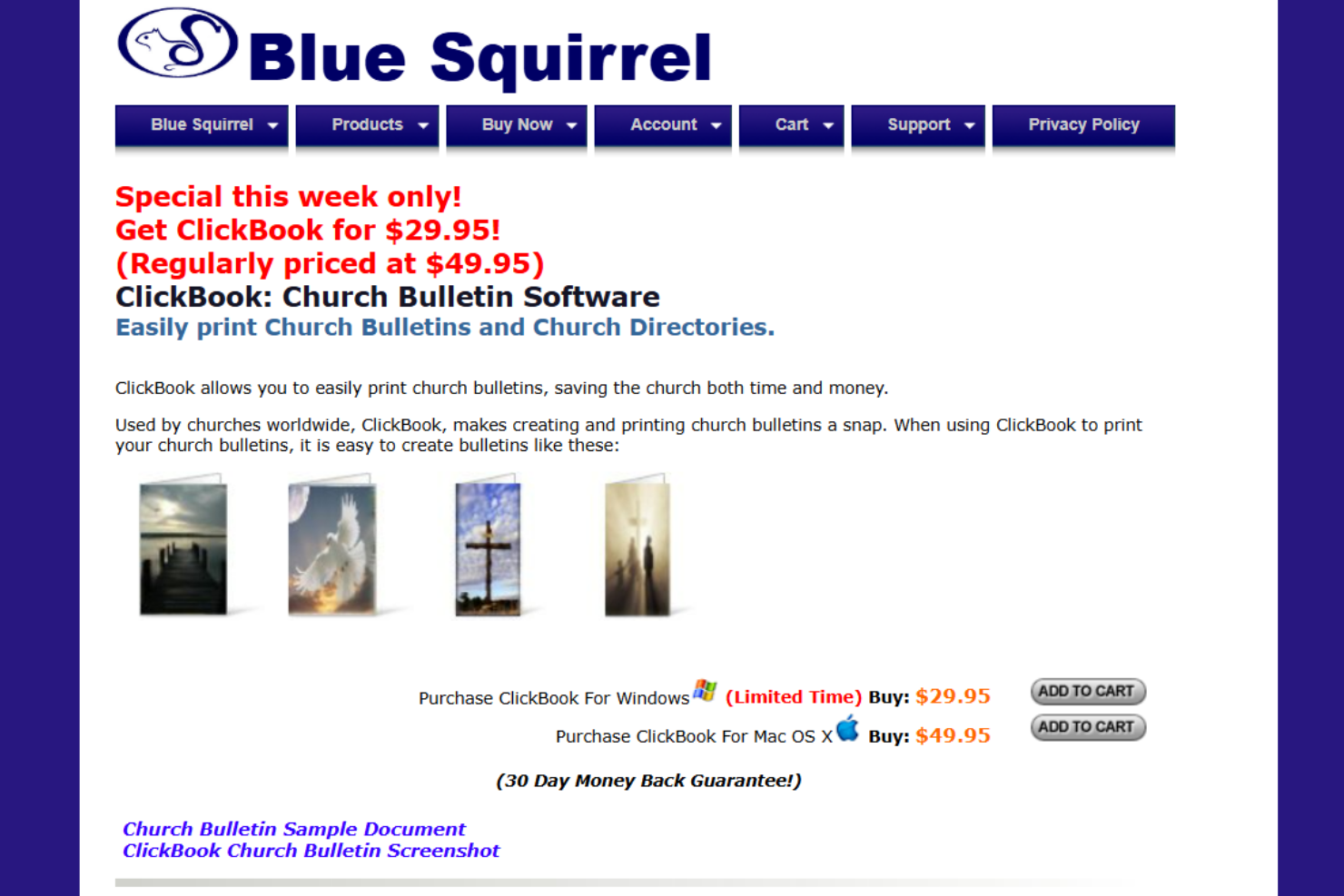
ClickBook es una aplicación de software de escritorio diseñada para crear e imprimir boletines de iglesia personalizados. Está dirigida a los administradores de iglesias que prefieren un enfoque práctico para diseñar e imprimir los boletines internamente.
Por qué elegí ClickBook: Ofrece amplias opciones de personalización de impresión, lo que lo hace ideal para quienes desean adaptar sus boletines a formatos específicos. Puedes ajustar los diseños y tamaños de página para diferentes necesidades de impresión. El software te permite crear cuadernillos, folletos y volantes, proporcionando flexibilidad en la presentación. En mi experiencia, ClickBook simplifica el proceso de impresión, asegurando que puedas producir boletines de alta calidad de manera eficiente.
Características destacadas e integraciones:
Características incluyen la capacidad de imprimir en varios formatos como cuadernillos y folletos, diseños de página personalizables y la opción de escalar el contenido para diferentes tamaños de papel. También puedes crear portadas profesionales e insertar páginas para un acabado pulido. El software es compatible con impresión a doble cara, lo que ahorra papel y recursos.
Integraciones incluyen compatibilidad con la mayoría de impresoras e impresión directa desde aplicaciones populares como Microsoft Word, Adobe Acrobat y Corel WordPerfect.
Pros and Cons
Pros:
- Impresión a doble cara eficiente
- Compatible con muchas impresoras
- Impresión directa desde aplicaciones
Cons:
- Requiere instalación en el escritorio
- Funciones en línea limitadas


Bulletin Builder es un software de boletines eclesiásticos diseñado específicamente para iglesias ortodoxas. Permite a los usuarios crear boletines de aspecto profesional con facilidad, dirigido a los administradores de iglesias que necesitan herramientas de comunicación eficientes.
Por qué elegí Bulletin Builder: Ofrece un enfoque especial en las necesidades de las iglesias ortodoxas, lo que lo hace único en su mercado. La herramienta proporciona plantillas prediseñadas adaptadas para liturgias ortodoxas, lo que te ahorra tiempo. Puedes arrastrar y soltar elementos fácilmente para personalizar tu boletín. La interfaz intuitiva de la plataforma garantiza que tu equipo no necesite conocimientos técnicos para comenzar.
Características destacadas e integraciones:
Características incluyen una biblioteca de plantillas específicas para iglesias ortodoxas, personalización sencilla de arrastrar y soltar, y opciones para incluir textos litúrgicos. También puedes añadir imágenes y anuncios personalizados para satisfacer las necesidades específicas de tu iglesia. El diseño intuitivo asegura que puedas crear boletines rápidamente sin una curva de aprendizaje pronunciada.
Integraciones incluyen Google Calendar, Dropbox, Mailchimp, Facebook y Twitter.
Pros and Cons
Pros:
- Adaptado para servicios ortodoxos
- No se requieren conocimientos técnicos
- Interfaz fácil de arrastrar y soltar
Cons:
- Sin analíticas avanzadas
- Canales de soporte limitados

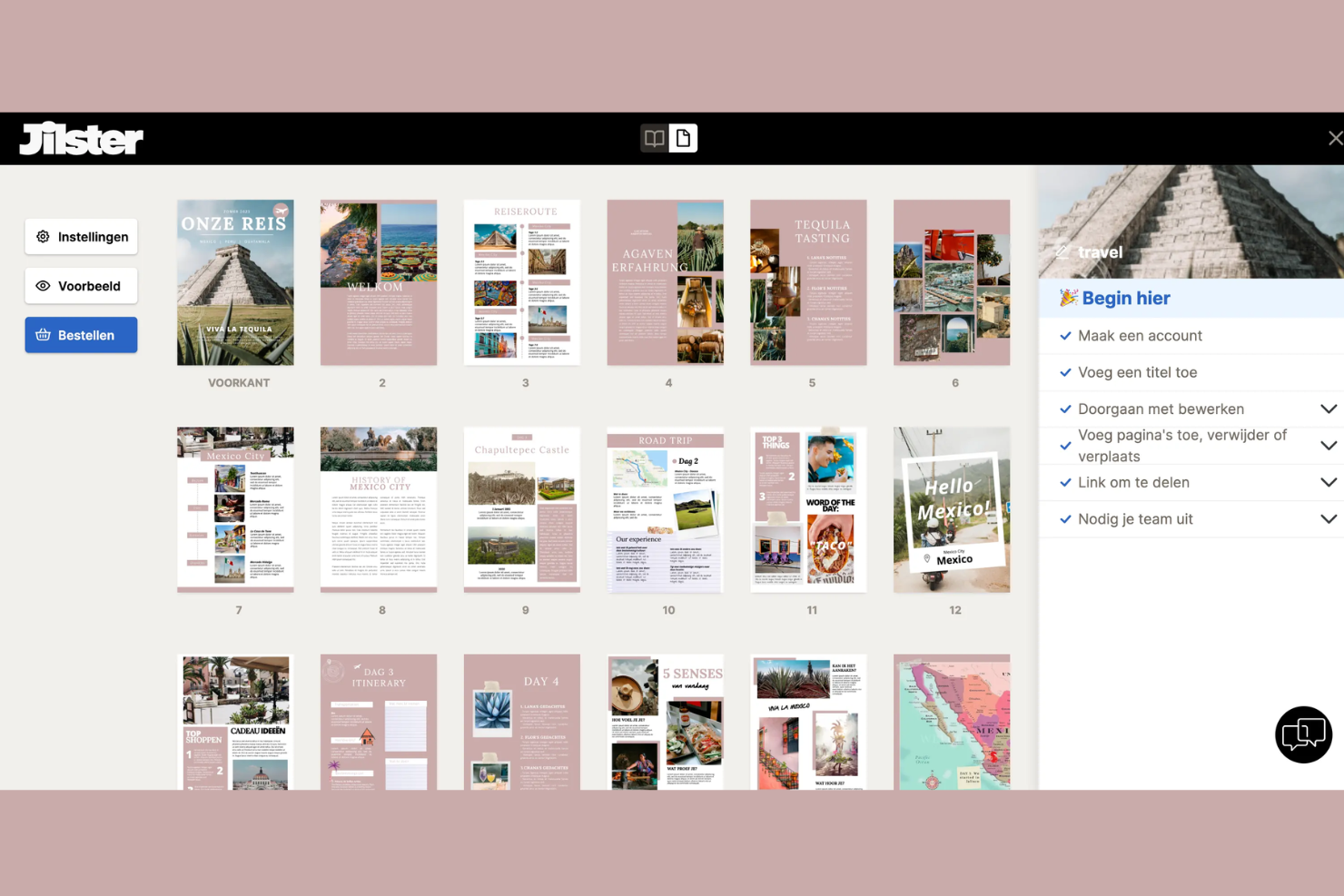
Jilster es una plataforma en línea para crear y publicar revistas digitales e impresas, incluidos boletines de iglesia. Es ideal para equipos de iglesia que buscan colaborar en la creación y distribución de boletines.
Por qué elegí Jilster: Permite que varios usuarios trabajen en el mismo boletín de forma simultánea, lo cual es perfecto para proyectos colaborativos. Puedes asignar diferentes roles a los miembros del equipo, asegurando que todos contribuyan de manera efectiva. La herramienta ofrece una variedad de plantillas personalizables que puedes adaptar al estilo de tu iglesia. Con Jilster, puedes alternar fácilmente entre los formatos digital e impreso, lo que brinda flexibilidad en la forma en que compartes tus boletines.
Características destacadas e integraciones:
Características incluyen una variedad de plantillas personalizables, la posibilidad de alternar entre formatos digital e impreso y acceso basado en roles para la colaboración en equipo. Puedes añadir elementos multimedia a tus boletines para hacerlos más atractivos. La plataforma también permite compartir fácilmente los boletines terminados a través de diferentes canales.
Integraciones incluyen opciones para compartir por correo electrónico, plataformas de redes sociales como Facebook y Twitter, y para insertar en sitios web.
Pros and Cons
Pros:
- Soporta colaboración en equipo
- Asignación sencilla de roles
- Cambia fácilmente entre formatos
Cons:
- Requiere aprendizaje para nuevos usuarios
- Flexibilidad de diseño limitada


Loop Bulletin es un software de boletines digitales para iglesias diseñado para congregaciones que buscan modernizar su comunicación. Está dirigido a los administradores de iglesias que necesitan una forma sencilla de compartir información con sus comunidades a través de plataformas digitales.
Por qué elegí Loop Bulletin: Destaca en la creación de pantallas digitales, lo que lo hace ideal para iglesias que desean eliminar el papel. Puedes actualizar el boletín al instante, asegurando que todos tengan la información más reciente. La herramienta permite compartir boletines por correo electrónico, mensajes de texto o códigos QR, haciéndolo accesible para todos. Con Loop Bulletin ahorras tiempo y dinero al eliminar la necesidad de imprimir.
Características destacadas e integraciones:
Características incluyen la capacidad de personalizar los boletines con secciones de arrastrar y soltar, vista previa en tiempo real de las ediciones y programación de publicaciones futuras. Puedes añadir elementos como anuncios, solicitudes de oración e información de eventos para mantener a la congregación informada. La herramienta también admite donaciones en línea y tarjetas de conexión digitales.
Integraciones incluyen Google Calendar, Mailchimp, Facebook, Twitter, YouTube, Vimeo e Instagram.
Pros and Cons
Pros:
- Actualizaciones digitales al instante
- Fácil de compartir mediante código QR
- No es necesario descargar ninguna app
Cons:
- Acceso limitado sin conexión
- Requiere conexión a internet


bltn es un software para boletines de iglesias que permite crear boletines tanto digitales como impresos. Está dirigido a los administradores de iglesias que desean una herramienta versátil para llegar a su congregación a través de diversos medios.
Por qué elegí bltn: Está diseñado para un acceso fácil desde dispositivos móviles, lo que lo hace conveniente para que los usuarios creen y distribuyan boletines en cualquier momento y lugar. El constructor con función de arrastrar y soltar te permite personalizar los boletines con facilidad, colocando el contenido exactamente donde lo desees. Puedes incluir anuncios, notas del sermón y elementos multimedia desde su biblioteca de bloques. El diseño intuitivo de la plataforma asegura que tú y tu equipo puedan aprender a usarla rápidamente y sin complicaciones.
Características destacadas e integraciones:
Características incluyen una interfaz intuitiva de arrastrar y soltar, la capacidad de crear boletines tanto digitales como impresos, y un editor basado en bloques que permite añadir contenidos diversos. También puedes enviar boletines informativos por correo electrónico y conectar con tu congregación a través de redes sociales y mensajes SMS. La plataforma utiliza tecnología moderna para garantizar una experiencia fluida.
Integraciones incluyen Mailchimp, Facebook, Twitter, Instagram, Google Calendar, YouTube, Vimeo, Slack, Dropbox y LinkedIn.
Pros and Cons
Pros:
- Curva de aprendizaje rápida
- Personalización mediante arrastrar y soltar
- Múltiples opciones de distribución
Cons:
- Funciones analíticas básicas
- Capacidades offline limitadas

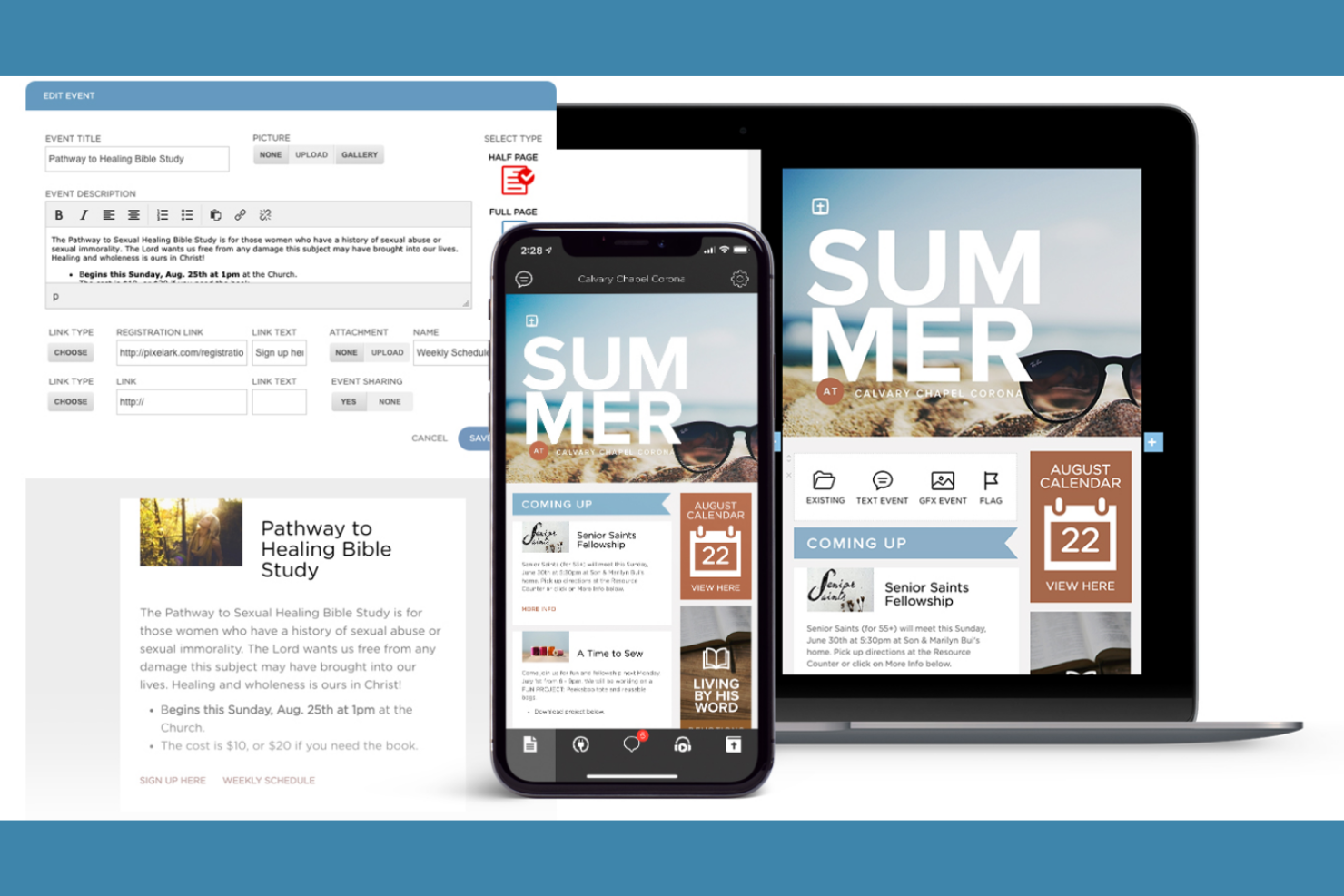
BulletinPlus es un software de boletines para iglesias diseñado para ayudar a las iglesias a gestionar y distribuir eficientemente la información de eventos. Está dirigido a administradores de iglesias que necesitan una forma confiable de comunicar los detalles de los eventos a sus congregaciones.
Por qué elegí BulletinPlus: Destaca por integrar los detalles de los eventos directamente en los boletines, facilitando que mantengas informada a tu congregación. Puedes crear y compartir boletines específicos para eventos, completos con opciones de confirmación de asistencia. La herramienta te permite personalizar los diseños para que coincidan con la identidad visual de tu iglesia. BulletinPlus garantiza que tu equipo pueda gestionar la comunicación de eventos sin complicaciones, ahorrando tiempo y esfuerzo.
Características destacadas e integraciones:
Características incluyen la capacidad de crear páginas de eventos personalizadas, integración con calendarios para la programación y opciones para enviar recordatorios automáticos. También puedes diseñar boletines con elementos interactivos como enlaces de confirmación de asistencia y mapas. La plataforma proporciona análisis para rastrear la participación y la asistencia.
Integraciones incluyen Google Calendar, Mailchimp, Facebook, Twitter, Instagram, YouTube, Vimeo, Dropbox, Slack y LinkedIn.
Pros and Cons
Pros:
- Fácil integración de eventos
- Diseños de boletines personalizables
- Elementos interactivos disponibles
Cons:
- Flexibilidad de diseño limitada
- Requiere conexión a internet para todas las funciones
Otros programas para boletines de iglesias
u003cspan style=u0022font-weight: 400u0022u003eAquí tienes algunas opciones adicionales de programas para boletines de iglesias que no llegaron a mi lista principal, pero que aún así valen la pena considerar:u003c/spanu003e
- Happybulletin
Mejor por su facilidad de uso
- Service Bulletin Builder
Mejor para la planificación de servicios


Cómo evalúo el software para boletines de iglesias
El software para boletines de iglesias gestiona todo, desde la impresión de un orden de servicio en formato tríptico hasta el envío de un boletín digital interactivo con un botón para donar, todo bajo una fecha límite semanal que no espera a nadie. Al evaluar herramientas en esta categoría, busco una línea base que todos deben cumplir, y luego considero los diferenciadores que hacen que una solución sea mejor que otra.
Funcionalidad principal (requisitos básicos para esta lista)
Para el software de boletines de iglesias, la funcionalidad principal que evalúo es:
- Plantillas de boletines: Busco diseños específicos para iglesias como formatos díptico y tríptico con secciones preconstruidas para el orden del servicio, anuncios y peticiones de oración.
- Edición visual: La edición de tipo arrastrar y soltar o editores WYSIWYG son importantes aquí porque normalmente son voluntarios, no diseñadores, quienes crean el boletín cada semana.
- Distribución digital: Reviso si la herramienta puede compartir boletines por correo electrónico, SMS, código QR o un enlace persistente que los congregantes puedan abrir en sus teléfonos durante el servicio.
- Exportación lista para imprimir: Incluso las herramientas pensadas primero para lo digital deben producir un PDF limpio. Muchas congregaciones todavía entregan boletines impresos, así que evalúo la calidad de salida y las opciones de formato.
- Programación y publicación: Las fechas límite semanales son implacables. Busco la capacidad de preparar boletines con anticipación y programar su publicación automática antes del domingo.
- Actualizaciones en tiempo real: Los cambios de último minuto suceden constantemente. La herramienta debe permitirte editar un boletín digital ya publicado y que esos cambios se reflejen de inmediato para los lectores.
- Identidad visual de la iglesia: Cada iglesia tiene su propia identidad visual. Evalúo cuánto control tienes sobre colores, fuentes, logotipos e imágenes para que coincidan con la imagen de tu congregación.
- Visualización adaptada al móvil: La mayoría de los congregantes abren los boletines digitales en sus teléfonos, así que el resultado final debe verse bien en cualquier tamaño de pantalla sin necesidad de pellizcar o hacer zoom.
Una herramienta debe ofrecer la mayoría de estas capacidades para ganarse un lugar en la lista. A partir de ahí, considero lo que diferencia a cada herramienta.
Funciones destacadas (qué distingue a las opciones)
Considero el nivel de integración de cada herramienta con sistemas de gestión de iglesias y plataformas de donaciones en línea: poder importar eventos o incluir enlaces de donación puede marcar una gran diferencia para los equipos ministeriales ocupados. Algunos proveedores ofrecen análisis automatizados que muestran vistas del boletín, clics e interacción, lo que ayuda a los líderes a entender qué conecta realmente con su congregación. En algunos casos, reviso si hay plantillas específicas para denominaciones o soporte de liturgias completas, lo cual es especialmente valioso para iglesias con formatos de servicio complejos o calendarios litúrgicos tradicionales.
Qué valoro más allá de las funciones
El precio es fundamental aquí porque las iglesias se sostienen con donaciones. Evalúo si existen planes gratuitos o descuentos para organizaciones sin fines de lucro y vigilo los costos ocultos como tarifas por mensaje de texto o límites de suscriptores. La facilidad de uso para voluntarios es otro factor clave: si un nuevo voluntario no puede entender la herramienta en una sola sesión, habrá problemas cada vez que alguien deje el equipo de boletines. También considero si una herramienta se adapta a iglesias pequeñas que gestionan todo solas o a congregaciones más grandes que ya usan plataformas como Planning Center o Tithely.
Cómo elegir un programa para boletines de iglesias
Es fácil sentirse abrumado con largas listas de características y estructuras de precios complejas. Para ayudarte a mantenerte enfocado durante tu proceso único de selección de software, aquí tienes una lista de factores que debes tener en cuenta:
| Factor | Qué tener en cuenta |
| Escalabilidad | ¿El software crecerá con tu iglesia? Considera la expansión futura y si la herramienta puede manejar un aumento en el volumen o la complejidad a medida que tu congregación crece. |
| Integraciones | ¿Se conecta con tus sistemas existentes? Verifica si es compatible con tu software de gestión eclesiástica, servicios de correo electrónico o plataformas de redes sociales. |
| Personalización | ¿Puedes adaptarlo a tus necesidades? Busca opciones para ajustar plantillas, diseños y la imagen de marca para reflejar el estilo y mensaje únicos de tu iglesia. |
| Facilidad de uso | ¿Es fácil de usar para tu equipo? Evalúa la interfaz y consulta si los miembros del equipo con diferentes niveles de habilidad tecnológica pueden navegar y utilizar la herramienta eficazmente. |
| Implementación y capacitación | ¿Qué tan fluida es la transición? Evalúa los recursos disponibles para la capacitación, como tutoriales y soporte, y considera el tiempo necesario para implementar por completo el software. |
| Costo | ¿Se adapta a tu presupuesto? Compara planes de precios, ten en cuenta posibles cargos ocultos y verifica si el software ofrece descuentos para organizaciones sin fines de lucro como las iglesias. |
| Medidas de seguridad | ¿Qué tan segura está tu información? Verifica los estándares de encriptación, rutinas de respaldo de datos y controles de acceso para proteger información sensible relacionada con tu congregación. |
| Disponibilidad de soporte | ¿La ayuda está disponible cuando la necesitas? Confirma la disponibilidad de soporte al cliente, como servicio 24/7, chat en vivo o gestores de cuenta dedicados. |
¿Qué es el software para boletines de iglesias?
El software para boletines de iglesias es una herramienta que ayuda a las iglesias a crear y distribuir boletines para sus congregaciones. Los administradores de la iglesia y los voluntarios suelen usar estos programas para gestionar y compartir información importante de manera eficiente. Plantillas personalizables, opciones de distribución digital y capacidades de integración facilitan la creación de boletines atractivos que lleguen eficazmente a toda la comunidad. Estas herramientas ahorran tiempo y aseguran una comunicación clara dentro de la iglesia.
Características del software para boletines de iglesias
Al seleccionar un software para boletines de iglesias, presta atención a las siguientes características clave:
- Plantillas personalizables: Permite personalizar los boletines para que coincidan con la marca y el estilo de tu iglesia, garantizando coherencia.
- Opciones de distribución digital: Permite distribuir los boletines por correo electrónico, redes sociales o códigos QR, facilitando que lleguen a la congregación.
- Capacidades de integración: Se conecta con otros sistemas y herramientas de gestión eclesiástica, agilizando los procesos de datos y comunicación.
- Acceso móvil: Permite crear y editar boletines desde cualquier lugar, ofreciendo flexibilidad al personal y voluntarios de la iglesia.
- Colaboración en tiempo real: Facilita el trabajo en equipo permitiendo que varios usuarios trabajen en los boletines simultáneamente, mejorando la productividad.
- Opciones de impresión: Soporta distintos formatos de impresión, permitiendo producir copias físicas para quienes lo prefieran.
- Analítica y seguimiento: Ofrece información sobre cómo se accede y usan los boletines, ayudando a optimizar la estrategia de comunicación.
- Medidas de seguridad: Protege la información sensible de la iglesia con encriptación y controles de acceso, garantizando la seguridad de los datos.
- Programación automatizada: Permite planificar y publicar boletines a horas específicas, reduciendo la carga de trabajo manual.
- Interfaz fácil de usar: Asegura la facilidad de uso para los integrantes del equipo, independientemente de su habilidad técnica, minimizando el tiempo de aprendizaje.
Beneficios del software para boletines de iglesias
Implementar un software para boletines de iglesias proporciona varios beneficios para tu equipo y tu organización. Aquí tienes algunos de los que puedes esperar:
- Mejora en la comunicación: Facilita el intercambio efectivo de información a través de boletines digitales e impresos, asegurando que todos estén informados.
- Ahorro de tiempo: Automatiza tareas como la programación y la distribución, liberando a tu equipo para otras responsabilidades.
- Colaboración mejorada: Permite el trabajo en equipo en tiempo real, permitiendo que varios usuarios colaboren en la creación de boletines simultáneamente.
- Eficiencia de costos: Reduce la necesidad de materiales impresos al facilitar la distribución digital, ahorrando en costos de impresión.
- Mayor participación: Involucra a tu congregación con contenido multimedia y elementos interactivos, haciendo los boletines más atractivos.
- Seguridad de datos: Protege la información sensible con medidas de seguridad sólidas, ofreciendo tranquilidad.
- Imagen personalizada: Permite usar plantillas personalizadas que reflejan la identidad única de tu iglesia, manteniendo la coherencia de marca.
Costos y precios del software para boletines de iglesias
Seleccionar un software para boletines de iglesia requiere comprender los distintos modelos y planes de precios disponibles. Los costos varían según las características, el tamaño del equipo, los complementos y más. La tabla a continuación resume los planes más comunes, sus precios promedio y las características típicas incluidas en las soluciones de software para boletines de iglesia:
Tabla comparativa de planes para software de boletines de iglesia
| Tipo de plan | Precio promedio | Características comunes |
| Plan gratuito | $0 | Plantillas básicas, personalización limitada y opciones básicas de compartición. |
| Plan personal | $5-$25/usuario/mes | Plantillas personalizables, opciones de compartición digital y análisis básicos. |
| Plan empresarial | $30-$50/usuario/mes | Personalización avanzada, capacidades de integración y colaboración en tiempo real. |
| Plan corporativo | $60-$100/usuario/mes | Personalización completa, soporte dedicado y análisis y seguridad integrales. |
Preguntas frecuentes sobre software de boletines de iglesia
u003cspan style=u0022font-weight: 400u0022u003eAquí tienes respuestas a preguntas frecuentes sobre el software de boletines de iglesia:u003c/spanu003e
¿Cómo pueden los feligreses acceder a un boletín digital de la iglesia?
u003cspan style=u0022font-weight: 400u0022u003eLos feligreses pueden acceder a los boletines digitales de la iglesia desde sus teléfonos inteligentes, tabletas o computadoras. Reciben los boletines por correo electrónico, mensajes de texto o escaneando códigos QR en la iglesia. Este método asegura que todos, ya sea que asistan en persona o en línea, tengan las últimas actualizaciones.u003c/spanu003e
¿Puedo actualizar los boletines en tiempo real?
u003cspan style=u0022font-weight: 400u0022u003eSí, muchas soluciones de software para boletines de iglesia permiten actualizar los boletines en tiempo real. Esta función garantiza que cualquier cambio o anuncio nuevo se refleje de inmediato, manteniendo a la congregación informada con la información más actualizada sin demoras.u003c/spanu003e
¿Cómo mejoran las funciones interactivas la participación?
u003cspan style=u0022font-weight: 400u0022u003eLas funciones interactivas como enlaces clicables, videos y elementos multimedia mejoran la participación haciendo que los boletines sean más dinámicos e interesantes. Estos elementos animan a los feligreses a explorar el contenido y mantenerse conectados con la comunidad de la iglesia.u003c/spanu003e
¿Cuáles son los beneficios económicos de los boletines digitales?
u003cspan style=u0022font-weight: 400u0022u003eLos boletines digitales permiten ahorrar costes al reducir la necesidad de papel, impresión y distribución. También ofrecen escalabilidad sin gastos adicionales, permitiendo llegar de manera eficiente a más personas. Con el tiempo, estos ahorros pueden ser significativos para el presupuesto de la iglesia.u003c/spanu003e
¿Qué tan segura es la información en el software de boletines de iglesia?
u003cspan style=u0022font-weight: 400u0022u003eEl software de boletines de iglesia suele incluir medidas de seguridad como cifrado y controles de acceso para proteger la información sensible. Es importante verificar estas funciones para garantizar que los datos de la congregación permanezcan seguros ante el acceso no autorizado.u003c/spanu003e
¿Qué opciones de soporte ofrecen estas herramientas?
u003cspan style=u0022font-weight: 400u0022u003eLa mayoría de los proveedores de software para boletines de iglesia ofrecen varias opciones de soporte, incluyendo chat en vivo, correo electrónico, asistencia telefónica y recursos extensos en línea. Estas opciones ayudan a garantizar que tú y tu equipo podáis resolver cualquier problema rápidamente y seguir utilizando el software de manera eficaz.u003c/spanu003e
Próximos pasos:
Si estás investigando software para boletines de iglesia, contacta con un asesor de SoftwareSelect para recibir recomendaciones gratuitas.
Solo tienes que rellenar un formulario y mantener una breve charla donde se profundiza en las necesidades específicas de tu caso. Luego recibirás una lista corta de software para revisar. Incluso te apoyarán durante todo el proceso de compra, incluidas negociaciones de precios.